In the realm of industrial automation and machine control, proximity switches are indispensable components for non-contact detection of metallic objects. Among the diverse types available, the three-wire rectangular proximity switch in a normally open (NO) configuration stands out for its reliability, straightforward wiring, and robust design. This article delves into the operational principles, wiring methodology, key specifications, and typical applications of this specific sensor type, providing a comprehensive guide for engineers and technicians.
A three-wire rectangular proximity switch is an inductive sensor. Its core principle is based on generating a high-frequency electromagnetic field from an oscillator circuit within its sensing face. When a metallic target (typically ferrous or non-ferrous metals like steel, aluminum, or copper) enters this field, eddy currents are induced in the target. This causes a change in the oscillation amplitude or frequency, which is detected by the sensor's internal circuitry. This detection triggers a change in the state of its solid-state output switch.
The "three-wire" designation refers to its power and output connections. Unlike two-wire sensors that are wired in series with the load, a three-wire sensor has separate wires for power supply, ground, and the output signal. This design offers significant advantages. It allows for lower leakage currents, enabling the connection of smaller loads like PLC inputs. It also provides better switching characteristics and is less susceptible to voltage drop issues over long cable runs. The standard wire color coding, though not universally absolute, is commonly: Brown for positive DC supply (+V), Blue for negative DC supply or ground (0V), and Black for the switched output signal. For AC versions, brown is typically live, blue is neutral, and black is the output.
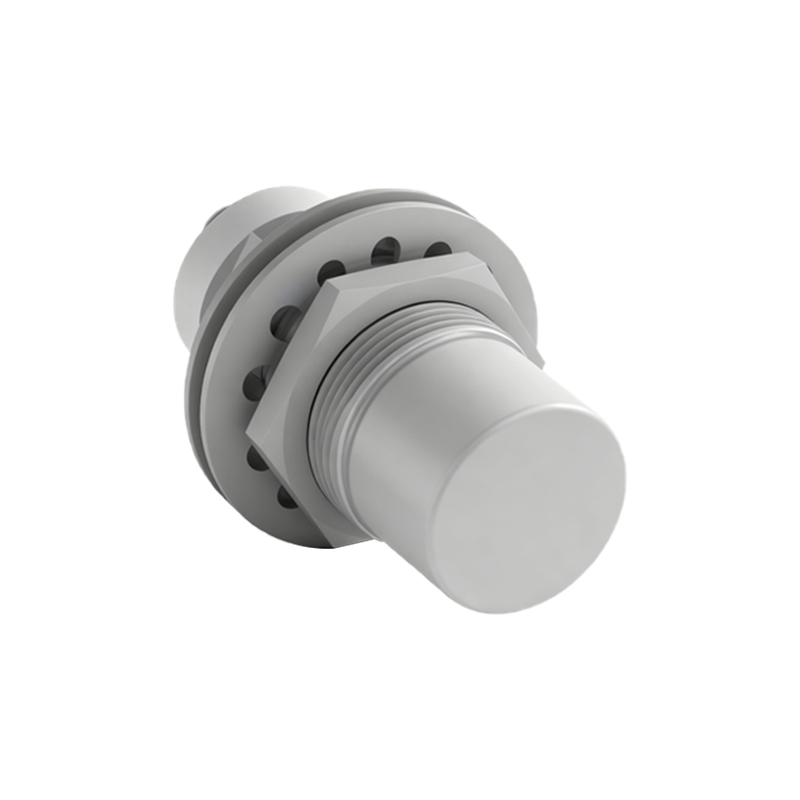
The "normally open" configuration defines the switch's default electrical state when no target is present. In an NO sensor, the output switch is open (non-conducting) when the sensing area is clear. When a valid target enters the sensing range, the output switch closes (conducts), allowing current to flow to the connected load, such as a PLC input module, relay coil, or indicator lamp. This behavior is intuitive: the circuit is "open" until a target "closes" it. The complementary type is the Normally Closed (NC) configuration.
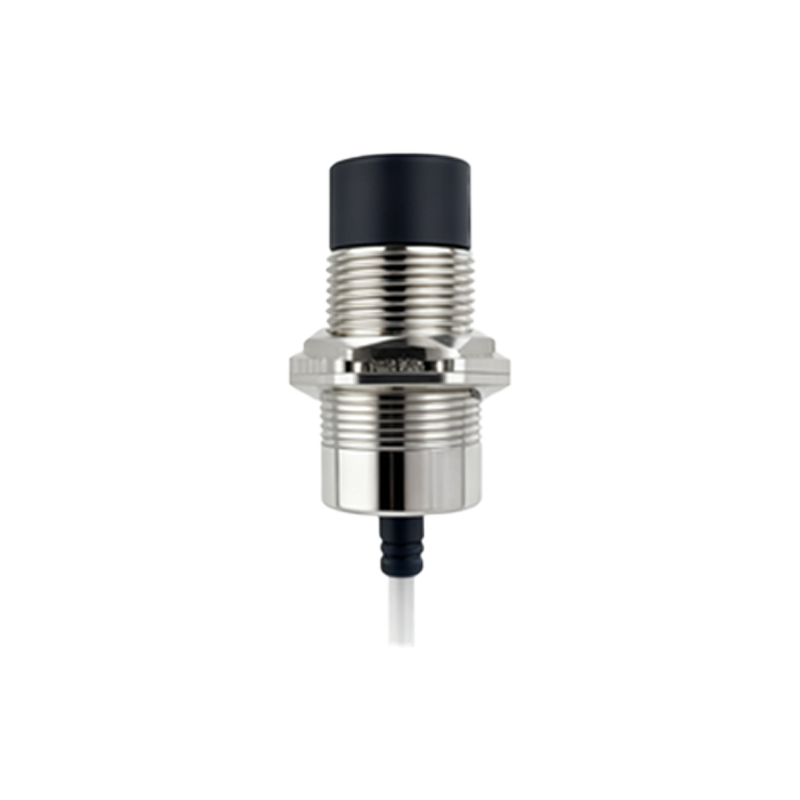
Rectangular or "block" style housings are favored in many industrial settings due to their ease of mounting, often using standard brackets or directly via threaded holes. They offer multiple mounting options (e.g., side or end mounting) and can be easier to integrate into machine frames and guards compared to cylindrical barrels. The sensing face is typically located on one of the larger rectangular surfaces.
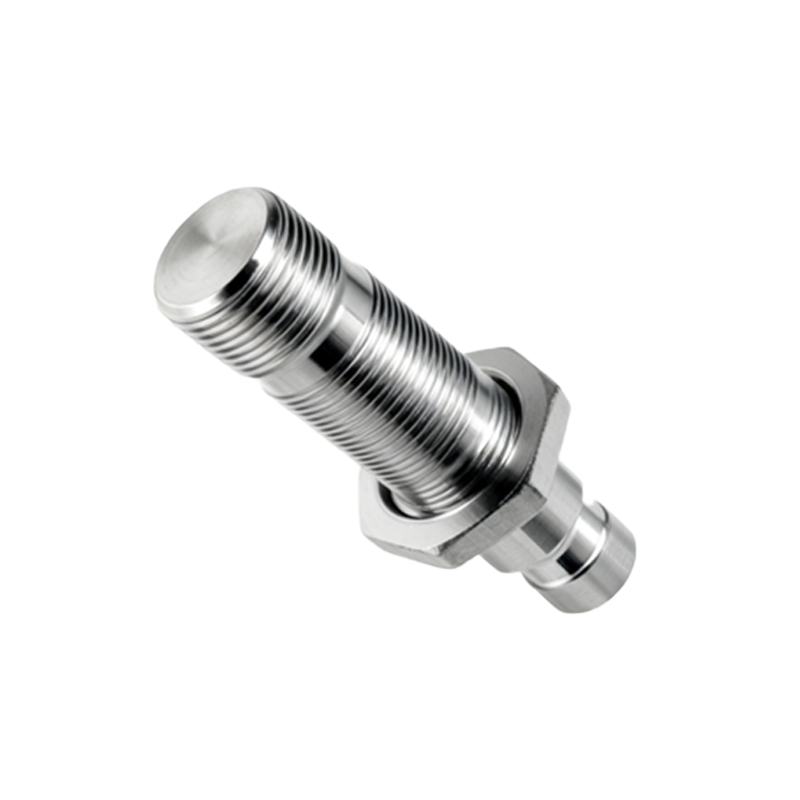
Key specifications to consider when selecting and applying a three-wire rectangular NO proximity switch include:
1. Sensing Distance: The nominal range (e.g., 5mm, 10mm, 15mm) at which it can reliably detect a standard target. It is crucial to account for a safety factor (typically 70-80% of nominal) in real-world applications.
2. Supply Voltage: Common DC ranges are 10-30V DC, while AC versions might operate on 90-250V AC. Ensuring a stable, clean power supply within the specified range is critical.
3. Output Type: For DC sensors, this is either a PNP (sourcing) or NPN (sinking) transistor output. A PNP (sourcing) switch provides positive voltage on the black wire when activated, common in Europe and for PLC sinking inputs. An NPN (sinking) switch connects the black wire to ground when activated, common in Asia and for PLC sourcing inputs. The NO function applies to both types.
4. Output Current: The maximum current the switch can handle, usually around 100-200mA for standard models. This must not be exceeded.
5. Housing Material and Protection Rating: Typically made of nickel-plated brass, stainless steel, or PBT plastic. The Ingress Protection (IP) rating (e.g., IP67, IP68) indicates resistance to dust and water, essential for harsh environments.
6. Switching Frequency: The maximum number of on/off cycles per second, important for high-speed counting or positioning applications.
Wiring a DC three-wire NO proximity switch is systematic. Connect the brown wire to the positive DC supply terminal. Connect the blue wire to the negative DC supply terminal (0V/ground). The black output wire is connected to one side of your load (e.g., a PLC digital input). The other side of that load is then connected to the opposite supply polarity. For a PNP NO switch: Load connects between black wire (sourced +V when active) and 0V. For an NPN NO switch: Load connects between +V supply and the black wire (which sinks