In the demanding environment of modern port operations, gantry cranes are the workhorses of global logistics. Their reliability, efficiency, and safety are paramount, and a critical, yet often understated, component ensuring these attributes is the proximity switch sensor. These non-contact sensing devices are integral to the automated control and safety systems of port cranes, performing a wide array of functions from position detection to collision prevention. This article delves into the technical principles, common applications, selection criteria, and maintenance best practices for proximity sensors in this heavy-duty setting.
Proximity sensors operate on the principle of electromagnetic induction (inductive type) or capacitive/capacitive coupling. For metallic targets, which are ubiquitous in crane structures, inductive proximity switches are predominantly used. They generate an oscillating electromagnetic field. When a metal object (like a crane trolley, spreader, or end-stop) enters this field, eddy currents are induced in the target, causing a change in the oscillation amplitude. This change is detected by the sensor's circuitry, which then switches its output state. This non-contact operation is a key advantage, eliminating mechanical wear and tear associated with limit switches and ensuring high repeatability and long service life—essential for the millions of cycles a port crane executes.
The applications on a port gantry crane are numerous and mission-critical. A primary use is end-of-travel limiting for the crane's main motions: hoisting, trolley traverse, and gantry travel. Sensors are positioned at the extreme ends of these paths to signal the control system to decelerate and stop, preventing over-travel and potential catastrophic damage. They are also used for mid-range positioning, such as confirming the spreader is at a specific height for container pickup or setting the trolley position for precise spotting. Anti-sway systems may utilize arrays of sensors to monitor the load's swing. Furthermore, sensors play a vital role in safety interlocks, ensuring access doors to machinery houses are closed or that maintenance locks are disengaged before crane operation can commence.
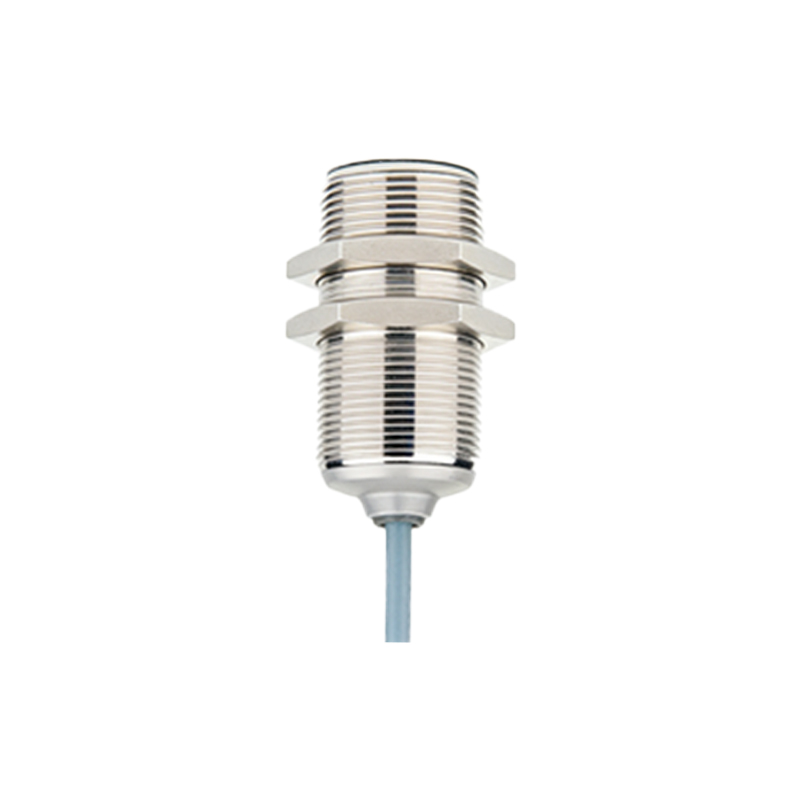
Selecting the right proximity sensor for a port crane is a rigorous process dictated by the harsh operating conditions. The key parameters include:
Sensing Distance: The nominal range must account for target alignment tolerances and potential mechanical deflection.
Housing Material and Protection Rating: Sensors must be housed in robust, corrosion-resistant materials like nickel-plated brass or stainless steel. An ingress protection rating of at least IP67 is standard, providing dust-tightness and protection against temporary immersion, crucial for withstanding salt spray, rain, and high-pressure washdowns.
Temperature Range: They must operate reliably in the wide temperature extremes found in ports, from freezing winters to scorching summers.
Output Type: PNP or NPN transistor outputs are common for PLC integration, while some heavy-duty applications may still use relay contacts.
Electrical Noise Immunity: The electrical environment near large motors and variable frequency drives (VFDs) is noisy. Sensors must have excellent electromagnetic compatibility (EMC) to avoid false triggering.
Installation and maintenance are as crucial as selection. Sensors must be securely mounted to minimize vibration-induced misalignment. The sensing face should be kept clean from metallic dust, paint buildup, or debris, which can reduce the effective sensing distance. A regular preventive maintenance schedule should include checking the mechanical mounting integrity, cleaning the sensor face, and verifying the switching function through operational tests or diagnostic tools. Monitoring for increased "chatter" or intermittent signals can provide early warning of impending failure.
In conclusion, proximity switch sensors are the silent sentinels of port gantry crane automation and safety. Their non-contact, reliable operation underpins the precise, high-cycle movements required in container handling. A deep understanding of their technology, coupled with diligent selection for the marine-industrial environment and a robust maintenance regimen, is essential for maximizing crane uptime, protecting valuable assets, and ensuring the safety of personnel. As port automation advances towards higher degrees of autonomy, the role of reliable sensing, including advanced versions of proximity sensors, will only become more central to efficient and safe terminal operations.