In the realm of industrial automation, proximity sensors are indispensable components, providing non-contact detection of metallic and, in some cases, non-metallic objects. Among the diverse array of specifications, the 6mm normally closed (NC) proximity sensor represents a specific and widely utilized configuration. This article delves into the operational principles, typical characteristics, and application considerations for these compact sensing devices.
A 6mm normally closed proximity sensor is defined by two key parameters: its sensing distance and its output switching logic. The "6mm" denotes the rated operating distance, typically standardized as the nominal sensing range (Sn). This means the sensor is designed to reliably detect a standard target (usually a square of mild steel, 1mm thick) at a distance of up to 6 millimeters. It is crucial to note that this is a theoretical value under ideal conditions; factors like target material, size, temperature, and supply voltage can influence the effective sensing range. For non-ferrous metals, the sensing distance is often reduced, a factor accounted for by correction coefficients provided in datasheets.
The "normally closed" designation refers to the electrical state of the sensor's output in the absence of a target within its detection field. In a two-wire AC or three-wire DC NC configuration, the output switch (transistor or triac) is in a conducting state when no target is present. This completes the circuit, allowing current to flow to the connected load, such as a PLC input or a relay coil. When a target enters the sensing range, the internal oscillator's amplitude changes, triggering the output switch to open (turn off), thereby interrupting the current flow to the load. This behavior is the inverse of a normally open (NO) sensor.
The choice between normally closed and normally open configurations is driven by safety and circuit design logic. Normally closed sensors are often employed in safety-critical or monitoring applications where a wire break or sensor failure should cause a "fail-safe" condition. For instance, in a guard door monitoring system, an NC sensor would be used. If the door is closed (target present), the sensor output is off, allowing the machine to operate. If the door opens (target removed) or if the sensor's wiring is severed, the circuit opens, signaling the control system to halt the machine immediately. This fail-safe philosophy prioritizes safety in the event of a fault.
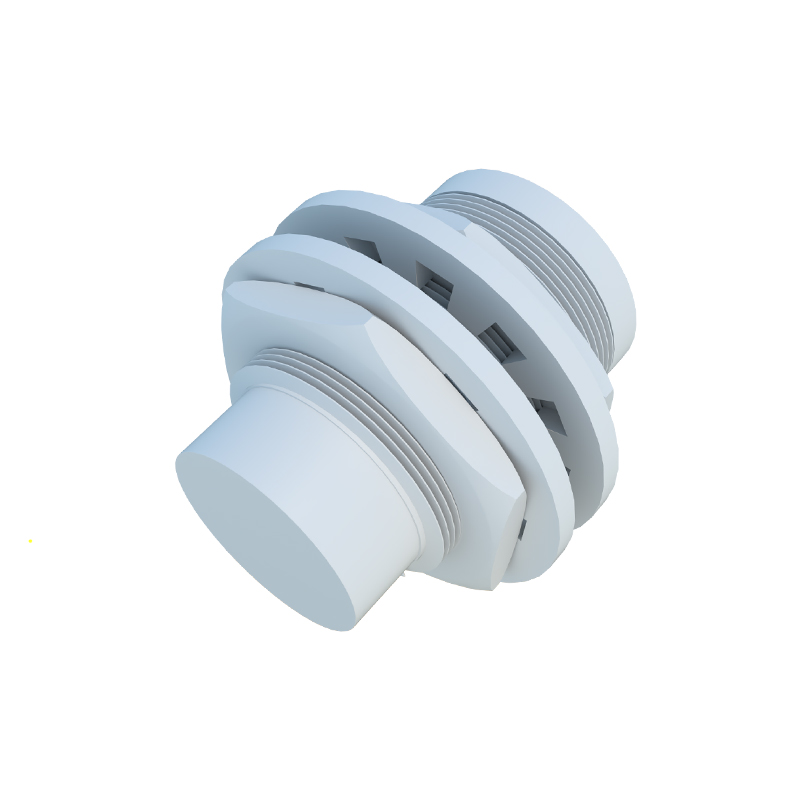
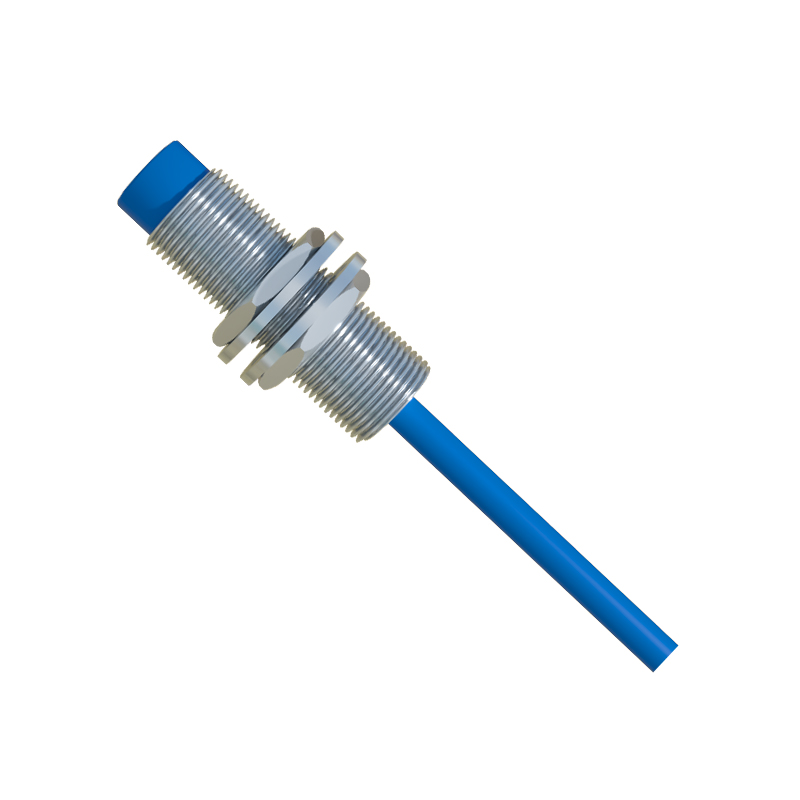
Technologically, most modern 6mm proximity sensors are inductive type, generating an electromagnetic field to detect conductive metals. They are characterized by their compact cylindrical housing, often in M8 or M12 threaded barrels for easy mounting. Key specifications to consider include:
Supply Voltage: Ranging from 10-30V DC for three-wire models or 20-250V AC for two-wire models.
Output Current: The maximum current the sensor's solid-state switch can handle, typically 100-200mA for DC models.
Switching Frequency: How quickly the sensor can detect objects, usually in the range of hundreds of Hz to 1kHz.
Hysteresis: The difference between the switch-on and switch-off points, which prevents output chatter when a target is at the edge of the sensing range.
Protection Rating: Commonly IP67, indicating resistance to dust and temporary immersion in water, making them suitable for harsh industrial environments.
Application scenarios for 6mm NC sensors are vast. They are ideal for position verification in confined spaces, such as checking if a small pneumatic cylinder is fully retracted, confirming the presence of a metal part in a fixture, or as end-of-travel limit switches in compact machinery. Their small size allows for dense mounting on automated assembly lines.
When integrating a 6mm NC sensor, several practical points must be observed. First, ensure proper mounting; metallic surroundings can diminish the sensing range, so maintaining the recommended non-flush mounting distance is essential. Second, for DC three-wire sensors, correct wiring of the brown (live/+), blue (neutral/-), and black (output) wires is critical. Connecting an NC load to a PLC input module configured for a sinking input might require careful planning. Lastly, while robust, these sensors can be susceptible to electrical noise in high-interference environments; using shielded cables and proper grounding is recommended.
In summary, the 6mm normally closed proximity sensor is a precise, reliable, and safety-oriented component in the automation toolkit. Its operation, centered on a default closed circuit that opens upon detection, makes it a cornerstone for fail-safe design. Understanding its specifications, limitations, and correct implementation is key to leveraging its full potential for enhancing machine safety, reliability, and efficiency in countless industrial applications.
SEO