In the realm of industrial automation and control systems, the integration of sensing technology directly into amplifier units represents a significant advancement in efficiency, space-saving design, and system simplification. Amplifier-built-in proximity sensors, as the name implies, are devices where the sensing element and the signal conditioning amplifier are housed within a single, compact unit. This integration eliminates the need for separate amplifier modules, reducing wiring complexity, installation time, and potential points of failure. This article delves into the common types of these integrated sensors and their operational principles.
The primary function of any proximity sensor is to detect the presence or absence of an object within a specified range without physical contact. When this sensor is combined with an amplifier, the typically weak electrical signal generated by the sensing element is immediately amplified, conditioned, and converted into a robust, standardized output signal suitable for direct connection to programmable logic controllers (PLCs), counters, or other control devices. The built-in amplifier ensures signal integrity over longer cable runs and in electrically noisy industrial environments.
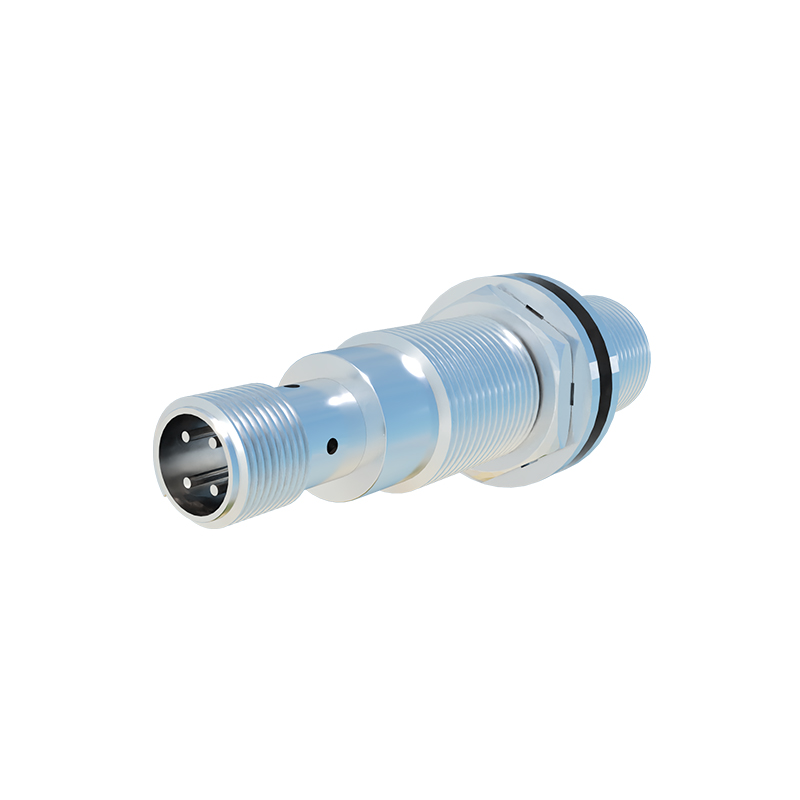
Several core technologies are employed in amplifier-built-in proximity sensors, each with distinct characteristics suited to different applications:
1. Inductive Proximity Sensors: These are among the most prevalent types. They generate an electromagnetic field. When a metallic object (ferrous or non-ferrous) enters this field, it induces eddy currents within the object, causing a change in the oscillation amplitude within the sensor's coil. The built-in amplifier detects this change and triggers a solid-state switch output. They are ideal for detecting metal parts, such as in machine tools, conveyor systems, and robotic arms. Key variants include shielded (flush-mountable) and unshielded types, offering different sensing ranges and mounting flexibility.
2. Capacitive Proximity Sensors: These sensors can detect both metallic and non-metallic objects—liquids, plastics, glass, wood, and granular materials. They operate by generating an electrostatic field. The presence of any object with a dielectric constant different from air alters the capacitance of the sensor's circuit. The integrated amplifier measures this capacitance change and provides an output. Common applications include level detection in tanks (for liquids or powders), material handling, and presence detection of non-metallic containers or products.
3. Magnetic Proximity Sensors (Reed Switch or Hall Effect-based): These sensors are designed specifically to detect permanent magnets. The reed switch type uses hermetically sealed ferromagnetic reeds that close in the presence of a magnetic field. Modern versions often incorporate a Hall Effect IC, which produces a voltage change when exposed to a magnetic field. The built-in amplifier provides a clean, debounced digital output. They are extensively used in pneumatic cylinder position feedback (with a magnet embedded in the piston), door and cover position sensing, and low-speed rotational sensing.
4. Ultrasonic Proximity Sensors: While less common as a fully integrated "amplifier-built-in" unit in the traditional sense, many compact ultrasonic sensors contain the transducer, oscillator, and signal processing electronics in one housing. They work by emitting high-frequency sound waves and measuring the time for the echo to return. The internal circuitry acts as an amplifier and processor to calculate distance. They are used for object detection and distance measurement, even with transparent or sound-absorbing materials, and in challenging environments with dust or vapor.
The output from these integrated sensors is typically a discrete DC signal. The most standard forms are:
- PNP (Sourcing): The output switches the positive voltage line to the load.
- NPN (Sinking): The output switches the negative or ground line to the load.
- Analog Output (e.g., 0-10V, 4-20mA): Provides a continuous signal proportional to the distance to the target, offered by some advanced models.
The advantages of using amplifier-built-in proximity sensors are substantial. They offer simplified installation with fewer components, enhanced reliability due to reduced connection points, and improved resistance to electromagnetic interference (EMI) because the sensitive signal amplification occurs immediately at the source. Their compact design is crucial in modern machinery with high component density.
Selection criteria for these sensors involve considering the target material (metal, plastic, liquid), required sensing distance, environmental conditions (temperature, chemicals, washdown requirements), output type needed by the controller, and supply voltage. Proper mounting, alignment, and adherence to manufacturer specifications regarding sensing distances (rated operating distance) and hysteresis are critical for optimal performance.
In conclusion, amplifier-built-in proximity sensors are fundamental components that streamline sensing tasks in automated systems. By understanding the specific types—inductive for metals, capacitive for diverse materials, magnetic for magnets, and ultrasonic for challenging conditions—engineers and technicians can select the optimal device to enhance machine performance, reliability, and operational intelligence. Their integrated