In the realm of industrial automation and control systems, the reliability and precision of sensing components are paramount. Among these, proximity sensor switches play a critical role in non-contact detection, and the TSC1204 model stands out as a noteworthy example for engineers to understand. This article delves into the technical specifications, operational principles, typical applications, and key considerations for integrating the TSC1204 into electrical designs.
The TSC1204 is a robust inductive proximity sensor switch designed for industrial environments. Its core function is to detect the presence or absence of metallic objects without physical contact, thereby eliminating mechanical wear and enabling high-speed operation. The operating principle is based on electromagnetic induction. The sensor generates a high-frequency oscillating electromagnetic field from its active face. When a metallic target enters this field, eddy currents are induced in the target, causing a change in the oscillation amplitude within the sensor's internal LC tank circuit. This change is detected and processed by the integrated circuitry, which subsequently triggers a solid-state switching output.
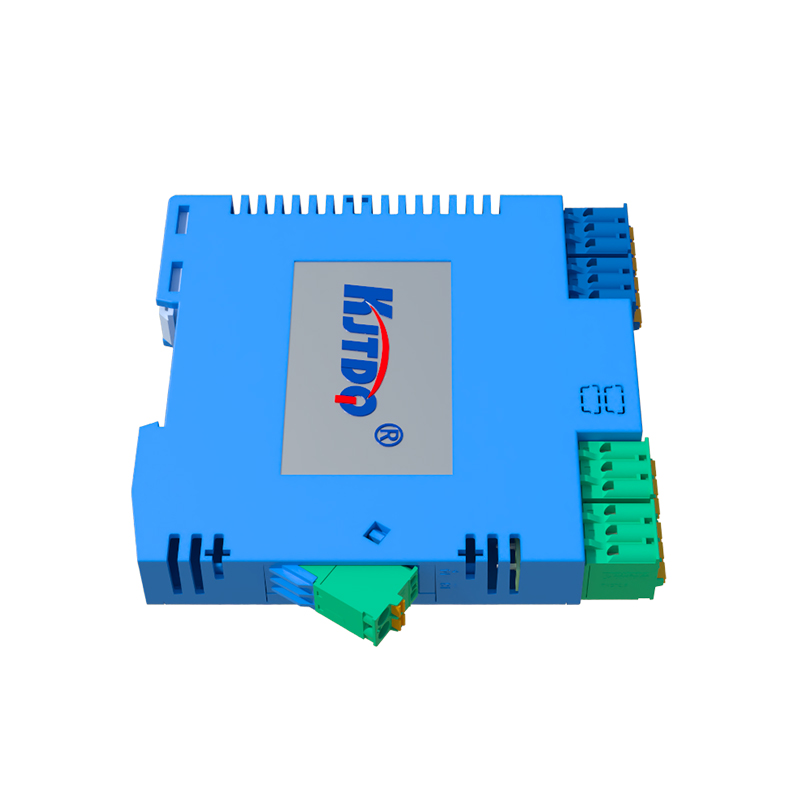
Key specifications typically associated with sensors like the TSC1204 include sensing distance, output type, supply voltage, and environmental ratings. A standard sensing range for such a unit might be up to 4mm, though this is target-material dependent (with a correction factor for different metals). The output is often a DC PNP (sourcing) or NPN (sinking) transistor, providing a clean switching signal compatible with PLCs (Programmable Logic Controllers) and other control logic. Supply voltage ranges commonly span from 10-30V DC, ensuring compatibility with standard industrial power supplies. Importantly, the TSC1204 is likely built to withstand harsh conditions, featuring a housing rated at IP67 or higher for protection against dust and temporary immersion, and constructed from materials like nickel-plated brass or stainless steel for corrosion resistance.
Application scenarios for the TSC1204 are vast within factory automation. It is frequently deployed for position sensing, such as verifying if a robotic arm has reached its home position or if a workpiece is correctly seated in a fixture. It serves in counting applications on conveyor lines, detecting metal parts as they pass by. Furthermore, it can act as an end-of-travel limit switch for machine tools or as a safety interlock to confirm the closure of a protective guard. Its non-contact nature makes it ideal for applications involving fast-moving or fragile objects where mechanical limit switches would fail.
For successful implementation, engineers must adhere to several critical guidelines. First, proper mounting is essential; flush-mounted sensors in metal surroundings have a reduced effective sensing range compared to non-flush mounting. Adequate clearance from other metal objects and adjacent sensors must be maintained to prevent mutual interference. Electrical wiring should follow best practices: using shielded cables in electrically noisy environments, implementing flyback diodes for inductive loads, and ensuring correct polarity for DC models. Regular maintenance, though minimal, involves keeping the sensing face clean from debris, metal chips, or oil buildup that could affect performance.
When selecting a proximity sensor like the TSC1204, comparing it with alternatives such as capacitive, ultrasonic, or photoelectric sensors is crucial. Inductive sensors excel specifically with metallic targets and are generally immune to environmental factors like dust, steam, or ambient light that can plague optical sensors. However, they are ineffective for detecting non-metallic materials. Therefore, a thorough analysis of the target material, required sensing distance, environmental conditions, and response speed is necessary before specification.
In conclusion, the TSC1204 proximity sensor switch represents a fundamental and highly reliable component in the electrical engineer's toolkit for machine automation. Its design based on inductive technology offers a durable and precise solution for metallic object detection. By thoroughly understanding its operating parameters, environmental limits, and installation requirements, engineers can leverage the TSC1204 to create more efficient, reliable, and maintenance-friendly control systems. As automation continues to evolve, the principles embodied by such sensors remain a cornerstone of robust industrial design.