In the intricate world of industrial automation, where precision, reliability, and space constraints are paramount, miniature inductive proximity sensors have emerged as indispensable components. Among these, the M4, M5, and M6 form factors represent a critical category, offering a perfect balance between compact size and robust performance. These tiny yet powerful devices are engineered to detect the presence or absence of metallic objects without physical contact, making them ideal for a vast array of applications from high-speed assembly lines to intricate robotic systems.
The fundamental operating principle of these sensors is based on electromagnetic induction. An internal oscillator generates a high-frequency electromagnetic field that radiates from the active face of the sensor. When a ferrous or non-ferrous metal target enters this field, eddy currents are induced on the target's surface. This causes a change in the oscillation amplitude within the sensor, which is detected by a threshold circuit. This circuit then triggers a solid-state switching output, signaling the object's presence to the programmable logic controller (PLC) or other control systems. The key advantage is the complete absence of mechanical wear, leading to exceptionally long service life and maintenance-free operation.
The differentiation between M4, M5, and M6 sensors primarily lies in their housing diameter—4mm, 5mm, and 6mm respectively. This seemingly small variance has significant implications. M4 sensors are the ultimate choice for ultra-dense packaging where space is at an absolute premium, such as in miniature grippers, small-part assembly stations, or within compact electronic manufacturing equipment. Their sensing ranges, however, are typically the shortest, often around 0.8 to 1.5 mm for steel, demanding precise mechanical alignment.
M5 sensors offer a moderate increase in size, which translates to slightly longer sensing ranges (commonly 1.5 to 2 mm) and often allows for the integration of more features, such as built-in LED status indicators. They provide a versatile middle ground, fitting into many standard mounting holes and offering a reliable detection capability for small actuators, pneumatic cylinders, or as part of position verification in conveyor systems.
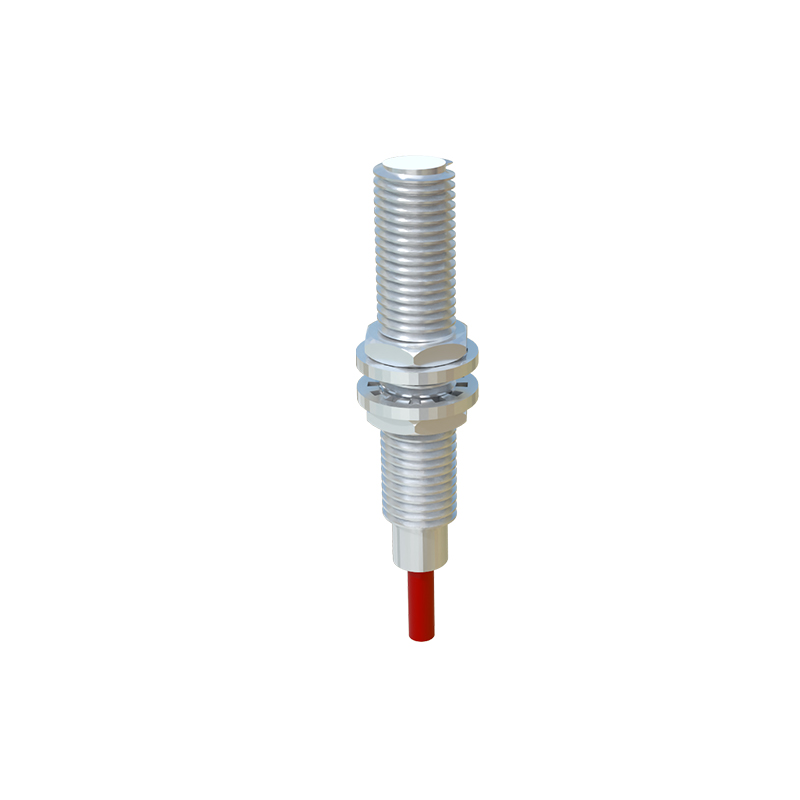
The M6 sensor, being the largest in this miniature series, provides the most robust sensing performance within this size class. With standard sensing distances up to 2-3 mm, it offers greater installation tolerance and can detect smaller or thinner metal targets more reliably. The larger housing also often accommodates enhanced environmental protection, with many models rated at IP67 or higher, making them resistant to coolants, oils, and dust ingress. This makes M6 sensors a workhorse in machine tools, packaging machinery, and automotive manufacturing.
Selecting the appropriate sensor requires careful consideration of several technical parameters beyond just size. The sensing distance (Sn), as specified by standards like IEC 60947-5-2, is crucial. One must also consider the target material correction factor; for instance, the sensing range for stainless steel or aluminum is reduced compared to mild steel. The output configuration—typically NPN (sinking) or PNP (sourcing) transistor outputs—must match the input card of the controller. Furthermore, factors like switching frequency (for high-speed applications), temperature range, housing material (often nickel-plated brass or stainless steel), and electrical connection type (pre-wired cable or quick-disconnect) are vital for optimal integration.
The application spectrum for these miniature sensors is remarkably broad. They are extensively used for end-position detection in pneumatic and hydraulic cylinders, where their small size allows them to be integrated directly into cylinder barrels. In robotics, they provide precise feedback for gripper jaw position or tool changer status. On high-speed rotary indexing tables, they ensure accurate part positioning. In electronic manufacturing, they detect the presence of PCBs or components on feeders. Their inherent resistance to shock and vibration makes them exceptionally reliable in demanding environments.
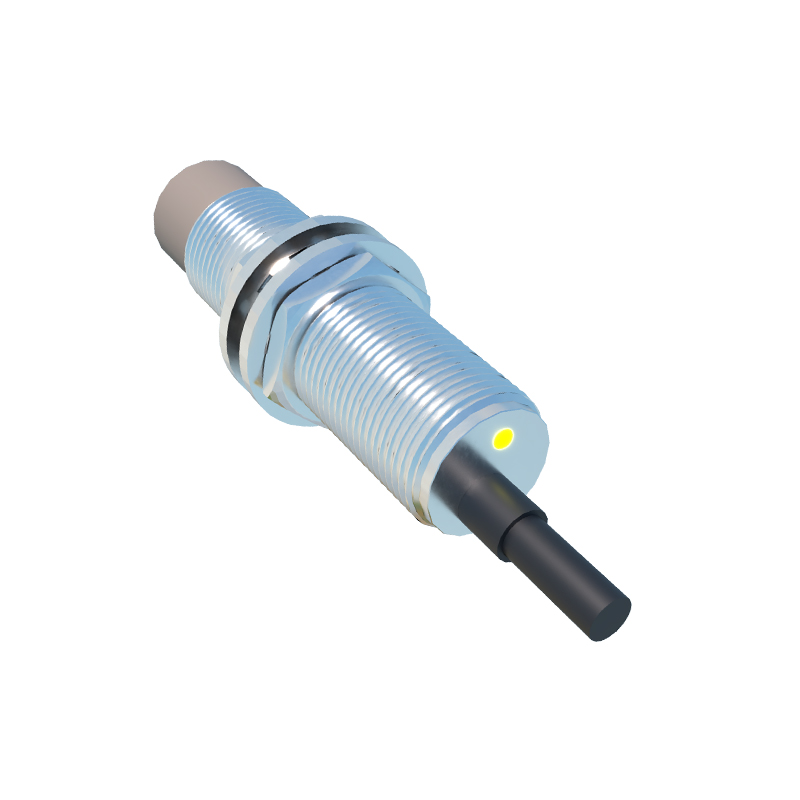
Recent advancements have pushed the capabilities of M4, M5, and M6 sensors even further. Modern variants incorporate advanced ASIC (Application-Specific Integrated Circuit) technology, which improves temperature stability, noise immunity, and allows for features like short-circuit and overload protection in an even tinier footprint. Some high-performance models offer increased switching frequencies exceeding 5 kHz, enabling detection in extremely fast-moving processes. The development of factor-1 sensors, which can detect all metals at the same range, has also simplified design and inventory for applications dealing with varied materials.
In conclusion, M4, M5, and M6 miniature inductive proximity sensors are far more than just small switches. They are precision-engineered components that form the sensory nervous system of modern automated machinery. Their selection and application demand a clear understanding of mechanical, electrical, and environmental requirements. By providing non-contact, wear-free detection in the tightest of spaces, they enable the high speed, accuracy, and reliability that define contemporary industrial automation, proving