In the intricate world of industrial automation and machinery, proximity sensors stand as silent sentinels, detecting the presence or absence of objects without physical contact. While the core sensing technology—be it inductive, capacitive, or photoelectric—rightly receives significant attention, a seemingly humble component often plays a critical, yet underappreciated role: the plastic shim. This thin, precisely manufactured plastic piece, typically inserted between the sensor's active face and the target object, is far from a simple spacer. Its functions are multifaceted and vital for optimal sensor performance, system longevity, and operational safety.
Primarily, plastic shims serve as protective barriers. Inductive proximity sensors, which generate an electromagnetic field to detect metallic targets, are particularly susceptible to mechanical damage. The active sensing face, often made of a ferrite core and encapsulated in a resin or similar material, can be vulnerable to abrasion, impact, or scratching from the target material, especially in high-cycle applications or with misaligned targets. A durable plastic shim, commonly made from materials like POM (Polyoxymethylene) or PET (Polyethylene Terephthalate), acts as a sacrificial wear layer. It absorbs the physical wear, protecting the sensitive sensor face from degradation that could alter its sensing characteristics or lead to premature failure. This simple measure dramatically extends the operational life of the sensor, reducing downtime and maintenance costs.
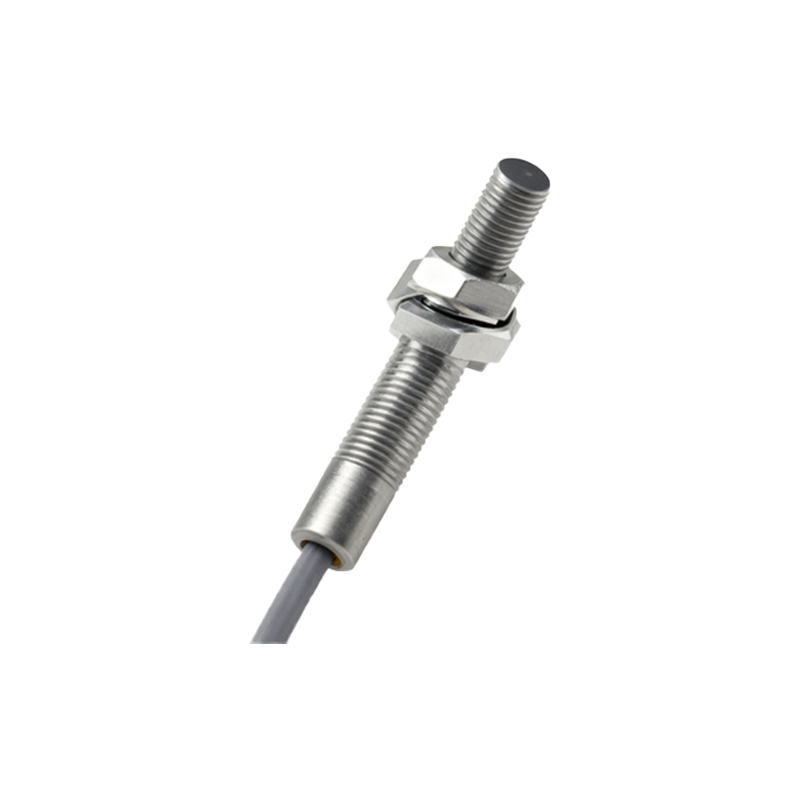
Beyond physical protection, plastic shims are crucial for establishing and maintaining precise sensing distances. Every proximity sensor has a specified nominal sensing distance (Sn). However, the effective sensing point can be influenced by the target material's properties, such as its size, shape, and composition. For inductive sensors, different metals (e.g., steel, aluminum, copper) have different damping effects on the electromagnetic field, leading to variations in the actual switching distance. A plastic shim of a known, calibrated thickness effectively sets a fixed "air gap" between the sensor and the target. This ensures consistent and repeatable switching behavior, regardless of minor target variations or installation tolerances. It allows engineers to "tune" the system for reliable operation, preventing false triggers or missed detections that could disrupt an automated process.
Furthermore, plastic shims play a significant role in mitigating the effects of target material. In applications involving different types of metals, the shim standardizes the sensing characteristics by introducing a consistent non-metallic gap. This is especially important when a sensor calibrated for mild steel is used to detect aluminum or stainless steel, which typically have reduced sensing ranges. The shim helps compensate for these differences, making system behavior more predictable. For capacitive sensors, which can detect non-metallic materials, a plastic shim can sometimes be used to shield the sensor from unwanted influences, such as moisture or contaminant buildup on its face, ensuring it only reacts to the intended target.
The selection of the plastic shim material is not arbitrary. Engineers must consider factors such as chemical resistance, temperature stability, mechanical strength, and dielectric properties. In environments with coolants, oils, or cleaning agents, shims made from chemically resistant plastics like PPS (Polyphenylene Sulfide) or PVDF (Polyvinylidene Fluoride) are essential. High-temperature applications near welding stations or ovens require materials like PEEK (Polyether Ether Ketone) or PI (Polyimide) that can withstand thermal stress without deforming. The thickness of the shim is also a critical design parameter, directly impacting the effective sensing range and must be calculated based on the sensor's specifications and the application's requirements.
In conclusion, the plastic shim in a proximity sensor application is a paradigm of engineering elegance in simplicity. It is not merely an accessory but a fundamental component for ensuring reliability, precision, and durability. By providing mechanical protection, defining precise sensing gaps, and compensating for material variances, these unassuming plastic pieces contribute significantly to the robustness of automated systems. Specifying, installing, and maintaining the correct shim is as important as selecting the sensor itself, underscoring the principle that in high-performance industrial design, every component, no matter how small, has a vital role to play.