In the realm of industrial automation and control, the reliable detection of object presence or position is paramount. Among the plethora of sensing technologies available, Hall Effect sensors have carved out a significant niche, particularly when configured as non-contact proximity switches. Their operation, rooted in fundamental physics, offers distinct advantages in challenging environments where mechanical wear, contamination, or harsh conditions render other sensor types less effective.
The principle behind the Hall Effect sensor is straightforward yet elegant. When a current-carrying conductor is placed in a magnetic field, a voltage difference—known as the Hall voltage—is generated perpendicular to both the current and the field. In a practical Hall sensor, this conductor is a thin semiconductor element. When a ferromagnetic target (like a gear tooth, a machine part, or a dedicated magnet) approaches the sensor, it alters the magnetic field density at the semiconductor. This change modulates the Hall voltage, which is then processed by integrated electronics within the sensor package. For a proximity switch application, this internal circuitry is designed to trigger a clean, digital output signal (often open-collector) at a precise magnetic threshold, effectively acting as a switch.
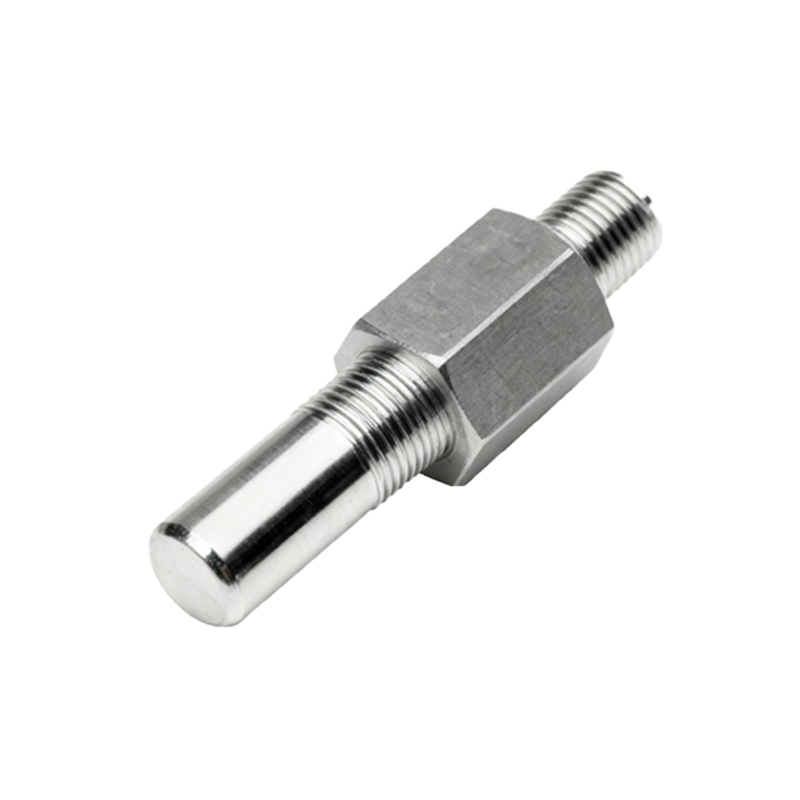
The transition from a basic Hall element to a robust industrial proximity switch involves critical design considerations. Key among these is the choice between different output types. Unipolar switches activate in the presence of a single magnetic south or north pole and deactivate when the field drops below a release threshold. Bipolar switches require alternating poles to toggle their state, offering inherent protection against accidental triggering from a constant stray field. A latched or latching version, a subset of bipolar sensors, maintains its output state until an opposite pole is presented, functioning like a magnetic memory cell. The sensing distance, while typically shorter than inductive or capacitive proximity sensors, is precisely defined and highly repeatable. Engineers must carefully select sensors based on required operating distance, magnetic field strength of the target, and the necessary switching frequency.
The benefits of using Hall Effect sensors as proximity switches are compelling, especially in automotive and heavy machinery sectors. First and foremost, they are true solid-state devices with no moving parts, leading to exceptional reliability and an almost limitless lifespan in terms of switching cycles. They are immune to contaminants such as dust, oil, and moisture that can foul optical or mechanical switches. Their performance is unaffected by non-ferrous materials, allowing them to operate reliably in the presence of aluminum, plastic, or liquid splashes. Furthermore, they can operate at very high speeds, detecting rapidly passing targets like rotating gear teeth for speed or timing applications, a task where physical contact is impossible.
Typical applications are widespread. In automotive systems, they are ubiquitous for crankshaft and camshaft position sensing, wheel speed detection for ABS systems, and detecting seatbelt buckle status. In industrial machinery, they monitor the position of cylinders, act as end-of-travel limits on actuators, count metallic parts on conveyors, and provide rotational speed feedback from motor shafts. Their ability to function in wide temperature ranges and under significant vibration makes them indispensable in these settings.
However, prudent design must account for their limitations. The primary constraint is the necessity of a magnetic field interaction. The target must be ferromagnetic or a permanent magnet. Sensing distances are generally in the range of a few millimeters, though specialized versions can extend further. Strong external magnetic fields from motors or solenoids can potentially interfere with operation, necessitating proper shielding or sensor placement. Additionally, while the sensor itself is robust, the associated magnet on the target must be chosen and mounted to withstand the environmental conditions.
Integration into a control system is typically simple. The three-wire DC sensor (power, ground, and switched output) is standard, easily interfacing with PLCs, microcontrollers, or relay modules. Attention must be paid to wiring practices, including overvoltage and reverse polarity protection, as the integrated electronics can be sensitive to electrical transients.
In conclusion, Hall Effect proximity switches represent a sophisticated, reliable, and versatile solution for non-contact position and presence detection. By leveraging a fundamental physical phenomenon, they deliver performance where other sensors may falter. For engineers designing systems that demand durability, high-speed operation, and immunity to harsh industrial environments, specifying a Hall-based proximity switch is often the optimal choice to ensure long-term, maintenance-free operation. Their continued evolution, with integrated diagnostics and smarter signal processing, promises to further solidify their role in the future of industrial sensing.