In the realm of industrial measurement and condition monitoring, the ability to accurately determine rotational speed is paramount. Among the various technologies employed for this purpose, the laser tachometer stands out for its non-contact, high-precision, and versatile capabilities. This article delves into the operational principles, key applications, and critical selection factors for these sophisticated instruments, providing a comprehensive guide for engineers and technicians across multiple sectors.
At its core, a laser tachometer, often referred to as a laser tach or non-contact tachometer, operates on the principle of optical reflection and time-domain analysis. The device emits a focused beam of coherent light—a laser—towards a rotating target. A small piece of reflective tape is typically affixed to the target surface, such as a motor shaft, fan blade, or spindle. Each time this reflective marker passes through the laser beam, it reflects a high-intensity pulse of light back to the sensor's receiver. The internal electronics of the tachometer measure the time interval between these consecutive pulses. By calculating the reciprocal of this time interval, the device accurately computes the rotational speed, commonly displayed in revolutions per minute (RPM) or other relevant units like revolutions per second (Hz). This non-intrusive method eliminates the need for physical coupling, thereby avoiding potential load effects, slippage, or safety hazards associated with contact-based methods like mechanical or optical encoder wheels.
The advantages of laser tachometers are numerous. Their non-contact nature makes them ideal for measuring the speed of delicate, hazardous, or electrically live components where direct contact is impossible or unsafe. They offer exceptional accuracy, often within ±0.05% of reading or better, and high resolution. Setup is generally quick and straightforward, requiring only the application of reflective tape and aiming the laser beam. Modern units are highly portable, battery-operated, and often feature data logging, USB connectivity, and user-friendly interfaces. Furthermore, they can measure over considerable distances, with some models effective from several meters away.
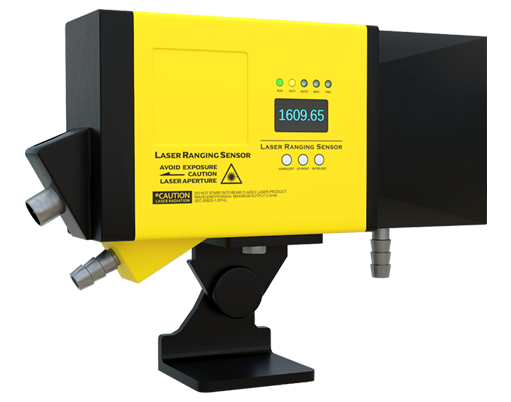
The applications for laser tachometers span a wide spectrum of industries. In manufacturing and plant maintenance, they are indispensable for checking the speed of motors, pumps, conveyors, fans, and turbines, facilitating predictive maintenance and troubleshooting. Within the automotive sector, engineers use them to measure engine RPM, wheel speed, and dynamometer testing. In aerospace, they assist in testing auxiliary power units and various rotating assemblies. Laboratory research and development rely on them for prototyping and testing new mechanical designs. Even in consumer electronics, they can be used to verify the speed of cooling fans in computers and servers.
Selecting the appropriate laser tachometer requires careful consideration of several technical parameters. The primary specification is the measurement range, which must encompass the minimum and maximum expected speeds of the target application. Accuracy and resolution are critical for precision tasks. The measuring distance, or range, determines how far the operator can be from the target, which is crucial for hard-to-reach or hot surfaces. The response time indicates how quickly the device updates the reading, important for rapidly changing speeds. Additional features to evaluate include the type of display (backlit LCDs are preferable in low light), memory capacity for storing readings, output interfaces (e.g., analog voltage, USB, Bluetooth), and the quality of the laser (Class II lasers are common and eye-safe for incidental exposure). Environmental factors like ambient light interference, temperature, and humidity should also be considered, as some models are specifically designed for harsh industrial environments.

For optimal performance, proper usage is essential. The reflective tape should be applied to a clean, flat surface on the rotating body. It is advisable to use only the tape supplied or recommended by the manufacturer to ensure optimal reflectivity. The laser beam must be aimed precisely at the tape marker. Steady hands or a mounting tripod can prevent jitter and ensure consistent readings, especially at long distances. It is also good practice to take multiple readings and average them for the most reliable result. Users must always observe laser safety guidelines, never pointing the beam at a person's eyes or reflective surfaces that could deflect the beam.
In conclusion, the laser tachometer is a powerful, flexible tool that has become a standard in the toolkit of maintenance professionals, design engineers, and quality control technicians. By offering a safe, accurate, and convenient method for measuring rotational speed without physical contact, it enhances operational efficiency, equipment reliability, and safety across countless applications. Understanding its principles and carefully matching its specifications to the task at hand ensures that this advanced sensor technology delivers maximum value and performance in any industrial or research setting.
