In the realm of industrial automation and precision measurement, laser sensor light beams stand as a cornerstone technology. These devices project a highly focused, coherent beam of light to detect, measure, or profile objects with exceptional accuracy and speed. Unlike conventional photoelectric sensors that may use diffuse or reflective light, the core of a laser sensor's operation is its ability to emit a narrow, intense, and typically visible or infrared light column. This column acts as a precise probe for a multitude of sensing tasks.
The fundamental principle behind a laser sensor light beam is based on the emission, reflection, or interruption of light. A laser diode generates the light beam, which is then collimated through lenses to form a straight, thin column. When this beam strikes a target, several detection methods come into play. In a through-beam sensor, the beam is projected to a separate receiver; an object interrupting the beam triggers a signal. In a retro-reflective model, the beam bounces off a reflector back to the receiver housed in the same unit. For diffuse reflection sensors, the target itself reflects the beam back to the receiver. The time-of-flight (ToF) or phase-shift analysis of the returned light allows precise distance measurement, forming the basis of laser distance sensors and LiDAR systems.
Several key types of laser sensor light beams are prevalent in industry. Red laser beams, often from helium-neon or laser diodes, are common for alignment, positioning, and basic detection due to their high visibility. Infrared laser beams are widely used in safety curtains, distance measurement, and applications where invisible light is preferable. More advanced blue laser beams offer advantages for detecting shiny or metallic surfaces, as the shorter wavelength reduces specular reflection issues. Line laser generators project a fan-shaped beam, creating a visible line for profile scanning and dimension checking, essential in 3D inspection systems.
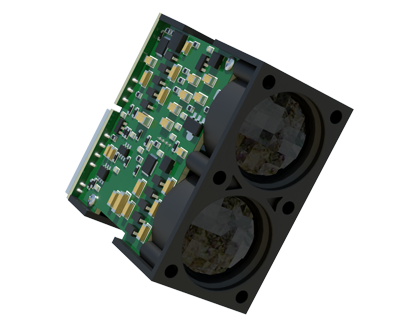
The applications of laser sensor light beams are vast and critical. On assembly lines, they perform precise object detection, counting, and height discrimination. In robotics, they guide arms for pick-and-place operations and ensure safe human-robot collaboration through safety scanning fields. Quality control leverages them for non-contact measurement of dimensions, thickness, warp, and presence/absence checks. Logistics and warehousing depend on them for barcode scanning and package dimensioning. Furthermore, in structural monitoring and surveying, laser beams measure displacement, vibration, and alignment with micron-level precision.

Selecting the appropriate laser sensor involves careful consideration of several parameters. The operating range, or sensing distance, must match the application. Beam spot size determines the minimum detectable object and edge resolution. Response time is crucial for high-speed production lines. Environmental factors like ambient light, dust, fog, or temperature swings can affect performance, necessitating sensors with robust housings and high ingress protection ratings. Safety is paramount; most industrial lasers are Class 1, Class 2, or Class 3R, deemed safe under normal use, but proper labeling and handling procedures are always mandatory.
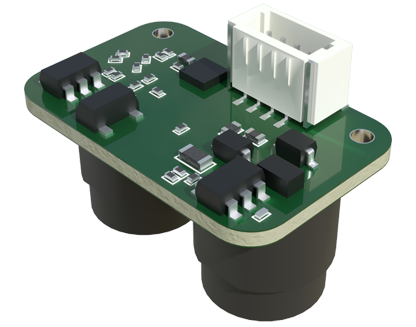
The future of laser sensor light beams is intertwined with advancements in miniaturization, cost reduction, and intelligence. Integration with Industrial IoT platforms allows for predictive maintenance and data analytics. Developments in spectral sensing and multi-beam arrays promise even greater capabilities for complex inspection tasks. As industries strive for higher precision, efficiency, and flexibility, the laser sensor's focused column of light will remain an indispensable tool, illuminating the path toward smarter and more automated manufacturing and beyond. Its role in enabling machines to perceive and interact with their environment with such fidelity is a testament to its enduring engineering significance.