In the intricate world of industrial automation, the silent, ceaseless vigilance of metal proximity sensors forms a cornerstone of efficiency, safety, and precision. These non-contact electronic devices, fundamental to countless systems, operate on the principle of electromagnetic induction or the disturbance of an oscillating field. Their primary function is to detect the presence or absence of metallic objects without any physical contact, triggering a control signal that dictates the next action in a process. This simple yet profound action is the heartbeat of modern manufacturing, packaging, material handling, and automotive assembly lines.
The operational principle varies by type, primarily between inductive and capacitive variants, with inductive being the standard for metal detection. An inductive proximity sensor generates an oscillating electromagnetic field from its face. When a ferrous or non-ferrous metal object enters this field, eddy currents are induced on the metal's surface. This causes a load on the oscillator, leading to a change in the oscillation amplitude. The sensor's detection circuit monitors this change and switches the output state accordingly. This technology is exceptionally reliable, offering high switching frequencies, immunity to environmental contaminants like dust, oil, or moisture, and remarkable longevity due to the absence of moving parts subject to wear.
The applications are vast and mission-critical. In automotive manufacturing, these sensors ensure robotic arms precisely position engine blocks or confirm that a door panel is correctly seated before welding commences. On high-speed packaging lines, they count metallic cans or foil lids, verifying fill levels and triggering reject mechanisms for faulty products. Within automated storage and retrieval systems (AS/RS), they provide precise positioning feedback for cranes, ensuring pallets are accurately located for pickup or deposit. Perhaps most crucially, they serve as vital safety interlocks on machinery guards, halting operation immediately if a safety door is opened, thereby protecting personnel from harm.
Selecting the appropriate metal proximity sensor requires careful consideration of several technical parameters. The sensing range, or nominal range (Sn), is specified for a standard target and must be derated for different metals; ferrous metals like steel are detected at the full range, while non-ferrous metals like aluminum or copper have a reduced effective range. The housing material, typically nickel-plated brass, stainless steel, or PBT plastic, must withstand the industrial environment, including exposure to coolants, chemicals, or physical impact. Output configuration—PNP (sourcing) or NPN (sinking)—must match the control system's input card. Furthermore, factors like switching frequency, temperature rating, and protection class (e.g., IP67 for dust and temporary immersion) are paramount for reliable operation.
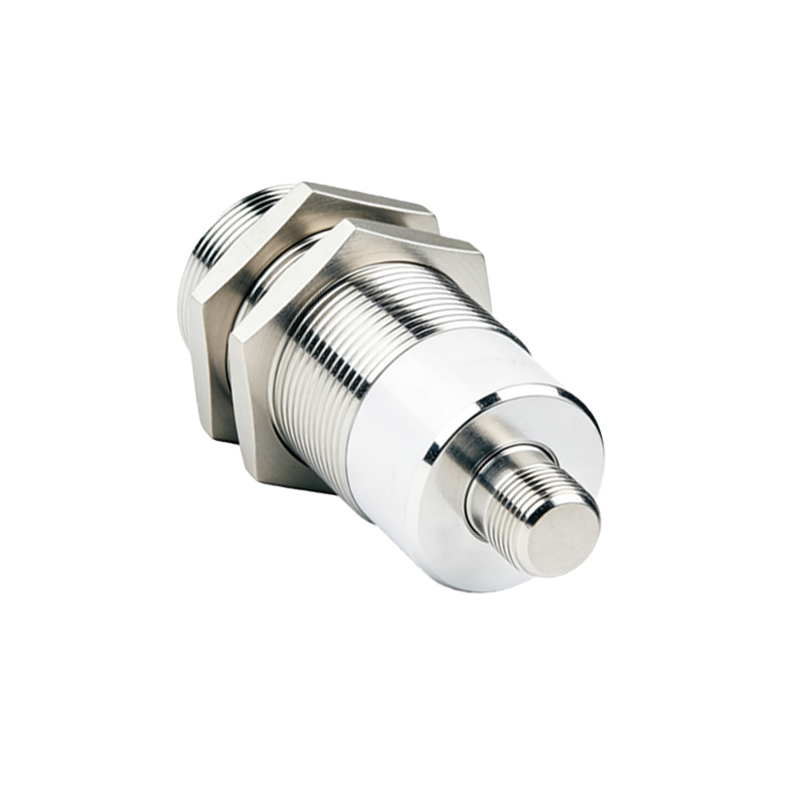
The evolution of these sensors continues to align with Industry 4.0 trends. Modern variants integrate advanced diagnostics and IO-Link communication capabilities. IO-Link transforms a simple binary switch into an intelligent device that can report parameters like operating temperature, signal strength, or even wear indicators to a central controller, enabling predictive maintenance and minimizing unplanned downtime. This digital layer adds unprecedented transparency to the plant floor.
In essence, metal proximity sensors are the indispensable eyes of the automated factory. Their ability to provide fast, reliable, and wear-free detection of metallic objects forms the foundational layer of data acquisition for control systems. From ensuring the meticulous precision of a CNC machine tool to safeguarding human workers, their role is both pervasive and pivotal. As automation grows more complex and interconnected, the humble proximity sensor, evolving with smarter features, will remain a critical enabler of productivity, quality, and operational safety in the electrical and automation engineering landscape.