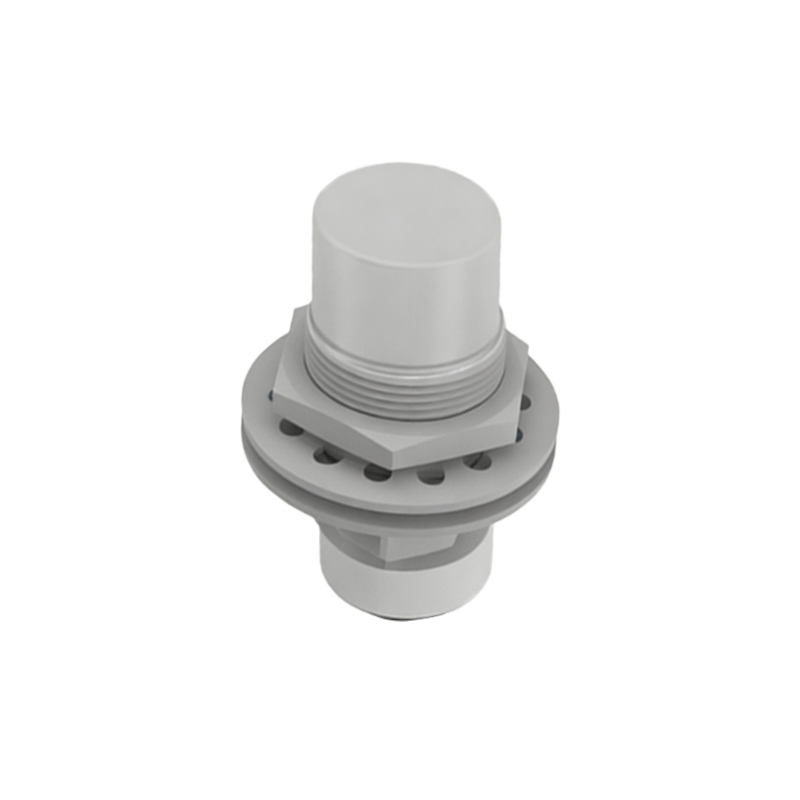
Proximity sensors have become indispensable tools in modern industrial automation, particularly for non-contact dimensional measurement tasks. These sensors, which detect the presence or absence of objects without physical contact, offer high precision, reliability, and durability in harsh environments. The fundamental principle behind their operation involves generating an electromagnetic field or beam and detecting changes caused by a target object entering this field. For dimensional measurement, this capability is harnessed to gauge sizes, positions, thicknesses, or diameters with remarkable accuracy.
One of the most common methods for dimensional measurement using proximity sensors is the single-point threshold detection technique. In this approach, a sensor is positioned at a known reference distance from a target surface. When an object passes through the sensor's detection range, the output signal transitions—either from high to low or vice versa—based on the preset threshold. By precisely calibrating the sensor's sensing distance and combining this with timing data from a conveyor or rotary encoder, systems can calculate dimensions such as length or width. For instance, on a production line, two sensors placed at specific intervals can measure the length of a metal component by noting the time difference between the sensor triggers as the part moves at a constant speed. This method is straightforward and cost-effective, suitable for applications like checking part presence or basic size verification.
For more complex measurements, such as diameter or thickness, differential measurement methods employing multiple sensors are often utilized. In a typical setup, two proximity sensors are aligned opposite each other, with the target object passing between them. Each sensor measures the distance to the nearest surface of the object. By subtracting these distances from the known total gap between the sensors, the system can compute the object's thickness or diameter in real-time. This technique is widely used in industries like metal fabrication or plastic extrusion, where continuous monitoring of material thickness is critical for quality control. Advanced systems may incorporate arrays of sensors to profile cross-sectional dimensions, enabling detection of irregularities like warping or ovality in cylindrical objects.
Another sophisticated approach involves analog output proximity sensors, which provide a continuous voltage or current signal proportional to the distance between the sensor and the target. Unlike digital sensors that simply switch on or off, analog sensors offer a linear output over their sensing range, allowing for precise distance measurement. By integrating these sensors with programmable logic controllers (PLCs) or data acquisition systems, operators can achieve high-resolution dimensional assessments. For example, in automotive manufacturing, analog inductive proximity sensors are used to measure piston rod diameters by monitoring signal variations as the rod rotates, identifying micron-level deviations that could affect engine performance. This method excels in applications requiring fine tolerances and real-time feedback for adaptive control.
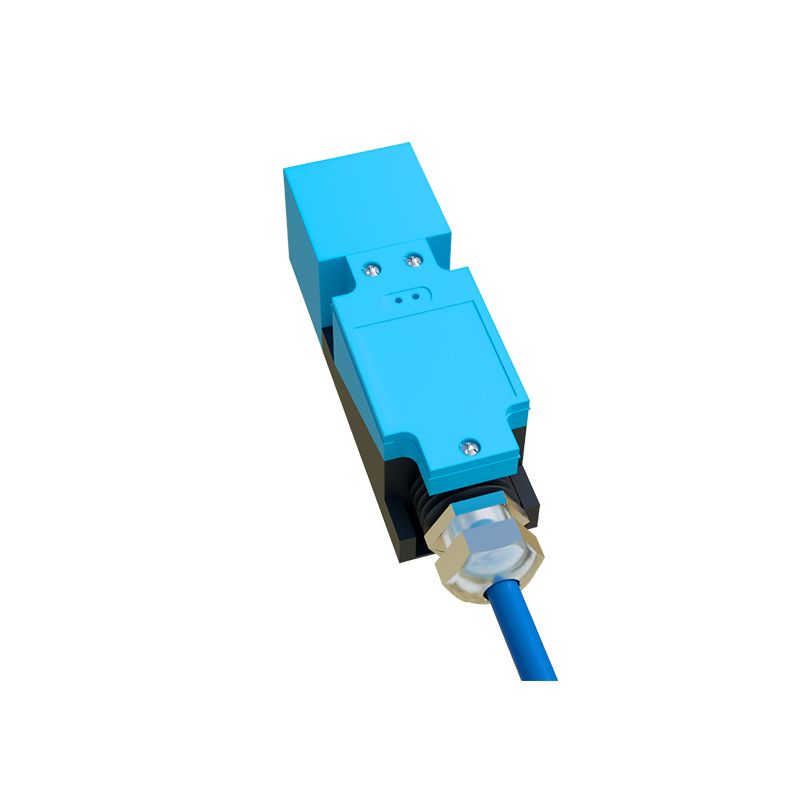
Environmental factors play a crucial role in the accuracy of proximity sensor measurements. Temperature fluctuations, humidity, and electromagnetic interference can affect sensor performance. Industrial-grade sensors are often designed with compensation circuits to mitigate these effects. Additionally, material properties of the target—such as conductivity for inductive sensors or color and reflectivity for optical sensors—must be considered during calibration. For instance, capacitive proximity sensors can measure non-metallic materials but may require adjustments for dielectric constants. Regular maintenance, including cleaning of sensor faces and verification against master samples, ensures long-term measurement consistency.
Emerging trends in proximity sensing for dimensional measurement include the integration of smart sensor technologies and IoT connectivity. Modern sensors equipped with IO-Link or Ethernet interfaces can transmit detailed diagnostic data, such as temperature readings or signal strength, to central monitoring systems. This enables predictive maintenance and remote calibration, reducing downtime. Furthermore, machine learning algorithms are being applied to sensor data to identify patterns and predict dimensional drifts before they lead to defects. In high-speed packaging lines, for example, networked proximity sensors can dynamically adjust cut-off lengths based on real-time material variations, enhancing efficiency and reducing waste.
In conclusion, proximity sensors offer versatile and robust solutions for dimensional measurement across diverse industrial sectors. From simple binary detection to complex analog profiling, these sensors enable non-contact, high-speed assessments that are essential for quality assurance and process optimization. As technology advances, their integration with digital systems promises even greater precision and adaptability, solidifying their role in the future of industrial automation. Engineers selecting proximity sensors for measurement tasks should carefully evaluate factors like sensing range, target material, environmental conditions, and required output type to ensure optimal performance.