In the realm of industrial automation and machine safety, proximity sensors play an indispensable role. Among the prominent manufacturers, E2S stands out for its robust and reliable sensor solutions. This article delves into the technology behind E2S proximity sensors, their key applications, and provides a practical guide for selection and implementation.
Proximity sensors are non-contact devices designed to detect the presence or absence of an object within a specific sensing range without physical contact. E2S offers a comprehensive range of these sensors, primarily utilizing two fundamental technologies: inductive and capacitive sensing.
Inductive proximity sensors are the workhorses for detecting metallic objects. An E2S inductive sensor generates an electromagnetic field from its active face. When a ferrous or non-ferrous metal target enters this field, it causes a change in the oscillation amplitude. The sensor's internal circuitry detects this change and switches its output state. These sensors are renowned for their high switching frequency, resistance to environmental contaminants like dust, oil, and coolant, and exceptional longevity. Typical E2S inductive sensors are ideal for applications such as part presence detection on conveyor lines, end-of-travel sensing on cylinders, and rotary speed monitoring.
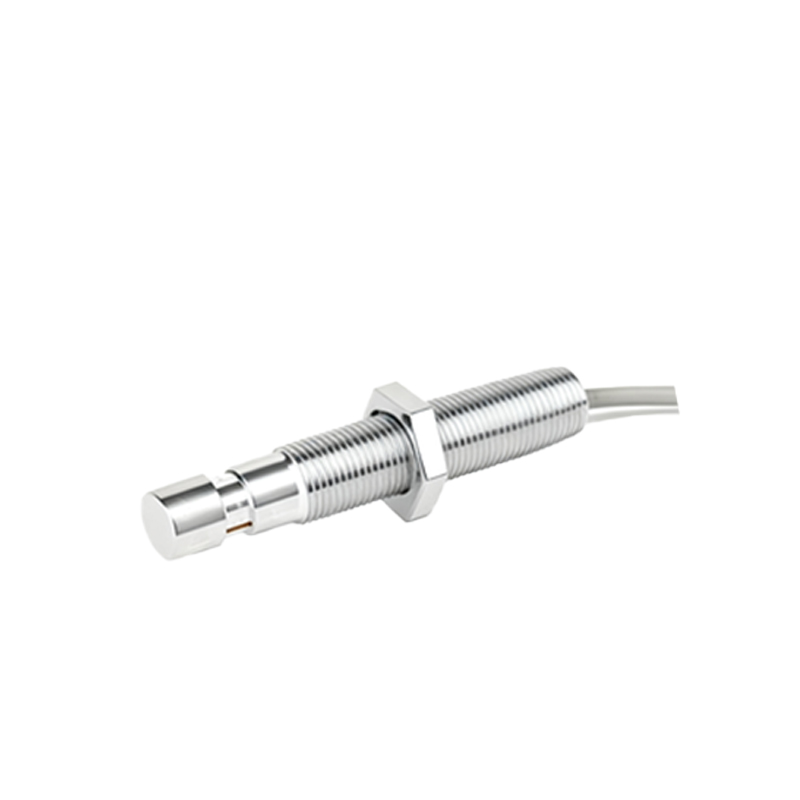
Capacitive proximity sensors, on the other hand, can detect both metallic and non-metallic materials, including liquids, plastics, wood, and glass. They operate by generating an electrostatic field. The presence of any material with a dielectric constant different from air alters the capacitance of the circuit, triggering the output. E2S capacitive sensors are particularly valuable in industries like food and beverage, packaging, and chemical processing, where they can monitor liquid levels in non-metallic tanks, detect filled containers, or sense the presence of paper or plastic films.
Key features that define E2S proximity sensor performance include sensing distance, housing material, output configuration, and environmental ratings. The nominal sensing distance (Sn) is a critical parameter, often specified for a standard target. Factors like target material, size, and shape can affect the actual usable range. E2S sensors come in various rugged housing materials like nickel-plated brass, stainless steel, or PBT plastic, chosen for specific environmental resistance. Outputs are typically either NPN (sinking) or PNP (sourcing) transistor types, compatible with standard programmable logic controllers (PLCs). Furthermore, many E2S models boast high Ingress Protection (IP) ratings (e.g., IP67, IP69K), making them suitable for washdown environments, and feature LED status indicators for easy diagnostics.
When selecting an E2S proximity sensor for an application, engineers must consider several factors. First, identify the target material to choose between inductive or capacitive technology. Second, determine the required sensing distance, adding a safety factor to account for mechanical tolerances and temperature variations. Third, match the electrical characteristics—operating voltage (commonly 10-30V DC) and output type (NPN/PNP)—to the control system. Fourth, assess the environmental conditions: exposure to temperature extremes, chemicals, moisture, or physical impact will dictate the required housing material and IP rating. Finally, consider the mechanical form factor—threaded barrel, rectangular, or slot style—to ensure proper mounting and alignment.
Installation and wiring are straightforward but require attention to detail. Ensure the sensor is mounted securely without misalignment. For inductive sensors, maintain a minimum distance from other metal objects and adjacent sensors to prevent mutual interference, a concept known as "shielding." Always follow the wiring diagram provided in the datasheet, connecting the brown wire (typically +V), blue wire (0V), and black wire (output signal) correctly. Proper grounding is essential for stable operation and noise immunity.
In conclusion, E2S proximity sensors offer a reliable and versatile solution for countless automation tasks. Their robust construction, advanced sensing technology, and wide range of models make them a preferred choice for engineers seeking to enhance machine efficiency, ensure safety, and achieve precise control. By understanding the underlying principles and carefully matching sensor specifications to application demands, optimal performance and system reliability are guaranteed.