In the demanding landscape of modern industrial automation, the reliability of sensing technology is paramount. Among the critical components, proximity sensors stand as the silent sentinels, detecting the presence or absence of objects without physical contact. However, their performance is often challenged by a hostile electrical environment rife with electromagnetic interference (EMI), radio frequency interference (RFI), cross-talk from adjacent sensors, and electrical noise from heavy machinery like variable frequency drives (VFDs) and welding equipment. A sensor that fails under such conditions can lead to costly production downtime, safety hazards, and product quality issues. This article delves into the defining characteristics and technologies that constitute a superior anti-interference proximity sensor, essential for robust and uninterrupted operations.
The core of a high-performance, interference-immune proximity sensor lies in its sophisticated internal design and signal processing. Traditional sensors can be easily fooled by external noise, leading to false triggering or failure to detect. Advanced models address this through a multi-faceted approach. Firstly, the use of shielded coils and Faraday cages in inductive sensors, or optically isolated components in photoelectric sensors, physically contains the sensing field and blocks external EMI/RFI ingress. The housing material, often a high-grade metal like stainless steel, also acts as a barrier against interference.
More critically, modern electronics incorporate advanced filtering circuits. These are not simple passive filters but active, adaptive digital signal processing (DSP) algorithms. They are programmed to recognize the specific frequency or signature of the intended target signal while dynamically filtering out known noise patterns common in industrial settings. For instance, a sensor can be tuned to ignore the characteristic switching frequency noise emitted by nearby VFDs. Furthermore, innovative modulation techniques are employed. Instead of emitting a constant signal, the sensor's oscillator operates at a specific, high frequency that is modulated. The detection circuit is then designed to only respond to this precise modulated signal, making it highly immune to random environmental noise or signals from other sensors operating at different frequencies.
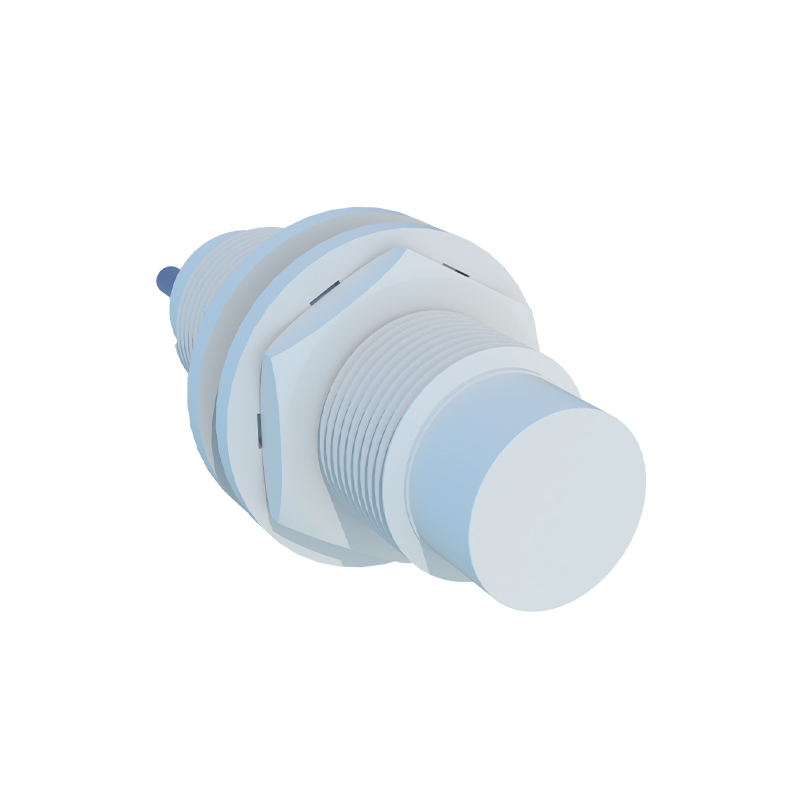
Another pivotal feature is robust electrical design for noise immunity. This includes high common-mode rejection ratio (CMRR) in differential input circuits, which cancels out noise that appears identically on both signal wires. Surge protection and voltage spike suppression circuits safeguard the sensor from transients on the power supply line. For sensors in networked systems, employing differential line drivers (e.g., RS-485) instead of single-ended voltage outputs significantly enhances noise immunity over long cable runs.
The benefits of deploying such interference-resistant proximity sensors are substantial. The most direct impact is a dramatic increase in system reliability and uptime. Machines operate predictably without mysterious stoppages caused by sensor ghosts. This leads to higher overall equipment effectiveness (OEE). In precision applications, such as robotic assembly or CNC machining, consistent and accurate detection ensures product quality and reduces scrap. Safety is also enhanced; for example, in guarding applications, a sensor must reliably detect a person or object without being disabled by nearby equipment noise.
Selecting the right sensor requires careful consideration of the application environment. Key specifications to evaluate include the stated noise immunity, often quantified in volts per meter (V/m) for RF immunity or specific test standards like IEC 60947-5-2. The sensor's operating frequency, if adjustable, should be set to avoid conflicts with other electronic devices. For areas with extreme noise, choosing a sensor with a dedicated shield wire or one designed for "noise immune" or "welding field" applications is crucial. Physical installation best practices, such as using shielded cables, grounding the shield properly at one end, and maintaining adequate separation from power cables and noise sources, complement the sensor's inherent capabilities.
In conclusion, as factories become smarter and more interconnected, the electromagnetic environment grows increasingly complex. A standard proximity sensor is no longer adequate for mission-critical automation tasks. Investing in advanced proximity sensors engineered with superior anti-interference technology is not merely an upgrade—it is a strategic necessity for ensuring resilience, precision, and continuous productivity in the face of industrial electrical chaos. These intelligent devices provide the dependable sensing foundation upon which reliable and efficient Industry 4.0 systems are built.