In the high-stakes world of modern manufacturing, precision is not just a goal; it is an absolute necessity. Laser cutting technology has revolutionized fabrication processes, offering unparalleled accuracy and speed. However, the true potential of a laser cutting system is only realized when paired with an equally sophisticated support system: the fixture and its integrated sensors. Laser cutting fixture sensors are the unsung heroes, the critical components that bridge the gap between raw material and finished part, ensuring every cut is executed with flawless precision.
At its core, a laser cutting fixture is a specialized workholding device designed to securely position and clamp a workpiece during the cutting process. The role of sensors integrated into these fixtures is to provide real-time feedback and control. This sensory feedback loop is fundamental for adaptive manufacturing, where variables like material thickness, surface irregularities, or thermal expansion must be dynamically accounted for. Without this intelligence, even the most powerful laser is merely a blind tool.
Several key types of sensors are deployed in advanced laser cutting fixtures, each serving a distinct purpose. Proximity sensors, often inductive or capacitive, are used for initial part presence detection. They confirm that a workpiece is correctly loaded into the fixture before the laser cycle begins, preventing costly dry runs or collisions. Displacement sensors, such as laser triangulation or eddy-current sensors, measure the exact distance between the sensor head and the workpiece surface. This is crucial for maintaining the optimal focal length of the cutting laser, which directly impacts cut quality and kerf width. A variation of even a few microns can lead to defocusing, resulting in poor edge quality or incomplete cuts.
Force and pressure sensors are embedded within clamping mechanisms. They monitor the clamping force applied to the workpiece, ensuring it is sufficient to prevent movement during high-speed cutting but not so excessive as to cause deformation or damage to delicate materials. This is particularly vital for processing thin-gauge metals or composite materials. Thermal sensors, including infrared pyrometers or thermocouples, can be strategically placed to monitor heat-affected zones (HAZ). By tracking temperature gradients, the system can make micro-adjustments to laser power or cutting speed to mitigate thermal distortion, a common challenge in precision metal cutting.

The integration of these sensors transforms a passive fixture into a smart, responsive system. The data collected is fed into the machine's CNC (Computer Numerical Control) system or a dedicated PLC (Programmable Logic Controller). This enables features like automatic tool offset compensation, real-time process adjustment, and predictive maintenance alerts. For instance, if a displacement sensor detects that a sheet of metal is slightly warped, the CNC can dynamically adjust the Z-axis of the laser head to follow the contour of the material, maintaining a constant focal distance throughout the entire cutting path. This capability is known as real-time height control or capacitive height sensing, and it is a standard requirement for cutting reflective or uneven materials.
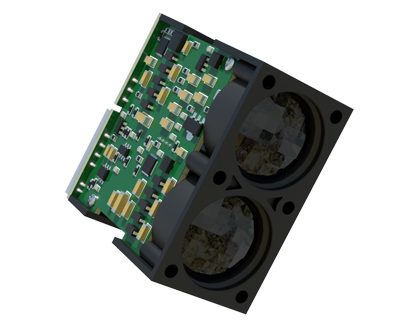
The benefits of employing sensor-equipped fixtures in laser cutting are substantial and multifaceted. The most immediate impact is a dramatic increase in first-pass yield and a reduction in scrap material. By ensuring perfect part positioning and focal distance from the outset, rework due to misalignment or poor cut quality is minimized. Furthermore, these systems enhance operational safety. Sensors can detect anomalies such as a slipped workpiece or an unexpected obstacle, triggering an immediate emergency stop to protect both the machine and the operator.
From an efficiency standpoint, smart fixtures reduce setup times. Traditional setups rely on manual measurement and trial cuts. With automated sensing, the machine can quickly probe the workpiece, determine its exact position and orientation, and calibrate itself accordingly. This facilitates the trend towards high-mix, low-volume production runs and lights-out manufacturing, where unmanned operation is required. The data logged by these sensors also provides invaluable traceability and process documentation, essential for quality control in regulated industries like aerospace and medical device manufacturing.
Looking ahead, the evolution of laser cutting fixture sensors is intertwined with Industry 4.0 and the Industrial Internet of Things (IIoT). Future systems will feature even greater sensor fusion, combining data from vision systems, 3D scanners, and acoustic emission sensors for a holistic view of the cutting process. Wireless sensor nodes will simplify fixture design and maintenance. The ultimate goal is the creation of fully autonomous, self-optimizing laser cutting cells that can adapt to new parts with minimal programming, driven by the continuous, intelligent feedback from their fixture sensors.
In conclusion, while the laser cutter itself captures the imagination with its beam of concentrated light, the sophistication of the workholding system dictates the reality of the output. Laser cutting fixture sensors are the critical enabling technology that delivers consistency, quality, and intelligence to the manufacturing floor. Their continued advancement is not merely an incremental improvement but a fundamental driver for the next leap in precision manufacturing, ensuring that laser cutting remains at the forefront of industrial fabrication technology.