In the rapidly evolving landscape of industrial automation and smart systems, proximity sensors stand as critical components for non-contact detection. Moving beyond basic inductive and capacitive principles, modern high-tech proximity sensors incorporate sophisticated structural designs that enhance performance, reliability, and application scope. This article delves into the advanced architectures defining the next generation of these essential devices.
The core of any proximity sensor is its sensing element and associated oscillator circuit. In advanced inductive sensors, the coil structure has undergone significant refinement. Multi-layer, precision-wound coils with ferrite cores are now standard, optimized for specific frequency ranges to improve sensitivity and noise immunity. The housing, often made from corrosion-resistant materials like PEEK (Polyether Ether Ketone) or high-grade stainless steel, is not merely a protective shell. It is engineered to shape the electromagnetic field, creating precise, repeatable sensing zones. This is crucial for applications requiring exact positioning, such as in robotic end-effectors or high-speed assembly lines.
A pivotal advancement is the integration of Application-Specific Integrated Circuits (ASICs). These miniaturized chips are embedded directly within the sensor housing, often positioned behind the sensing coil. The ASIC consolidates the oscillator, demodulator, signal amplifier, and switching logic into a single, robust package. This structural integration drastically reduces the component count, leading to enhanced durability against vibration and thermal stress. Furthermore, ASICs enable advanced functionalities like programmable sensing ranges, temperature compensation algorithms, and built-in diagnostics (e.g., IO-Link communication). The physical layout of the ASIC, its power lines, and its connection to the coil are meticulously designed to minimize electromagnetic interference, ensuring stable operation in electrically noisy environments.
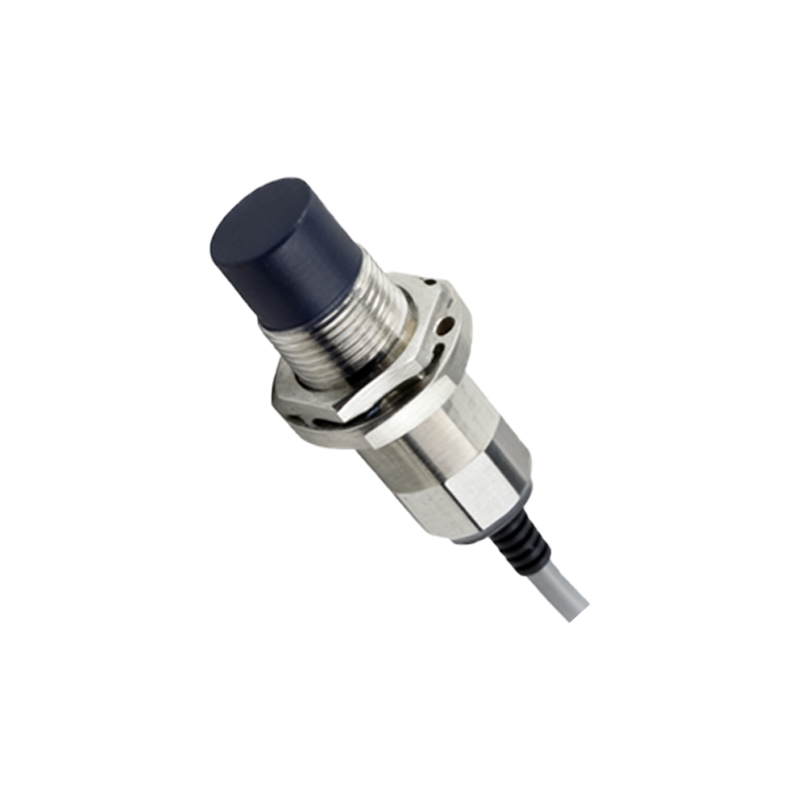
Another structural innovation is found in hybrid and specialized sensors. For instance, factor-1 cylindrical sensors, which provide uniform sensing characteristics regardless of mounting position, rely on a unique internal arrangement of multiple coils and shielding. Similarly, analog output sensors that provide a continuous distance signal (e.g., 4-20mA or 0-10V) incorporate precise linearization circuits within their compact form factor. The structural challenge is to isolate these sensitive analog pathways from the digital switching components to prevent signal degradation.
For harsh environments, the structural design focuses on resilience. Hermetically sealed units use laser-welded stainless steel bodies and glass-to-metal seals for the sensing face. This design prevents the ingress of oils, coolants, and metallic dust, which is vital for operation in CNC machining centers or foundries. The sensing face material itself, such as a specific grade of stainless steel or a ceramic compound, is chosen for its wear resistance and minimal effect on the sensor's electromagnetic field.
The trend towards miniaturization pushes structural engineering to its limits. Micro-proximity sensors, with housing diameters as small as M4 or M5, require innovative solutions for coil winding and component placement. Here, the use of high-frequency ASICs and specialized ferrite materials allows for a powerful sensing core in an extremely small volume. Thermal management becomes a critical design parameter, as the compact structure must dissipate heat effectively to maintain long-term stability.
In conclusion, the modern high-tech proximity sensor is a marvel of integrated electromechanical design. Its performance is no longer dictated by a single component but by the synergistic architecture of its sensing coil, advanced IC, rugged housing, and specialized seals. For electrical engineers, understanding these internal structures is key to selecting the right sensor for demanding applications, ensuring system reliability, and pushing the boundaries of what automated systems can achieve. The future will likely see further integration, with sensing, processing, and wireless communication modules converging into ever more intelligent and compact structural forms.