In the intricate world of industrial automation and control systems, proximity sensors stand as silent sentinels, detecting the presence or absence of objects without physical contact. While the internal electronics—the oscillator, Schmitt trigger, and output circuit—rightly receive significant attention, the external housing, particularly when crafted from copper alloys, plays an equally vital and multifaceted role. The choice of a copper housing is not merely an aesthetic or cost decision; it is a fundamental engineering consideration that profoundly impacts sensor performance, longevity, and application suitability.
The primary and most celebrated function of a copper housing in an inductive proximity sensor is its role as an active sensing element. Unlike sensors with inert stainless steel faces, a copper-faced sensor utilizes the housing itself in the oscillating circuit. When a metallic target enters the electromagnetic field generated by the sensor's coil, eddy currents are induced in the target, causing a change in the oscillation amplitude. The copper face, being part of this system, enhances the sensitivity and precision of this detection process. This design allows for the detection of all metals, including non-ferrous ones like aluminum, brass, and copper itself, with minimal variation in sensing distance—a feature known as "factor 1" capability. This is crucial in applications where the target material may vary or is non-ferrous.
Beyond its sensing capabilities, the copper housing serves as a formidable first line of defense against electromagnetic interference (EMI) and radio frequency interference (RFI). Industrial environments are rife with electromagnetic noise generated by variable frequency drives (VFDs), welding equipment, large motors, and communication systems. Copper, with its excellent electrical conductivity, acts as a highly effective Faraday cage. It shields the sensitive internal electronics from external EMI/RFI, preventing false triggering, signal drift, and potential damage. Conversely, it also contains the sensor's own electromagnetic emissions, preventing it from interfering with nearby sensitive equipment. This shielding integrity is paramount for ensuring stable, reliable operation in electrically noisy plants.
The physical and chemical properties of copper alloys contribute significantly to durability. While not as hard as some hardened stainless steels, copper alloys like brass (copper-zinc) or bronze (copper-tin) offer an excellent balance of machinability, corrosion resistance, and mechanical strength. They provide robust protection against physical impacts, vibrations, and abrasion commonly encountered on factory floors. Furthermore, copper alloys exhibit superior resistance to many corrosive agents, including certain chemicals, moisture, and atmospheric oxidation. The natural formation of a protective patina on copper further enhances its long-term corrosion resistance, ensuring the housing integrity is maintained in humid or mildly corrosive environments, which could otherwise compromise sensor seals and internals.
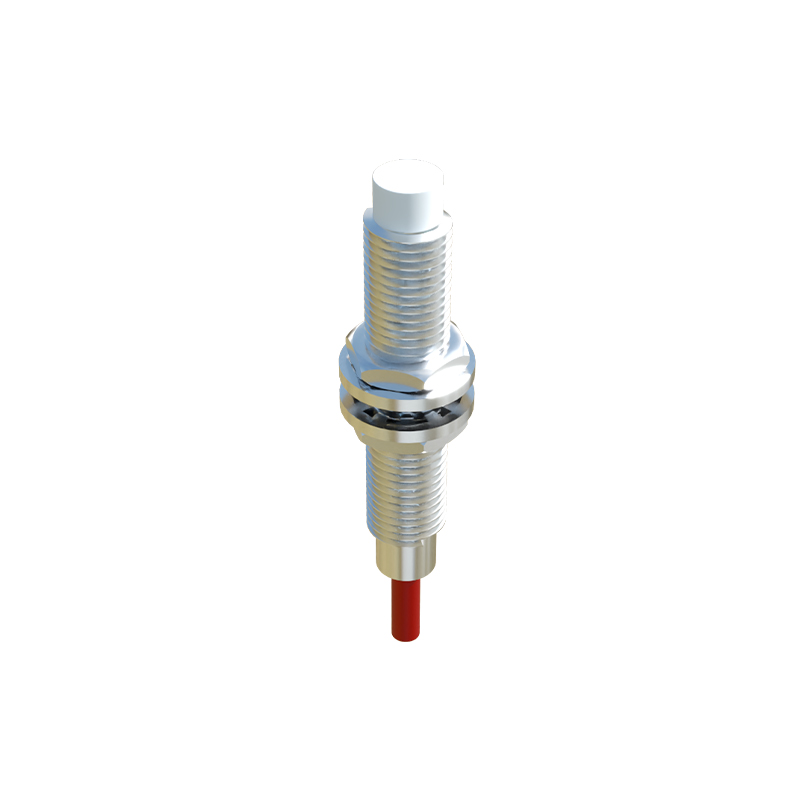
Thermal management is another critical, though often overlooked, function. Proximity sensors, especially those in high-duty-cycle or high-temperature ambient conditions, generate internal heat. Copper's exceptional thermal conductivity allows it to efficiently dissipate this heat away from the core electronic components. This passive cooling effect helps maintain the internal temperature within specified operational limits, preventing thermal drift of the sensing characteristics and significantly extending the lifespan of semiconductors and other heat-sensitive parts. Effective thermal dissipation directly correlates to enhanced mean time between failures (MTBF).
From a manufacturing and application standpoint, copper alloys offer distinct advantages. Their superior malleability and machinability allow for the production of complex housing geometries with tight tolerances, facilitating better sealing integration for high IP (Ingress Protection) ratings like IP67 and IP69K. The material also allows for effective plating or coating if a specific surface property or color coding is required for the application, without sacrificing its core benefits.
In conclusion, the copper housing in a proximity sensor is a masterclass in multifunctional design. It transcends its basic role as an enclosure to become an integral component of the sensing system, a guardian against electromagnetic chaos, a durable shield against environmental assaults, and a silent thermal manager. Specifying a proximity sensor with a copper housing is a strategic decision for engineers seeking reliable, accurate, and durable performance, particularly in challenging industrial settings involving mixed metals, significant electrical noise, or demanding environmental conditions. It represents an investment in operational stability and reduced total cost of ownership through minimized downtime and maintenance.