In the realm of industrial automation and machinery, the precise detection of objects, materials, or personnel is paramount for both operational efficiency and workplace safety. Proximity sensors serve as the critical eyes of a system, providing non-contact detection capabilities. However, their integration into complex control systems necessitates a robust and flexible interface. This is where the proximity sensor insertion module becomes an indispensable component, bridging the gap between sensor signals and programmable logic controllers (PLCs) or other industrial control systems.
A proximity sensor insertion module is essentially an interface device designed to connect one or more proximity sensors to a central control unit. Unlike direct wiring, which can be cumbersome and prone to errors in large-scale installations, these modules offer a standardized, modular approach. They are typically mounted on a DIN rail within a control cabinet and feature pluggable terminals or connectors. The primary function of the module is to receive the discrete signal from the proximity sensor (indicating the presence or absence of a target) and condition this signal into a format that the PLC can reliably interpret. This often involves converting the sensor's output into a clean, low-voltage logic signal, providing electrical isolation to protect the PLC from voltage spikes or noise, and sometimes offering diagnostic capabilities.
The advantages of utilizing insertion modules are multifaceted. First and foremost is simplified wiring and maintenance. Technicians can connect sensors to the module using standardized cables or connectors, drastically reducing installation time and minimizing wiring errors. The modular design allows for easy replacement; if a channel fails, only the specific module or a single channel needs to be swapped out, rather than troubleshooting extensive hardwired circuits. This significantly reduces machine downtime. Secondly, these modules enhance system reliability. They provide optical or galvanic isolation between the field devices (sensors) and the sensitive control electronics. This isolation barrier protects the PLC from electrical transients, ground loops, and electromagnetic interference (EMI) prevalent in industrial environments, leading to more stable and fault-resistant operations.
From a diagnostic perspective, advanced insertion modules feature LED indicators for each channel, displaying the status of the connected sensor (e.g., power, signal activity, fault). Some intelligent modules can even communicate detailed diagnostic data back to the PLC, such as short-circuit warnings, wire-break detection, or overload conditions, enabling predictive maintenance and quicker troubleshooting. Furthermore, they offer flexibility in sensor compatibility. A single module type can often support various sensor technologies (inductive, capacitive, ultrasonic) and output types (PNP or NPN sourcing/sinking), simplifying inventory management and system design.
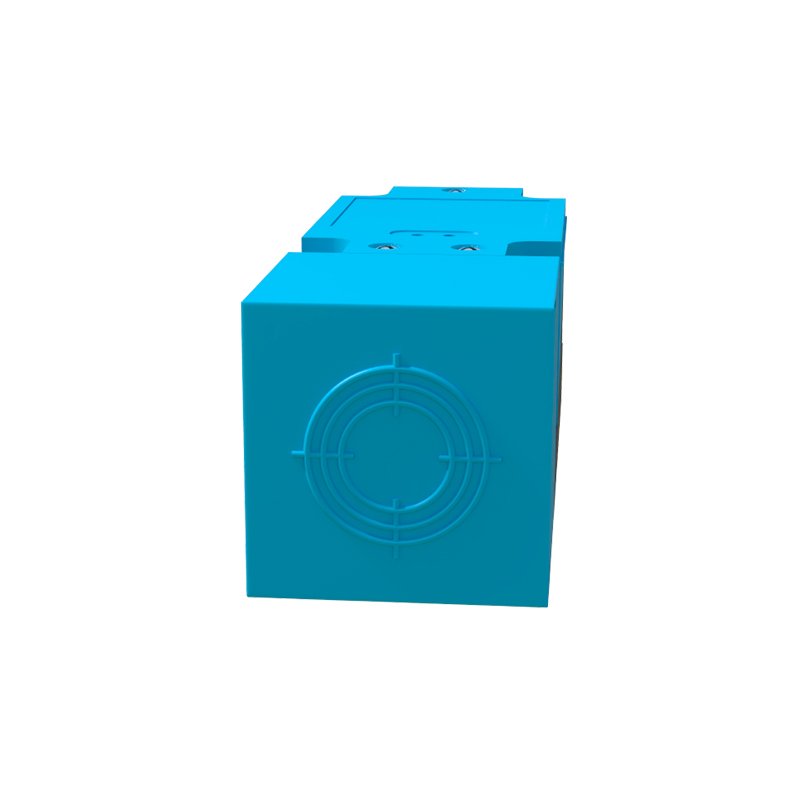
The application of proximity sensor insertion modules spans virtually all automated industries. In automotive manufacturing, they are used to confirm the position of robotic arms, detect parts on conveyor belts, and ensure safety guards are in place. In packaging machinery, modules interface with sensors that detect product presence for filling, capping, and labeling operations. In material handling, they monitor the position of pallets, boxes, and automated guided vehicles (AGVs). By providing a reliable and manageable interface, these modules ensure that the critical data from proximity sensors is accurately conveyed to the control system, enabling precise timing, sequencing, and safety interlocking.
When selecting a proximity sensor insertion module, several key specifications must be considered. These include the number of channels, the input voltage range compatible with the sensors, the type of output to the PLC (usually a digital signal over a bus system like PROFIBUS DP, PROFINET, EtherNet/IP, or DeviceNet, or discrete DC outputs), the degree of electrical isolation, and the module's environmental ratings for temperature, humidity, and vibration. Choosing a module from a manufacturer that aligns with the existing control system architecture is crucial for seamless integration.
In conclusion, the proximity sensor insertion module is far more than a simple connection point. It is a vital system component that standardizes connectivity, fortifies reliability, and unlocks advanced diagnostic functions. By adopting these modules, engineers and system integrators can build more resilient, maintainable, and intelligent automated systems. As Industry 4.0 drives the demand for greater data transparency and system interoperability, the role of these interface modules will only grow in importance, ensuring that the fundamental data provided by proximity sensors is effectively harnessed for smarter, safer, and more efficient industrial operations.