In modern industrial automation and control systems, the ability to detect objects reliably over extended distances without physical contact is paramount. Long-distance shielded proximity sensors have emerged as indispensable components, offering precise, non-contact detection capabilities in challenging environments. These sensors utilize electromagnetic fields, typically inductive or capacitive principles, to sense the presence of metallic or non-metallic targets from distances that can exceed several tens of millimeters, a significant advancement over standard proximity switches. The key distinction lies in their shielded design, which incorporates a metal ring or ferrite core around the sensing face. This shielding effectively concentrates the electromagnetic field axially in front of the sensor, minimizing radial dispersion. The result is a highly focused detection zone that reduces interference from adjacent metallic objects, side-mounted fixtures, or surrounding machinery. This characteristic is crucial in densely packed industrial setups, such as automated assembly lines, robotic cells, or material handling systems, where sensors must ignore non-target metals to prevent false triggering.
The operational principle of inductive long-distance shielded sensors involves generating a high-frequency oscillating electromagnetic field from a coil within the sensor. When a conductive target, usually metal, enters this field, eddy currents are induced on the target's surface. These currents absorb energy from the oscillator, causing a change in amplitude or frequency. The sensor's electronics detect this change and switch the output state accordingly. The shielding ensures that this reaction is primarily sensitive to objects directly in front, enhancing stability and repeatability. For capacitive versions, the principle relies on changes in capacitance when any material, metallic or non-metallic, alters the dielectric constant near the sensing face. Shielding here helps define the active sensing area and guards against environmental influences like humidity or dust accumulation.
The roles and benefits of these sensors in industrial applications are multifaceted. First, they enable precise positioning and counting of objects on conveyors, even when the targets are small or irregularly shaped. In packaging machinery, for instance, they accurately detect the presence of products at critical points, ensuring proper filling, sealing, or labeling sequences. Second, their long sensing range allows for flexible installation, providing engineers with more mounting options without compromising detection reliability. Sensors can be recessed or mounted flush with metal surfaces, thanks to the shielding that prevents interference from the mounting material itself. This feature simplifies mechanical design and reduces installation costs.
Third, in safety-critical applications, such as monitoring guard doors on machinery or ensuring proper workpiece clamping in presses, these sensors offer fail-safe detection. Their immunity to ambient conditions—like oil, coolant, dust, and vibration—ensures consistent operation in harsh industrial environments, from automotive manufacturing plants to food processing facilities. The shielded design is particularly valuable in metal-rich settings, such as CNC machining centers, where multiple sensors operate near each other and near large metal structures. Without shielding, cross-talk and false signals would be frequent, leading to production errors or downtime.
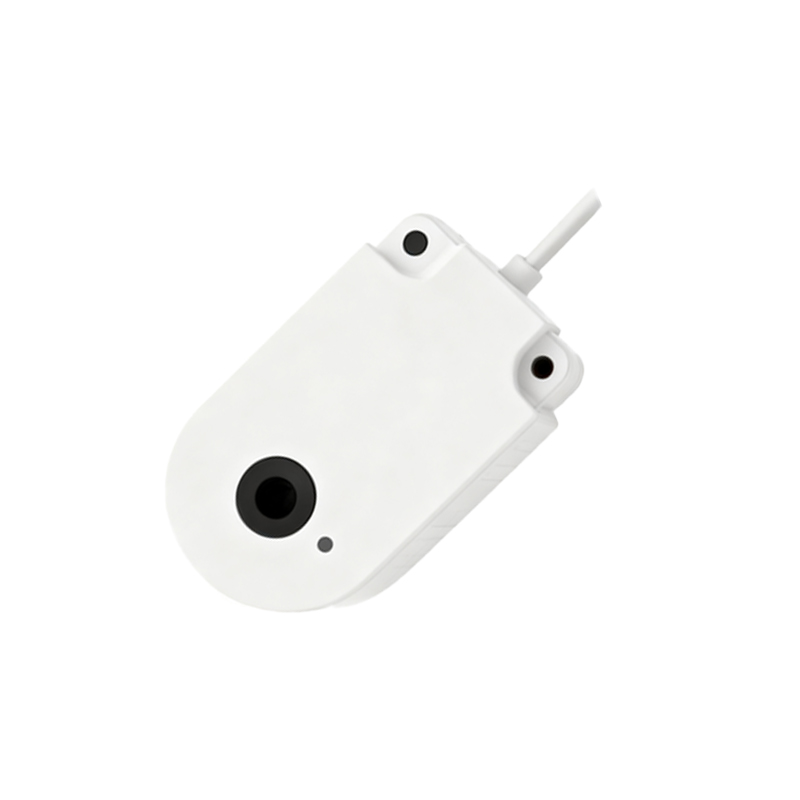
Moreover, advanced models integrate diagnostic capabilities, providing real-time feedback on sensor health, temperature, or signal strength via IO-Link or other industrial communication protocols. This facilitates predictive maintenance, allowing technicians to address potential issues before they cause line stoppages. The robustness of these sensors, often rated IP67 or higher, ensures longevity even under extreme conditions, contributing to overall system uptime and productivity.
When selecting a long-distance shielded proximity sensor, engineers must consider factors such as the required sensing distance, target material and size, environmental conditions, electrical output type (e.g., PNP/NPN, analog, or digital), and supply voltage. Calibration and alignment are also critical; even with shielding, proper orientation relative to the target path maximizes performance. Regular testing with the actual target material under operating conditions is recommended to verify reliability.
In conclusion, long-distance shielded proximity sensors are vital enablers of industrial automation, providing accurate, interference-resistant detection that enhances efficiency, safety, and flexibility. Their design addresses the core challenges of modern manufacturing—speed, precision, and resilience—making them a cornerstone in the evolution toward smarter, more connected factories. As industries continue to adopt Industry 4.0 principles, the integration of these sensors with data analytics and control systems will further amplify their value, driving innovations in process optimization and machine intelligence.