In the realm of industrial automation, where space constraints and precision are paramount, the M6 right-angle proximity sensor stands as a critical component for reliable non-contact detection. These compact sensors, typically housed in a threaded M6 body with a 90-degree bent sensing face, are engineered to solve a common challenge: installing a sensor in tight corners or against machine frames where a standard axial sensor simply cannot fit. Their unique form factor allows the wiring to exit parallel to the mounting surface, optimizing cabinet and machinery layout while ensuring the sensing face is positioned correctly towards the target.
The operational principle of an M6 right-angle inductive proximity sensor is based on electromagnetic induction. The sensor generates a high-frequency oscillating electromagnetic field from its front sensing face. When a metallic target (such as steel, aluminum, brass, or copper) enters this field, eddy currents are induced on the target's surface. This causes a change in the oscillation amplitude within the sensor's coil, which is detected by the internal circuitry. The circuit then triggers a solid-state switch, changing the output state. This entire process occurs without any physical contact, eliminating mechanical wear and enabling high-speed operation and long service life. Key specifications include sensing distance, which for a standard M6 inductive sensor is often 1.5mm or 2mm, with a repeat accuracy in the micron range. Factors like target material, size, and temperature can influence the effective sensing range, making correct selection vital.
Output configurations are predominantly PNP (sourcing) or NPN (sinking), aligning with different PLC and control system standards. Many models feature a built-in LED status indicator, providing immediate visual confirmation of power and detection state, which is invaluable for troubleshooting. The housing is typically constructed from nickel-plated brass or stainless steel, offering robust resistance to industrial contaminants like coolants, oils, and metal chips. Many sensors comply with IP67 or higher ingress protection ratings, making them suitable for harsh washdown environments.
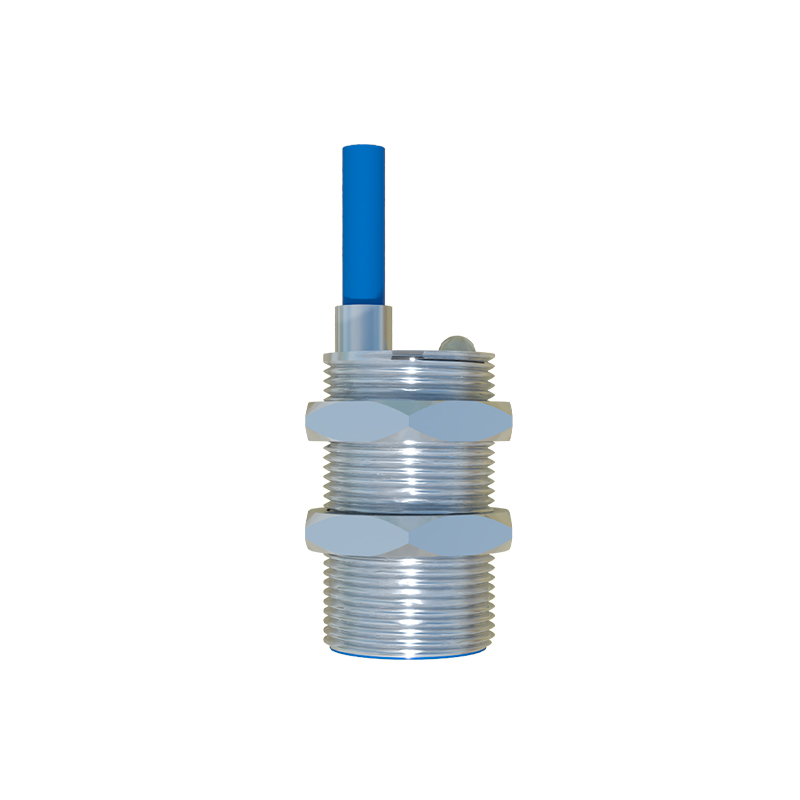
The application spectrum for M6 right-angle sensors is vast. They are indispensable in compact robotic grippers for detecting the presence or absence of a picked part. In assembly machines, they verify the precise position of components on indexing tables or within intricate jigs. Within the confines of a CNC machining center, they serve as tool presence detectors or door interlock sensors. Their small size is also advantageous in packaging machinery, semiconductor handling equipment, and small-part counting systems. A crucial installation consideration is maintaining the proper mounting distance and ensuring the target approaches the sensor within its specified sensing axis. Flush-mountable models allow installation in metal without loss of sensing range, while non-flush types offer slightly longer ranges but require a non-metallic surround.
When selecting an M6 right-angle proximity sensor, engineers must evaluate several parameters beyond just the form factor. The sensing distance must be appropriate for the application's mechanical tolerances. The target material dictates whether a standard inductive sensor suffices or if a variant for non-ferrous metals is needed. For detecting non-metallic objects, a capacitive M6 right-angle sensor would be the appropriate choice. Electrical characteristics like supply voltage (commonly 10-30V DC), output current, and switching frequency must match the control system. Environmental factors such as ambient temperature, potential for chemical exposure, and required ingress protection level are equally decisive.
In summary, the M6 right-angle proximity sensor is a masterpiece of miniaturized engineering, delivering high reliability in space-critical applications. Its design addresses real-world installation challenges, enabling smarter, denser machine designs. By understanding its operating principles, specifications, and correct application guidelines, automation engineers and maintenance technicians can leverage these sensors to enhance machine performance, improve reliability, and reduce downtime. As industries push for greater miniaturization and efficiency, the role of such precision components will only become more central to advanced manufacturing and automation solutions.