In the landscape of industrial automation and precision control, resistive proximity vision sensors represent a critical yet often understated technology. Unlike their more commonly discussed counterparts such as inductive or capacitive sensors, resistive proximity sensors operate on a fundamentally different principle, offering unique advantages in specific applications. This article delves into the operational mechanics, key characteristics, and practical implementations of these sensors within modern industrial frameworks.
At its core, a resistive proximity vision sensor functions by detecting the presence or absence of an object through changes in electrical resistance. The sensor typically consists of a probe or sensing element that, when in close proximity to a target object, experiences a measurable alteration in its resistive properties. This change is often due to physical contact or extremely close near-contact, which modifies the current flow within the sensor circuit. The vision component, when integrated, refers to the system's ability to interpret this resistive data spatially, often correlating it with positional or dimensional information of the target. This combination allows for not just detection but also basic visual assessment—such as verifying part placement, orientation, or surface contact integrity—without the complexity and cost of a full machine vision system.
The operational principle hinges on the concept of contact resistance or near-contact impedance. When the sensor's electrode approaches a conductive target, the effective resistance in the circuit decreases, triggering a detection signal. For non-conductive materials, specialized versions may rely on pressure-sensitive resistive films or strain gauges that respond to minute physical forces. The "vision" aspect is achieved by arraying multiple sensing points or using a matrix configuration, enabling the sensor to create a low-resolution topographic map of the target surface. This data is processed to extract features like edges, gaps, or thickness variations, making it invaluable in assembly verification, alignment checks, and quality control processes where traditional optical vision might be hindered by environmental factors like dust, oil, or variable lighting.
Key advantages of resistive proximity vision sensors include remarkable robustness and reliability in harsh environments. They are inherently less susceptible to interference from ambient light, airborne particulates, or electromagnetic noise compared to optical or inductive sensors. Their simplicity often translates to lower maintenance requirements and higher durability, especially in applications involving physical interaction, such as robotic end-effector guidance or conveyor belt monitoring. Furthermore, they provide consistent performance with conductive and certain non-conductive materials, offering versatility in mixed-material production lines.
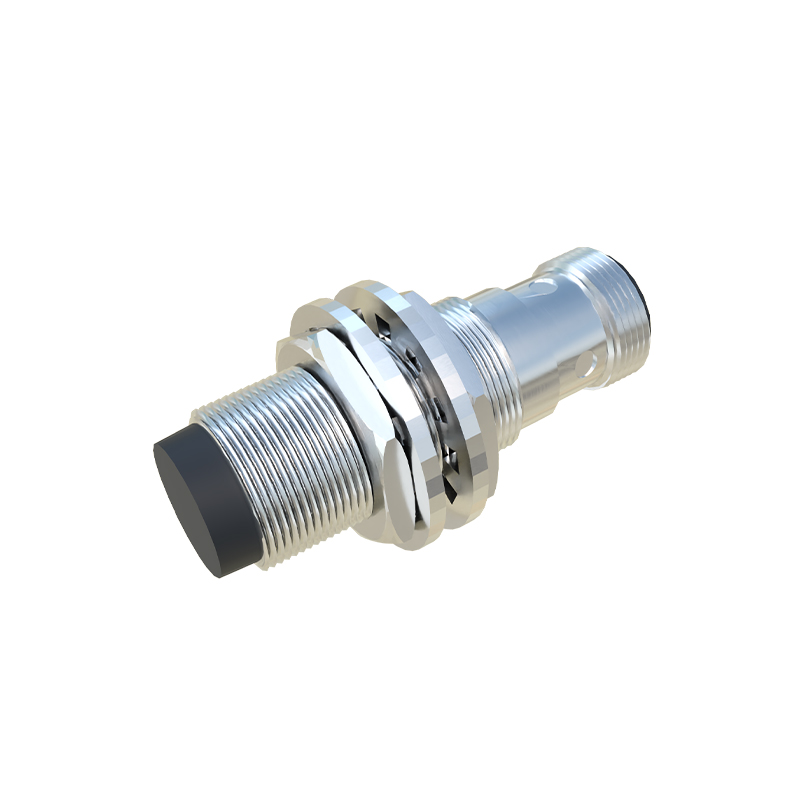
However, these sensors are not without limitations. The necessity for close or direct contact can be a constraint in high-speed or non-contact required processes. Wear and tear on the sensing surface over time may necessitate periodic calibration or replacement. Additionally, the resolution and detail provided are generally lower than those of advanced camera-based vision systems, making them unsuitable for high-precision inspection tasks like microscopic defect detection.
In practical industrial applications, resistive proximity vision sensors find their niche in several key areas. In automotive manufacturing, they are deployed to verify the proper seating of electrical connectors or the presence of gaskets before final assembly. In electronics production, they assist in ensuring components like chips or batteries are correctly placed on circuit boards, detecting even slight misalignments that could lead to failures. Packaging machinery utilizes them to confirm flap closure on boxes or the correct stacking of items, where physical contact is acceptable and environmental conditions are challenging. Another growing application is in collaborative robotics, where these sensors provide safe, tactile-like feedback for human-robot interaction, allowing robots to adjust grip or pressure based on resistive feedback.
The integration of these sensors into Industry 4.0 and IoT frameworks is enhancing their utility. By connecting resistive proximity vision sensors to networked control systems, real-time data on machine status and product quality can be streamed for predictive maintenance and process optimization. Advanced signal processing algorithms now allow for more sophisticated interpretation of resistive patterns, enabling anomaly detection and adaptive control.
Looking forward, developments in materials science, such as flexible and printable resistive sensors, are expanding the possibilities for conformal and custom-shaped sensing surfaces. Research into combining resistive sensing with other modalities, like capacitive touch or thermal imaging, promises next-generation multi-functional sensors capable of richer environmental perception.
For engineers and system integrators, selecting the appropriate resistive proximity vision sensor requires careful consideration of factors including target material conductivity, required sensing distance (often in the sub-millimeter to few millimeters range), environmental conditions, and the necessary level of "vision" detail. Proper installation and shielding are crucial to minimize false triggers from vibration or electrical noise.
In conclusion, resistive proximity vision sensors serve as a robust, cost-effective solution for tactile-based presence detection and basic visual tasks in industrial settings. Their unique operating principle fills a specific gap in the sensor ecosystem, providing reliability where other technologies may falter. As automation demands grow more complex, the continued evolution of this technology will undoubtedly cement its role in building smarter, more resilient manufacturing systems.