In the realm of industrial automation and electronic systems, proximity sensors play a pivotal role in enabling non-contact detection of objects. A common question among engineers and technicians is: "How many times per second can a proximity sensor sense?" This frequency, often referred to as the response frequency or switching frequency, is a critical parameter that determines the sensor's suitability for high-speed applications. Typically, proximity sensors can detect objects at rates ranging from 10 Hz to 5,000 Hz (or 10 to 5,000 times per second), depending on the sensor type, design, and operating conditions.
The response frequency of a proximity sensor is primarily influenced by its sensing principle. Inductive proximity sensors, which detect metallic objects, generally offer frequencies between 100 Hz and 2,000 Hz. For instance, a standard inductive sensor might operate at 500 Hz, meaning it can sense up to 500 times per second. Capacitive proximity sensors, used for non-metallic materials, often have lower frequencies, typically around 10 Hz to 100 Hz, due to their reliance on changes in capacitance that require more time to stabilize. Ultrasonic and photoelectric sensors can achieve higher frequencies, with some advanced models reaching up to 5,000 Hz or more, making them ideal for rapid detection in packaging, assembly lines, or robotics.
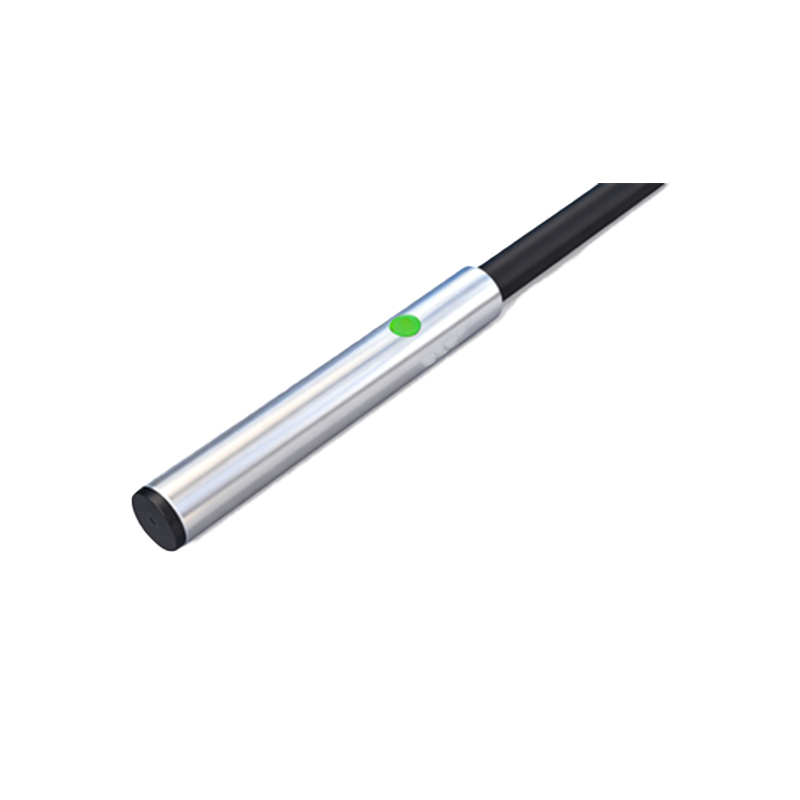
Several factors affect the actual sensing rate. The sensor's internal circuitry, including the oscillator and output stage, introduces delays. For example, the response time—comprising the approach time (when an object enters the sensing range) and release time (when it exits)—can limit the frequency. A sensor with a response time of 1 ms (millisecond) can theoretically sense up to 1,000 times per second (1,000 Hz), but in practice, this may be reduced due to environmental interferences like temperature fluctuations, electromagnetic noise, or target material properties. Additionally, the sensing distance plays a role; shorter distances often allow for higher frequencies because the signal path is minimized, reducing latency.
In high-speed applications, such as counting small parts on a conveyor belt or monitoring fast-moving machinery, selecting a sensor with an appropriate response frequency is crucial. Engineers must consider the object's speed and size. For example, if an object passes by at 10 meters per second and the sensor has a sensing range of 5 mm, a higher frequency sensor (e.g., 2,000 Hz) ensures reliable detection without misses. Manufacturers often specify the maximum switching frequency in datasheets, which should be tested under real-world conditions to account for variables like load resistance or supply voltage.
To optimize performance, regular maintenance and calibration are recommended. Dust, moisture, or mechanical wear can degrade a sensor's response over time. Using shielded cables and proper grounding can mitigate noise, preserving the sensing rate. Innovations in sensor technology, such as digital signal processing and miniaturized components, continue to push the limits, enabling faster and more accurate detection.
In summary, the number of times a proximity sensor can sense per second varies widely based on its type and application. While standard models may operate at a few hundred Hz, specialized sensors can exceed 5,000 Hz. Understanding these parameters helps in designing efficient and reliable automated systems, ensuring seamless operation in industries from automotive manufacturing to consumer electronics. Always refer to manufacturer guidelines and conduct practical tests to achieve optimal results.