In the realm of industrial automation, proximity switches stand as a cornerstone technology, enabling precise, non-contact detection of objects. These devices, fundamentally a type of sensor, operate by emitting an electromagnetic field or a beam of electromagnetic radiation and monitoring for changes in the field or return signal. The primary advantage lies in their ability to detect the presence, absence, or position of a target without any physical contact, thereby eliminating mechanical wear and tear and ensuring high reliability and longevity in demanding environments.
There are several principal types of proximity switches, each suited to specific applications based on the target material and environmental conditions. Inductive proximity sensors are the most common, designed to detect metallic objects. They generate an oscillating electromagnetic field from a coil. When a ferrous or non-ferrous metal object enters this field, it induces eddy currents, causing a change in the oscillation amplitude. This change is detected by the sensor's circuitry, which then triggers a solid-state output switch. These sensors are invaluable in metalworking, automotive assembly, and machine tooling for tasks like counting, positioning, and end-of-travel detection.
Capacitive proximity sensors, on the other hand, can detect both metallic and non-metallic materials, including liquids, powders, plastics, and wood. They function by generating an electrostatic field. The presence of any material with a dielectric constant different from air alters the capacitance of the circuit, triggering the output. This makes them ideal for level detection in tanks (e.g., monitoring liquid or granular materials), presence detection of non-metallic objects on conveyor belts, and even as touch-sensitive controls.
For longer-range detection or for sensing non-metallic objects where capacitive sensors may not be suitable, photoelectric sensors are often employed. While sometimes categorized separately, they function as a proximity switch variant. They consist of a light emitter (usually an LED) and a receiver. The presence of an object is detected either by the interruption of the light beam (through-beam), reflection from the target (retro-reflective), or reflection from the object itself (diffuse reflective). They excel in packaging, material handling, and food & beverage industries.
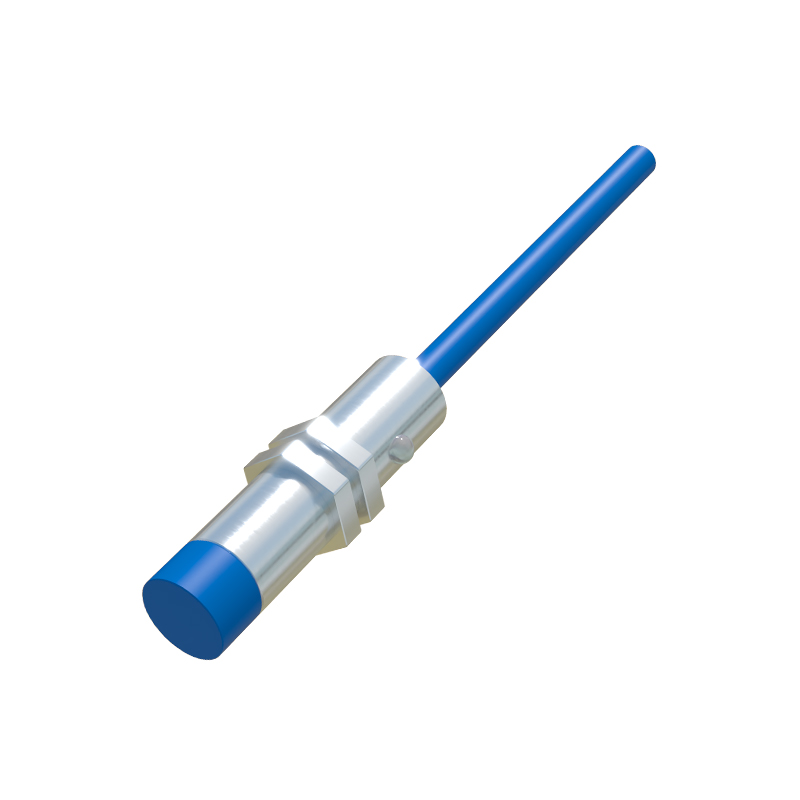
Ultrasonic proximity sensors use sound waves beyond human hearing. They measure the time taken for an emitted ultrasonic pulse to bounce back from a target. This time-of-flight principle allows them to detect objects of virtually any material, shape, or color, and they are particularly effective in harsh environments with dust, smoke, or vapors where optical methods might fail. Common applications include distance measurement, pallet detection, and liquid level sensing in transparent containers.
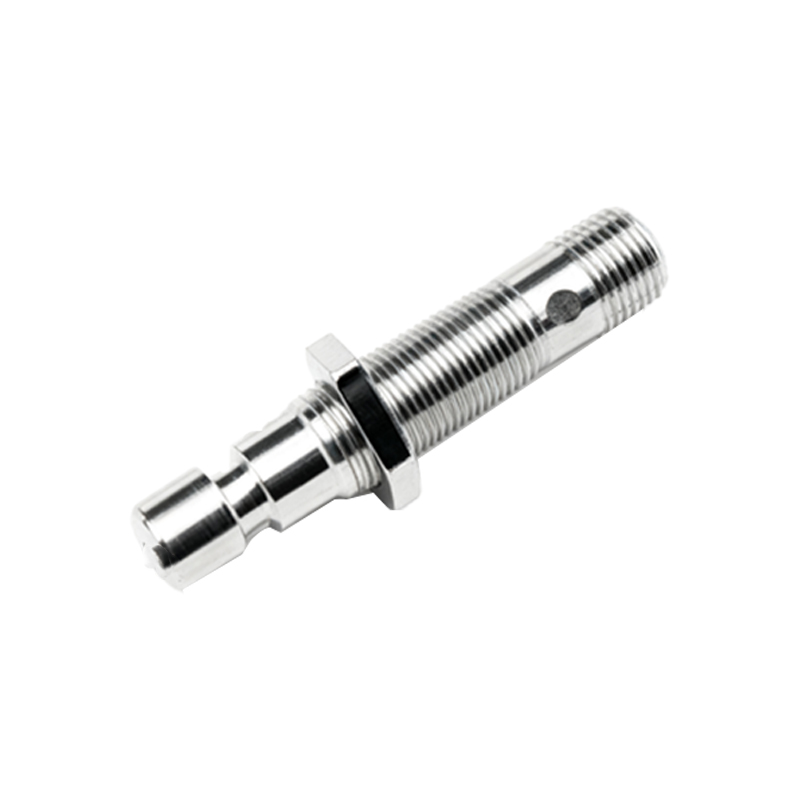
The selection of a proximity switch hinges on several critical factors beyond just the target material. Engineers must consider the sensing distance (rated and practical), the operating frequency (how quickly it can detect objects in succession), environmental factors like temperature, humidity, and potential chemical exposure, electrical requirements (DC vs. AC, NPN vs. PNP output), and housing design (cylindrical, rectangular, flush-mounted, or non-flush). A flush-mounted inductive sensor, for instance, can be embedded in metal without false triggering, while a non-flush version offers a longer sensing range.
Output configuration is another vital aspect. Most modern proximity switches provide solid-state switching outputs (transistors), which are fast, have a virtually infinite mechanical life, and are resistant to shock and vibration. The output can be normally open (NO) or normally closed (NC), and in a DC system, the sinking (NPN) or sourcing (PNP) configuration must match the controller's input module.
Installation and wiring require careful attention. Proper shielding, grounding, and maintaining adequate clearance between multiple sensors are essential to prevent mutual interference. For inductive sensors, the sensing face should be kept free of metallic debris buildup, which can reduce the effective sensing distance.
In summary, proximity switches are indispensable sensors in automation, providing robust, contactless detection that enhances system efficiency, safety, and durability. Their diverse technology portfolio—inductive, capacitive, photoelectric, and ultrasonic—ensures a solution for nearly every material detection challenge. A thorough understanding of their operating principles, specifications, and application nuances is crucial for engineers to design reliable and optimized control systems, from simple presence detection to complex robotic guidance and precision assembly lines. Their silent, unseen operation continues to be a fundamental driver of modern manufacturing and process automation.