In the realm of industrial automation and process control, precise, reliable, and non-contact sensing is paramount. Among the various technologies available, ultrasonic sensors have carved out a significant niche, particularly in challenging environments where optical or inductive sensors may falter. The 90GT series of ultrasonic proximity sensors represents a sophisticated solution within this category, engineered to deliver robust performance across a diverse range of applications. This article delves into the operational principles, key features, and typical use cases of the 90GT ultrasonic sensor, providing a detailed overview for engineers and system integrators.
At its core, the 90GT ultrasonic sensor operates on the time-of-flight principle. The sensor emits high-frequency sound waves, typically in the range of 200 kHz to 400 kHz, which are inaudible to the human ear. These sound pulses travel through the air until they encounter a target object. Upon striking the object, the waves are reflected back towards the sensor. An integrated piezoelectric receiver then detects this echo. The sensor's internal electronics meticulously calculate the time elapsed between the emission of the pulse and the reception of its echo. Since the speed of sound in air is a known constant (approximately 343 meters per second at 20°C), this time measurement is directly and accurately converted into a distance value. This fundamental principle allows the 90GT to function effectively as both a proximity switch (detecting presence/absence within a set window) and a precise distance-measuring device.
The design and construction of the 90GT series are tailored for industrial durability. Housed in a rugged, often cylindrical metal or high-grade polymer casing, these sensors are built to withstand harsh conditions. Many models feature an IP67 or higher ingress protection rating, making them resistant to dust and temporary immersion in water. This robustness is crucial for applications in manufacturing plants, material handling systems, and outdoor environments where exposure to moisture, oil, vibrations, and temperature fluctuations is common. The sensing face is typically made from a specialized material that aids in acoustic transmission and protects the sensitive transducer elements.
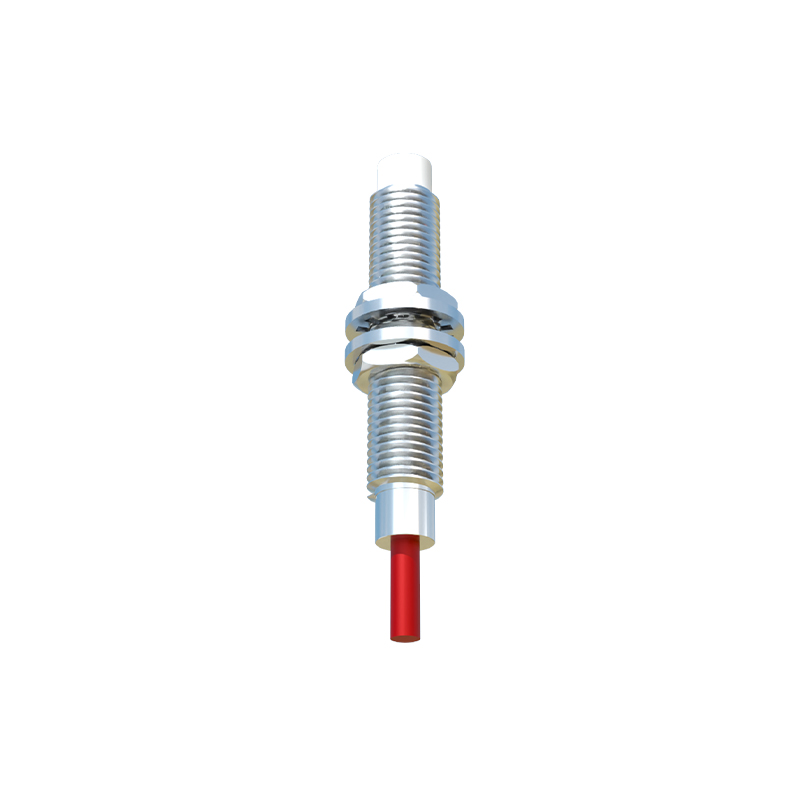
One of the most significant advantages of the 90GT ultrasonic sensor is its material independence. Unlike inductive sensors, which only detect metals, or capacitive sensors, which are sensitive to material density and moisture content, ultrasonic waves are reflected by virtually any solid or liquid surface. This makes the 90GT exceptionally versatile, capable of detecting objects made of plastic, glass, wood, cardboard, and metal with equal reliability. Furthermore, the sensor's performance is largely unaffected by the color, transparency, or surface finish of the target. It can reliably detect clear glass bottles, black rubber tires, or reflective metal sheets without requiring adjustment.
Another critical feature is its effective range and beam characteristics. The 90GT series typically offers sensing ranges from a few centimeters up to several meters, depending on the specific model. The ultrasonic beam is conical in shape, which allows for some tolerance in object alignment and can be beneficial for detecting objects with uneven surfaces. However, this beam angle also requires careful installation to avoid false triggers from background objects or the sides of containers. Advanced models incorporate background suppression or teach-in functionality, allowing users to program the exact sensing window, thereby ignoring echoes from fixed structures beyond the area of interest.
Typical applications for the 90GT ultrasonic proximity sensor are widespread. In packaging and bottling lines, they are used for level detection in silos and tanks, bottle presence verification, and stack height control. In automotive assembly, they monitor part presence on conveyor belts and robot positioning. In logistics and warehousing, they facilitate palletizing, box dimensioning, and vehicle detection for automated guided vehicles (AGVs). Their ability to function in dusty or foggy environments where photoelectric sensors might fail makes them ideal for woodworking, mining, and agricultural machinery.
When integrating a 90GT sensor, several practical considerations must be addressed. Temperature variations affect the speed of sound; therefore, many high-performance models include temperature compensation circuits to maintain accuracy. The sensing surface must be kept clean, as an accumulation of dirt, ice, or thick condensation can attenuate the sound waves. Acoustic noise from high-pressure air vents or other ultrasonic sources can potentially cause interference, though modern sensors use coded pulse sequences to enhance noise immunity. Output options are versatile, including analog (4-20 mA, 0-10 V), discrete (PNP/NPN), and IO-Link for smart sensor communication and parameterization.
In conclusion, the 90GT ultrasonic proximity sensor stands as a highly adaptable and resilient component in the industrial sensor toolkit. Its non-contact operation, material-agnostic detection, and environmental robustness solve complex sensing challenges that other technologies cannot. By understanding its operating principle, key specifications, and application best practices, engineers can leverage the 90GT to enhance system reliability, increase automation flexibility, and reduce maintenance demands across