In the rapidly evolving landscape of medical and consumer electronics, the non-contact infrared thermometer, commonly known as a forehead or temporal thermometer, has become a ubiquitous tool for preliminary health screening. At the heart of its user-friendly and accurate operation lies a critical, yet often overlooked, component: the proximity sensor. This article delves into the technical intricacies, operational principles, and design considerations of proximity sensors as applied in these devices, underscoring their indispensable role in ensuring measurement reliability and user safety.
Fundamentally, a proximity sensor in an infrared thermometer is an optoelectronic device designed to detect the presence of an object—specifically, the human forehead or temporal artery—within a precise, predefined distance range. Its primary function is not to measure temperature but to guarantee that the temperature measurement is taken from the correct distance and orientation. This is paramount because the accuracy of an infrared thermometer is highly dependent on the distance-to-spot ratio (D:S ratio). A measurement taken too far or too close will capture infrared radiation from an area larger or smaller than the device's optical field of view, leading to significant errors in the reported body temperature.
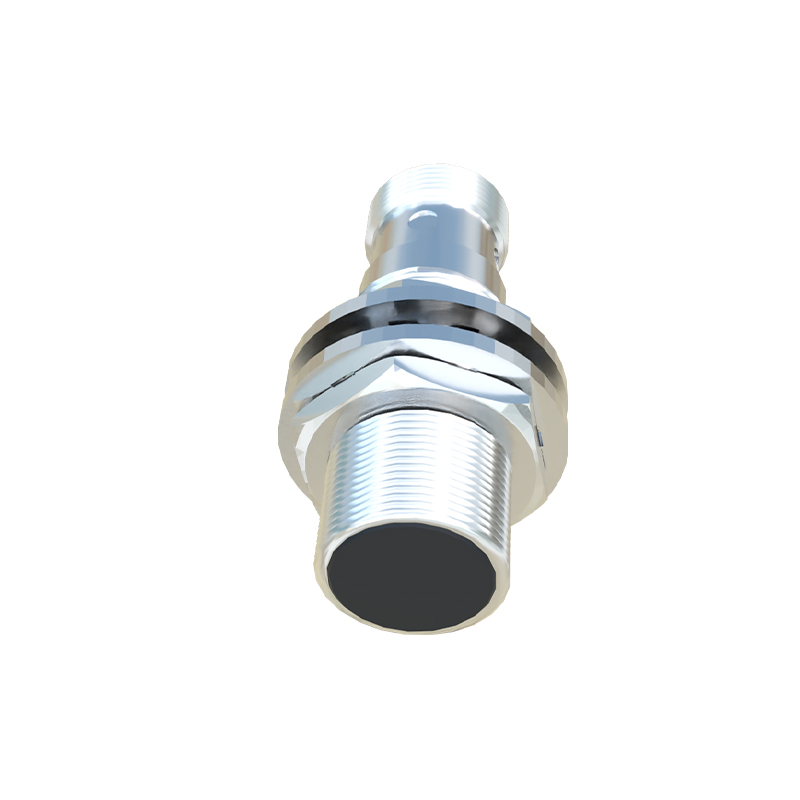
The most commonly employed technology for this application is the infrared (IR) proximity sensor, often utilizing a paired infrared LED and a photodiode. The operational principle is straightforward yet elegant. The IR LED emits a beam of infrared light, which is invisible to the human eye. When this beam strikes a nearby object, such as the forehead, a fraction of the light is reflected back towards the device. The adjacent photodiode, tuned to the same wavelength, detects this reflected signal. The intensity of the reflected light is inversely proportional to the square of the distance. The device's microcontroller unit (MCU) processes this signal intensity, correlates it with a calibrated distance threshold, and determines if the thermometer is held at the optimal range, typically between 3 to 5 centimeters for forehead models.
This simple detection triggers a crucial sequence of events. Upon confirming the correct proximity, the sensor sends a signal to the MCU, which then activates the main infrared thermopile sensor to capture the thermal radiation from the target. Concurrently, it often prompts a visual (e.g., an LED indicator turning green) or auditory cue (a beep) to inform the user to hold steady. Without a valid proximity signal, the thermopile remains inactive, or the device displays an error, preventing erroneous readings from being taken in mid-air or from an incorrect surface.
The integration of a proximity sensor addresses several critical design challenges. First, it enhances measurement consistency, eliminating user variability in holding distance. Second, it conserves battery life by ensuring the high-power consumption thermopile circuit is only activated when necessary. Third, and most importantly, it contributes to hygienic, non-contact operation by providing a clear indication of when the device is correctly positioned, minimizing the temptation to touch the sensor head to the skin.
From an engineering perspective, selecting and calibrating the proximity sensor involves careful consideration. Factors such as the reflectivity of human skin (which can vary), ambient light immunity, response time, power consumption, and miniaturization are key. Modern sensors often incorporate digital output and sophisticated algorithms to filter out noise from environmental IR sources, such as incandescent lights or sunlight. Furthermore, the sensor must be mechanically and optically integrated to align its detection field with the thermopile's field of view, ensuring the distance check corresponds precisely to the area being measured for temperature.
In advanced designs, sensor fusion techniques are emerging. Some systems combine a simple IR proximity sensor with a low-resolution thermal array or a time-of-flight (ToF) sensor to not only detect presence but also to assist in pinpointing the ideal measurement location on the forehead, further automating the process and enhancing accuracy.
In conclusion, the proximity sensor is the silent gatekeeper of the non-contact thermometer. It is a masterpiece of practical engineering that transforms a sensitive optical instrument into a robust, foolproof, and mass-consumer device. By enforcing the correct measurement protocol, it ensures the clinical validity of readings, builds user trust, and upholds the public health utility of these essential tools. As technology progresses, the intelligence embedded within these small sensors will continue to grow, paving the way for even more autonomous and reliable personal health monitoring devices.