In the rapidly evolving landscape of industrial automation, laser vision sensors have emerged as a pivotal technology, driving advancements in precision, efficiency, and reliability. These sensors, which combine laser-based illumination with advanced imaging capabilities, offer a multitude of benefits that traditional sensing methods often struggle to match. This article delves into the core advantages of laser vision sensors, highlighting their transformative impact across various industrial applications.
One of the most significant advantages of laser vision sensors is their exceptional accuracy and resolution. By projecting a laser line or pattern onto a target object, these sensors capture detailed height and contour information with micron-level precision. This enables precise measurement of dimensions, detection of minute defects, and accurate positioning of components. Unlike conventional 2D vision systems, laser vision sensors provide three-dimensional data, allowing for comprehensive inspection even on complex surfaces with varying reflectivity or color. This capability is crucial in industries such as automotive manufacturing, where weld seam inspection and panel gap measurement demand uncompromising accuracy.

Another key benefit is the high speed and real-time processing capability of laser vision sensors. Modern sensors are equipped with powerful processors and optimized algorithms that enable rapid data acquisition and analysis. This allows for in-line inspection at production line speeds, minimizing bottlenecks and ensuring continuous operation. For instance, in electronics assembly, laser vision sensors can quickly verify component placement and solder joint quality, preventing defects from progressing downstream. The ability to process thousands of measurements per second makes these sensors ideal for high-volume manufacturing environments where throughput is paramount.
Laser vision sensors also excel in robustness and adaptability to challenging conditions. The coherent nature of laser light reduces interference from ambient lighting, making these sensors less susceptible to variations in factory environments. They can reliably operate in settings with dust, smoke, or vibrations, where other optical sensors might fail. Additionally, many laser vision sensors feature adjustable parameters such as exposure time and laser intensity, allowing customization for different materials and surface finishes. This flexibility ensures consistent performance across diverse applications, from inspecting shiny metal parts to textured plastics.
The integration of laser vision sensors with Industry 4.0 frameworks further amplifies their advantages. These sensors can seamlessly connect to networked systems, providing valuable data for predictive maintenance, quality analytics, and process optimization. By feeding real-time measurement data into centralized platforms, manufacturers gain insights into production trends, enabling proactive adjustments and reducing downtime. This connectivity supports the shift towards smart factories, where data-driven decision-making enhances overall operational efficiency.
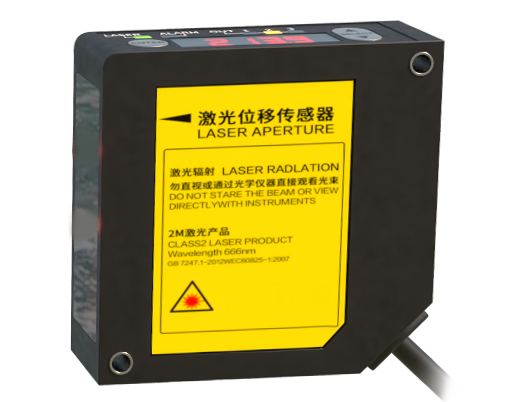
Cost-effectiveness over the long term is another compelling advantage. While the initial investment in laser vision sensors may be higher than simpler sensors, their ability to perform multiple inspection tasks simultaneously—such as measuring, counting, and defect detection—reduces the need for additional equipment. This consolidation lowers installation and maintenance costs. Moreover, by improving quality control and reducing scrap rates, these sensors contribute to significant savings in material and rework expenses. Their durability and low maintenance requirements further ensure a favorable return on investment.
In summary, laser vision sensors offer a powerful combination of precision, speed, durability, and connectivity that addresses the growing demands of modern industrial automation. From enhancing quality assurance to enabling agile manufacturing processes, these sensors are indispensable tools for industries striving to maintain competitiveness in a dynamic market. As technology continues to advance, the role of laser vision sensors is poised to expand, unlocking new possibilities for innovation and efficiency.