In the realm of industrial automation and control systems, proximity sensor transducers are indispensable components. They serve as the critical interface between a physical state—the presence or absence of an object—and an electrical signal that a control system can process. Fundamentally, a proximity sensor transducer converts the detection of a target into a usable electrical output without any physical contact. This article delves into the core types, operating principles, key applications, and essential selection factors for these versatile devices.
The term "transducer" is key here; it refers to a device that converts energy from one form to another. In proximity sensors, this involves transforming the energy associated with the detection of a metallic or non-metallic object into a standardized electrical signal. The most prevalent output signals are discrete DC voltages (like PNP or NPN transistor outputs for on/off control) or analog signals (like 4-20 mA or 0-10 VDC for distance-proportional data). Some advanced models also provide digital communication via IO-Link or similar protocols.
Several primary technologies underpin proximity sensor transducers, each with distinct advantages and ideal use cases.
Inductive Proximity Sensors: These are the workhorses for detecting metallic objects. They operate on the principle of electromagnetic induction. The sensor generates an oscillating electromagnetic field. When a conductive metal target enters this field, it induces eddy currents within the target, which dampens the oscillator's amplitude. This change is detected and triggers a switch in the output circuit. Inductive sensors are robust, resistant to environmental contaminants like dust and oil, and are excellent for short-range detection of ferrous and non-ferrous metals.
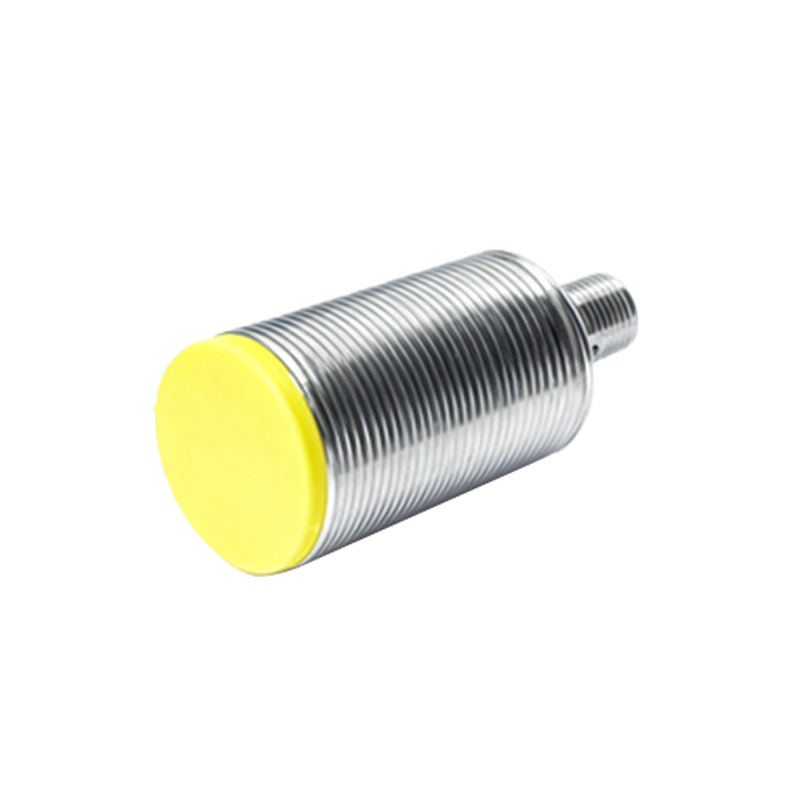
Capacitive Proximity Sensors: These sensors can detect both metallic and non-metallic materials, including liquids, plastics, glass, and wood. They function by generating an electrostatic field. Any object with a dielectric constant different from air entering this field alters the sensor's capacitance. This change is measured and converted into an output signal. Capacitive sensors are ideal for level detection in tanks (for liquids or granular solids), material handling, and detecting non-metallic objects on conveyor lines.
Photoelectric Sensors: While often categorized separately, their core function is transductive. They use light beams (visible, infrared, or laser) to detect objects. The transducer element converts the presence or absence of a received light beam into an electrical signal. Types include through-beam (separate emitter and receiver), retro-reflective (bounces light off a reflector), and diffuse (reflects light off the target itself). Photoelectric sensors offer the longest sensing ranges and can detect virtually any material, but they can be affected by ambient light and dirty environments.
Ultrasonic Proximity Sensors: These transducers emit high-frequency sound waves and evaluate the echo received back. The time delay between the emitted pulse and the received echo is transduced into a distance measurement or a simple presence/absence signal. They are superb for detecting objects regardless of color, transparency, or material, and are widely used for liquid level sensing, distance measurement, and detecting clear films or glass.
Selecting the right proximity sensor transducer requires careful consideration of several parameters:
1. Target Material: Is it metal, plastic, liquid, or something else? This dictates the choice between inductive, capacitive, photoelectric, or ultrasonic types.
2. Sensing Range: The required distance at which the sensor must reliably detect the object. Always consider a safety margin.
3. Output Type: Does the application require a simple switch (discrete DC), a proportional analog signal, or networked digital data?
4. Environmental Conditions: Factors such as temperature extremes, presence of washdown chemicals, dust, vibration, and electrical noise can severely impact sensor performance and longevity. Look for appropriate IP (Ingress Protection) and NEMA ratings.
5. Mounting and Size: Physical constraints in the machinery often determine the sensor's housing style (e.g., cylindrical, rectangular) and thread size.
In application, these transducers are ubiquitous. Inductive sensors count metal parts on an assembly line. Capacitive sensors control the fill level of a resin hopper. Photoelectric sensors ensure packaging is correctly positioned before sealing. Ultrasonic sensors maintain precise distance in robotic palletizing. Their reliability and speed are foundational to modern manufacturing efficiency, predictive maintenance, and overall equipment effectiveness (OEE).
In conclusion, proximity sensor transducers are more than simple switches. They are sophisticated measurement and conversion devices that form the sensory nervous system of automated equipment. Understanding their different transduction principles—electromagnetic, electrostatic, optical, and acoustic—is crucial for engineers and technicians to specify, implement, and maintain systems that are both robust and precisely tuned to their operational tasks. The correct selection ensures not only functionality but also enhances system safety, reduces downtime,