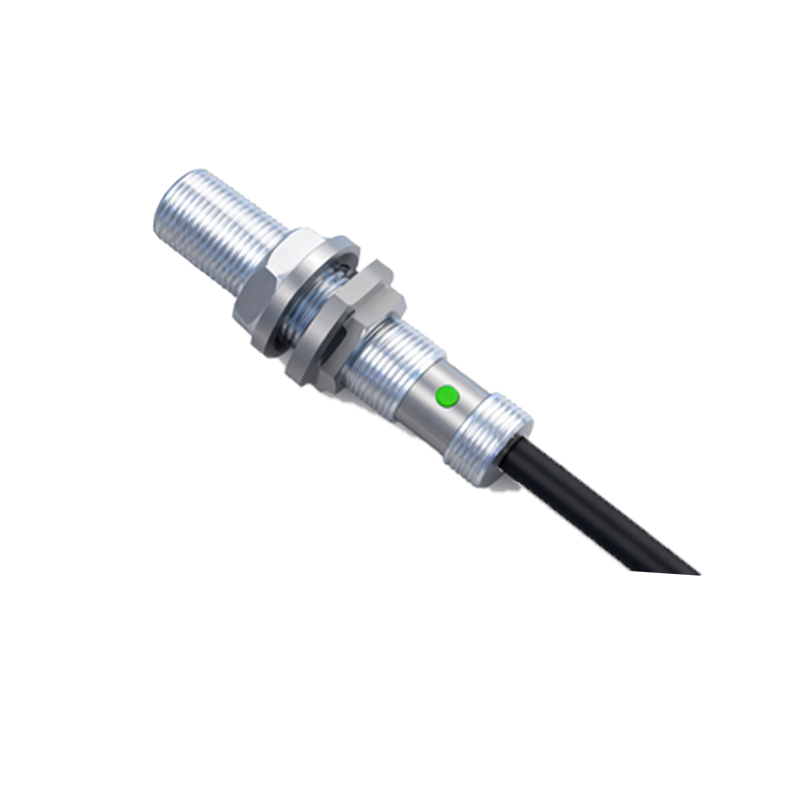
Proximity sensors operating at 24V DC are fundamental components in industrial automation, offering non-contact detection of metallic and sometimes non-metallic objects. Their robust construction and reliable performance make them indispensable in machinery, conveyor systems, and safety applications. Understanding their internal structure is key to proper selection, installation, and troubleshooting.
The core structural elements of a typical 24V DC inductive proximity sensor, the most common type for metal detection, can be broken down into several key components. First is the sensing face or active surface, usually made of a durable, wear-resistant material like PTFE or nickel-plated brass. This face protects the internal coil. Behind this face lies the heart of the sensor: the oscillator coil. This coil generates a high-frequency electromagnetic field that extends from the sensing face. When a metallic target enters this field, eddy currents are induced on the target's surface. These eddy currents draw energy from the oscillator, causing its amplitude to decrease.
This change in oscillation is detected by the evaluation circuit, another critical structural block. This solid-state circuit, often built on a printed circuit board (PCB) housed within the sensor body, processes the signal from the oscillator. When the amplitude drop reaches a predetermined threshold (corresponding to the rated sensing distance), the evaluation circuit triggers a change in the output state. The output stage is then activated. For a 3-wire DC sensor, this typically involves switching a transistor (PNP or NPN). The switching element is integrated into the circuit and connects to the output wire (brown/black for PNP sourcing, blue/black for NPN sinking). The entire internal assembly—coil, core, and PCB—is potted with epoxy resin within a robust housing. This potting provides exceptional resistance to vibration, shock, and protects against moisture, dust, and chemicals, ensuring longevity in harsh industrial environments.
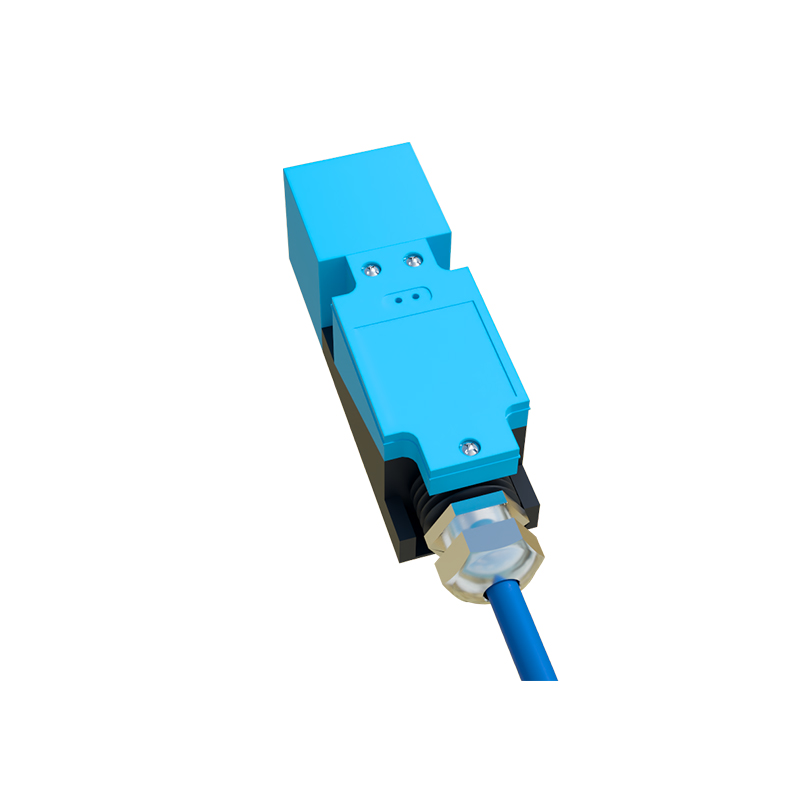
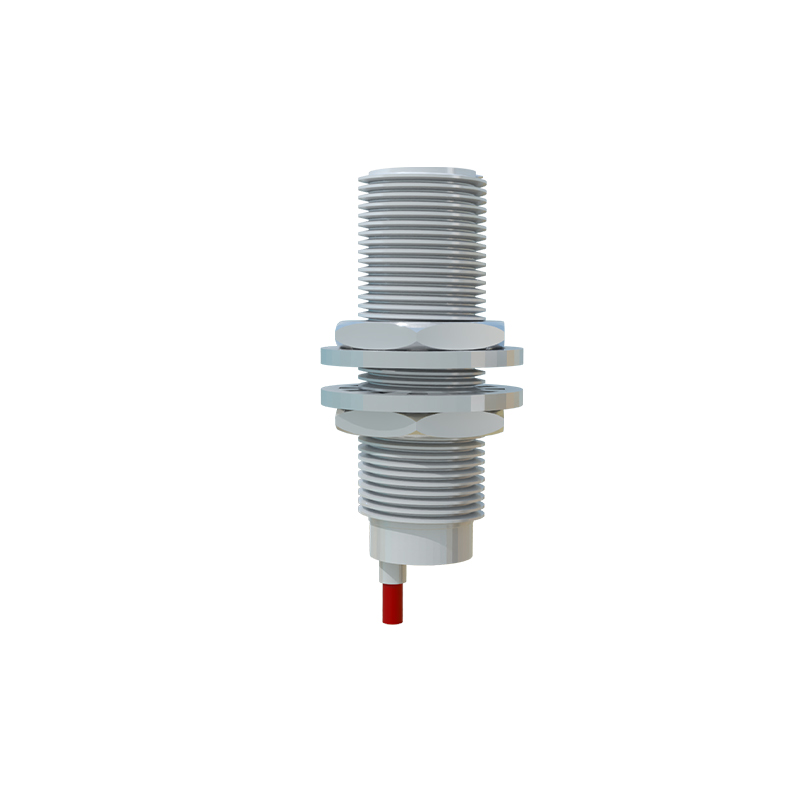
The housing itself is a major structural component, commonly cylindrical (e.g., M8, M12, M18, M30 threaded barrels) or rectangular. Materials range from stainless steel for extreme environments to nickel-plated brass or engineered plastics like PBT for general use. Integral to the housing is the connection area. Many sensors feature a quick-disconnect (QD) connector system, while others have fixed cable exits with strain relief. The cable or connector pins are wired to the internal PCB, providing the 24V DC supply (typically to brown and blue wires), the output signal, and sometimes a diagnostic LED indicator wire. A status LED, often embedded in the housing, provides visual feedback for power and output activation.
The working principle is elegantly simple, enabled by this precise structure. With 24V DC applied, the oscillator generates its field. The sensor remains in a "normal" state (output OFF or ON, depending on normally-open/closed configuration). A metal target entering the sensing zone dampens the oscillation. The evaluation circuit detects this, commands the output transistor to switch, and changes the state of the output circuit, sending a signal to the PLC or controller. The target does not need to touch the face; operation is wear-free. Key performance parameters defined by the structure include the sensing distance, hysteresis (the difference between the switch-on and switch-off points for stability), and switching frequency.
Different sensing technologies modify the core structure. While inductive sensors have a coil, capacitive 24V sensors have a capacitor plate behind the face and can detect non-metals by sensing changes in dielectric constant. Magnetic (reed or Hall-effect) sensors house a magnetically sensitive element. However, the overarching architectural principles—a sensing element, evaluation electronics, potted assembly, and rugged housing—remain consistent. Proper mounting, considering factors like embeddable vs. non-embeddable designs and metal-free zones around the sensing face, is crucial as it directly interacts with the sensor's electromagnetic field structure.
In summary, the 24V proximity sensor is a marvel of miniaturized industrial engineering. Its structure is meticulously designed to translate a physical phenomenon—the disturbance of an electromagnetic field—into a clean, switch-level electrical signal through a protected and resilient package. From the oscillator coil to the potted electronics and the hardened housing, every component serves the purpose of reliable, maintenance-free operation in demanding 24V DC control systems, forming the silent, unseen workhorse of automated production lines.