In the dynamic landscape of industrial automation and smart systems, multifunctional proximity sensors stand as critical components, enabling non-contact detection, measurement, and control. A clear and standardized naming convention for these devices is not merely a matter of labeling but a fundamental aspect of technical communication, system integration, and procurement. This article delves into the typical naming structures, key parameters reflected in model names, and the practical implications for engineers and system designers.
The nomenclature for a multifunctional proximity sensor typically follows a structured alphanumeric code that encapsulates its core characteristics. While manufacturers have proprietary prefixes, the general structure often sequences information in this order: Sensor Family/Series, Sensing Technology, Form Factor/Design, Sensing Range, Output Type, Electrical Connection, and Special Features or Housing Material.
First and foremost, the sensor family or series name indicates the product line and often hints at its primary application or performance tier. For instance, prefixes like "UM" might denote Ultrasonic Multifunction, "IM" for Inductive Multifunctional, or "CM" for Capacitive Multifunctional. This is the highest level of categorization.
The sensing technology is a cornerstone of the name. Key abbreviations include:
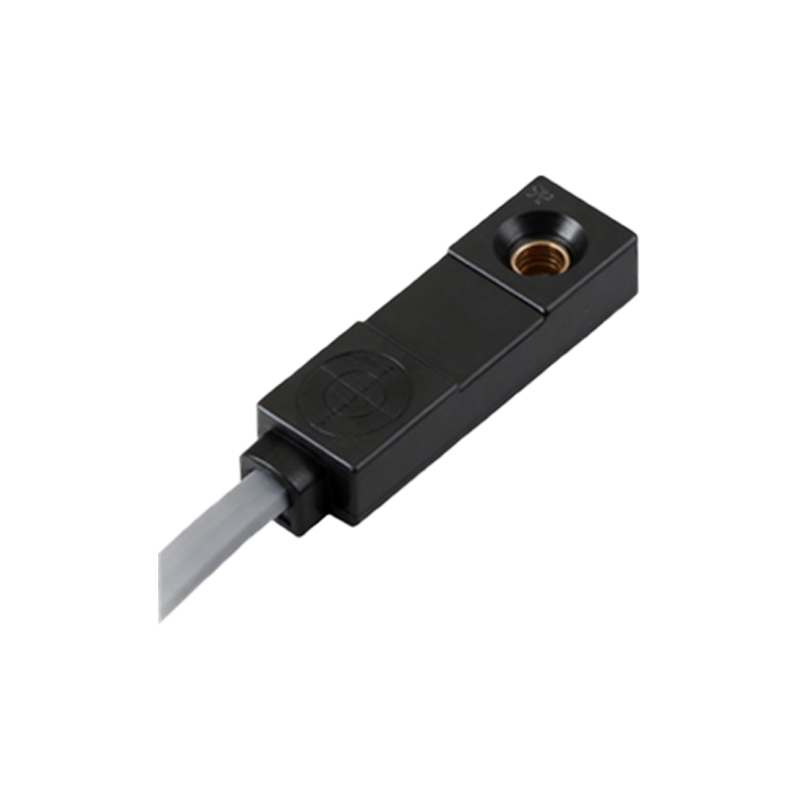
I- or IN-: Inductive sensors, detecting metallic objects.
C- or CA-: Capacitive sensors, detecting both metallic and non-metallic materials.
U- or US-: Ultrasonic sensors, using sound waves for distance measurement and presence detection.
O- or OP-: Optical sensors (often photoelectric), using light beams.
Following this, the form factor is specified. Terms like "Cyl" for cylindrical, "Rect" for rectangular, "Block," or "Ring" are common. This is frequently combined with dimensions, such as "M18" or "M30" for cylindrical threaded barrels of 18mm or 30mm diameter, or "40x40x20" for a rectangular housing.
The nominal sensing range is a critical numerical value embedded in the name, usually in millimeters (mm) or occasionally in centimeters. A model containing "5" or "05" often signifies a 5mm range, while "150" indicates 150mm. For ultrasonic sensors, this range is more prominent, e.g., "300-5000" for a 300mm to 5000mm adjustable range.
Output configuration is precisely denoted:
NPN-NO: NPN transistor, normally open.
NPN-NC: NPN transistor, normally closed.
PNP-NO: PNP transistor, normally open.
PNP-NC: PNP transistor, normally closed.
ANA: Analog output (e.g., 0-10V, 4-20mA).
IO-Link: Digital communication output.
Dual: Combination of outputs (e.g., one PNP and one NPN).
The connection method is also specified: "Cable" with length (e.g., "2M"), "Plug" (typically M8 or M12 connectors), or "Terminal".
Finally, suffixes indicate special features or robustness:
-T: Temperature compensated.
-S: Enhanced shielding (flush mountable).
-V: Resistant to vibration.
-IP67/IP69K: Ingress protection ratings.
-E2E: Factor 1 (inductive sensors that can detect all metals at the same range).
-HT: High-temperature version.
Thus, a hypothetical model name "IM-Cyl-M18-8-PNP-NO-M12-IP67" can be decoded as: Inductive Multifunctional, Cylindrical, M18 threaded barrel, 8mm sensing range, PNP Normally Open output, with an M12 connector, and IP67 protection.
Understanding this nomenclature is vital for several reasons. It ensures accurate specification and replacement, preventing costly downtime from incorrect part ordering. It aids in initial system design by allowing engineers to quickly filter sensors by technology, range, and output directly from datasheet lists or online catalogs. Furthermore, it facilitates clear communication across global teams and with suppliers, reducing errors.
In conclusion, the name of a multifunctional proximity sensor is a condensed technical datasheet. Mastering its language is an essential skill for professionals in electrical engineering, automation, and system integration. By paying close attention to these alphanumeric codes, one can efficiently select the precise sensor that meets the application's demands for performance, environment, and integration, thereby ensuring reliability and efficiency in automated systems.