In the rapidly evolving landscape of industrial automation, consumer electronics, and safety systems, proximity sensors have emerged as indispensable components. Their ability to detect the presence or absence of an object without physical contact offers a myriad of advantages that translate into enhanced efficiency, reliability, and innovation across diverse sectors. Unlike mechanical switches or manual detection methods, these sensors provide a seamless, non-intrusive means of gathering critical data, forming the backbone of countless automated processes.
One of the most significant advantages of proximity sensors is their exceptional reliability and longevity. Since there is no physical contact between the sensor and the target object, mechanical wear and tear are virtually eliminated. This non-contact operation ensures a much longer operational life compared to traditional limit switches, which suffer from contact degradation over time. In harsh industrial environments filled with dust, oil, or moisture, sealed inductive or capacitive proximity sensors continue to function flawlessly where mechanical parts would jam or fail. This robustness directly reduces maintenance costs, minimizes machine downtime, and increases overall system uptime, providing a substantial return on investment.
Speed and precision are further hallmarks of proximity sensing technology. These sensors can detect objects at incredibly high speeds—often in microseconds—enabling their use in high-speed counting, sorting, and positioning applications on fast-moving production lines. The response is consistent and repeatable, offering millimeter-level accuracy that is crucial for quality control and precise robotic guidance. This high-speed, accurate detection allows for tighter process control, leading to improved product quality and reduced material waste. For instance, in packaging machinery, a proximity sensor can precisely trigger a cutting mechanism the moment a product is in the correct position.
The versatility of proximity sensors is another key strength. They are available in various types, each suited to different materials and conditions. Inductive sensors excel at detecting metallic objects, making them perfect for machine tooling and metal fabrication. Capacitive sensors can detect both metallic and non-metallic materials like liquids, plastics, and wood, which is invaluable in food processing or chemical industries. Ultrasonic and photoelectric sensors offer even longer detection ranges for more complex applications. This adaptability allows engineers to select the optimal sensor for a specific task, ensuring optimal performance whether detecting a liquid level in a tank, a person approaching an automatic door, or a component on an assembly line.
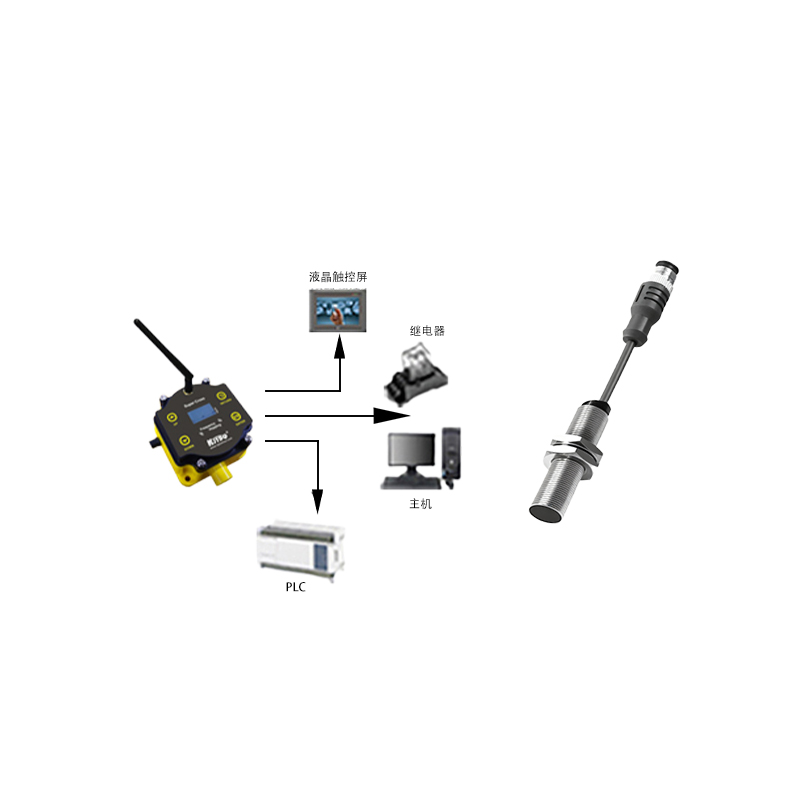
From a design and integration perspective, proximity sensors offer significant benefits. Their typically compact size allows for installation in space-constrained locations. Modern sensors come with various output options (e.g., NPN, PNP, analog, IO-Link) for easy integration into Programmable Logic Controllers (PLCs) and other control systems. This simplifies wiring and system architecture. Furthermore, their solid-state design is inherently resistant to vibration and shock, ensuring stable operation in demanding mobile or heavy machinery applications.
Finally, proximity sensors are pivotal in enhancing operational safety. By detecting the presence of personnel or obstacles in hazardous areas, they can trigger emergency stops or prevent machinery from operating unsafely. Safety-light curtains and area scanners, which are advanced forms of proximity sensing, create invisible protective fields around dangerous equipment. This proactive approach to safety helps prevent accidents, protects valuable assets, and ensures compliance with stringent industrial safety regulations.
In conclusion, the advantages of proximity sensors—non-contact reliability, high speed, precision, versatility, ease of integration, and safety enhancement—make them a foundational technology. They enable smarter automation, foster innovation in product design, and drive efficiencies that are essential in today's competitive and technology-driven world. Their continued evolution promises even greater capabilities, further embedding them as critical elements in the infrastructure of modern industry and beyond.