In the realm of precision measurement and industrial automation, the angle laser displacement sensor stands as a critical tool for non-contact, high-accuracy dimensional inspection. Unlike traditional linear laser sensors that measure straight-line distance, this specialized device calculates displacement based on the triangulation principle by precisely measuring the angle of a reflected laser beam. This capability enables it to perform complex tasks such as profiling, edge detection, and thickness measurement with exceptional resolution, often reaching the micron or even sub-micron level.
The core operating principle is laser triangulation. The sensor projects a focused laser spot onto the target surface. The reflected or scattered light from this spot is then captured by a receiving lens at a known angle and focused onto a position-sensitive detector, typically a CCD or CMOS array. Any change in the target's position alters the angle of the reflected beam, causing the light spot to shift on the detector. The sensor's internal processor calculates the exact displacement by analyzing this positional shift against the fixed geometric baseline between the laser emitter and the receiver. This method allows for measurements that are largely independent of surface reflectivity variations, provided the sensor is correctly configured.
Key specifications define the performance of an angle laser displacement sensor. Measurement range, resolution, linearity, and sampling speed are paramount. The stand-off distance—the fixed working distance from the sensor head to the target—must be carefully selected based on the application. Furthermore, factors like laser class (usually Class 2 for safety), spot size, and environmental ratings (IP67 for dust and water resistance) are crucial for reliable operation in industrial settings. Modern sensors often integrate advanced features such as digital filtering, programmable logic, and multiple analog/digital outputs (e.g., 4-20mA, Ethernet, RS-232) for seamless integration into control systems.
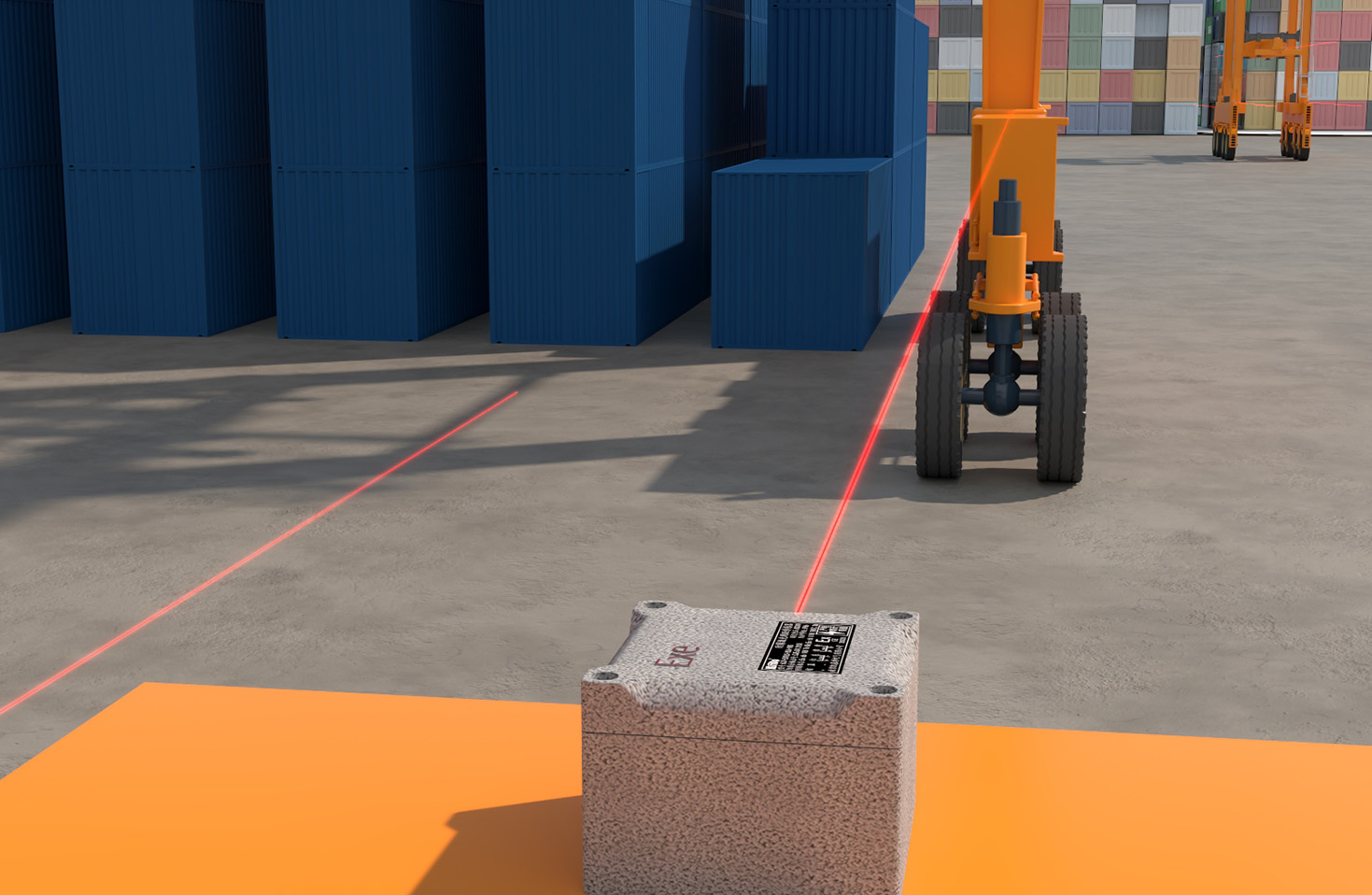
The applications are vast and span numerous industries. In automotive manufacturing, these sensors are indispensable for inspecting gear tooth profiles, measuring brake disc thickness, and verifying panel gaps. In electronics, they ensure the coplanarity of BGA solder balls and the precise height of components on PCBs. The semiconductor industry relies on them for wafer warpage measurement and chip profiling. In metal processing, they monitor sheet flatness and roll gap dimensions. Their non-contact nature makes them ideal for measuring soft, hot, or delicate materials that would be damaged by physical probes.
Selecting the right sensor requires a thorough analysis of the application. Engineers must first define the required measurement range, resolution, and target material. Highly reflective or transparent surfaces (like glass or polished metal) often pose challenges and may require sensors with special algorithms or coaxial optical designs to suppress noise. The installation environment is another critical factor; vibrations, ambient light, and temperature fluctuations can affect accuracy, necessitating sensors with robust housings and temperature compensation. Finally, the choice between a compact, integrated unit and a sensor head connected via fiber optic cable to a separate controller depends on space constraints and thermal conditions.
Integration and calibration are the final steps to ensure optimal performance. Proper mechanical fixturing to minimize vibration, alignment perpendicular to the target surface, and establishing a stable reference plane are essential. Calibration against a known standard, such as gauge blocks, verifies linearity and accuracy. Regular maintenance, including lens cleaning and verification checks, preserves long-term reliability. As Industry 4.0 advances, these sensors are increasingly becoming smart nodes in networked systems, providing not just raw data but also diagnostic information for predictive maintenance.
In conclusion, the angle laser displacement sensor is a sophisticated and versatile instrument that solves complex measurement challenges across modern industry. Its ability to deliver high-speed, non-contact, and precise dimensional data makes it a cornerstone of quality control and process automation. By understanding its principles, specifications, and application requirements, engineers can effectively leverage this technology to enhance productivity, ensure product quality, and drive innovation in manufacturing processes.