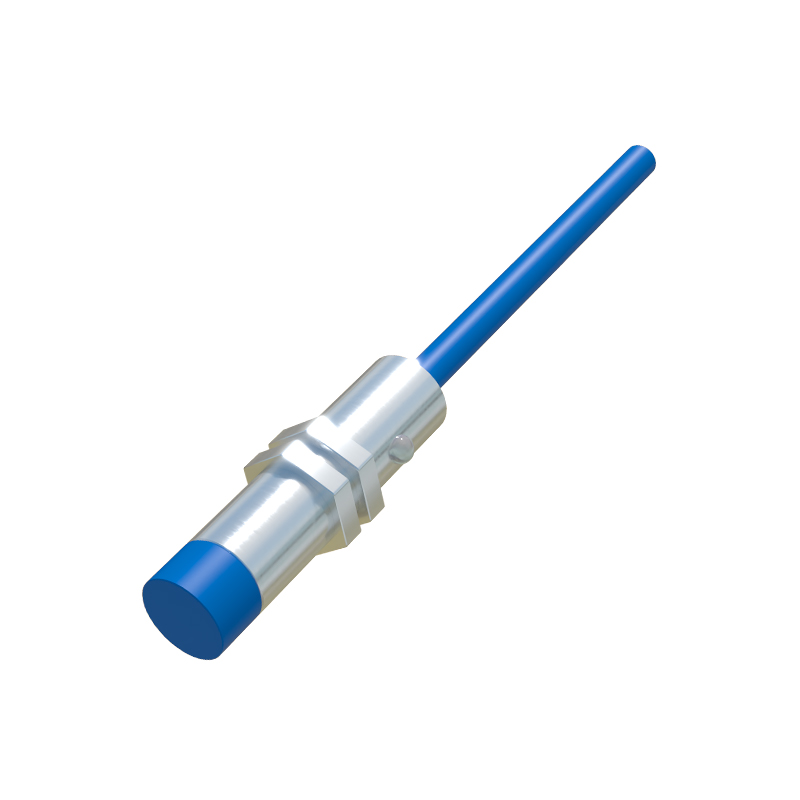
In the realm of industrial automation and control systems, the role of proximity sensors is paramount. These non-contact detection devices are fundamental for ensuring precision, safety, and efficiency across countless applications, from assembly lines and robotic guidance to material handling and machine safeguarding. Understanding the underlying principles of high-quality proximity sensors is essential for engineers and technicians tasked with selecting and implementing these critical components. This article delves into the core operating principles, key performance characteristics, and technological nuances that distinguish superior proximity sensors in the market.
At their essence, proximity sensors detect the presence or absence of an object within a specified sensing range without any physical contact. This is achieved through the use of various physical fields. The most prevalent types include inductive, capacitive, and photoelectric sensors, each based on a distinct principle.
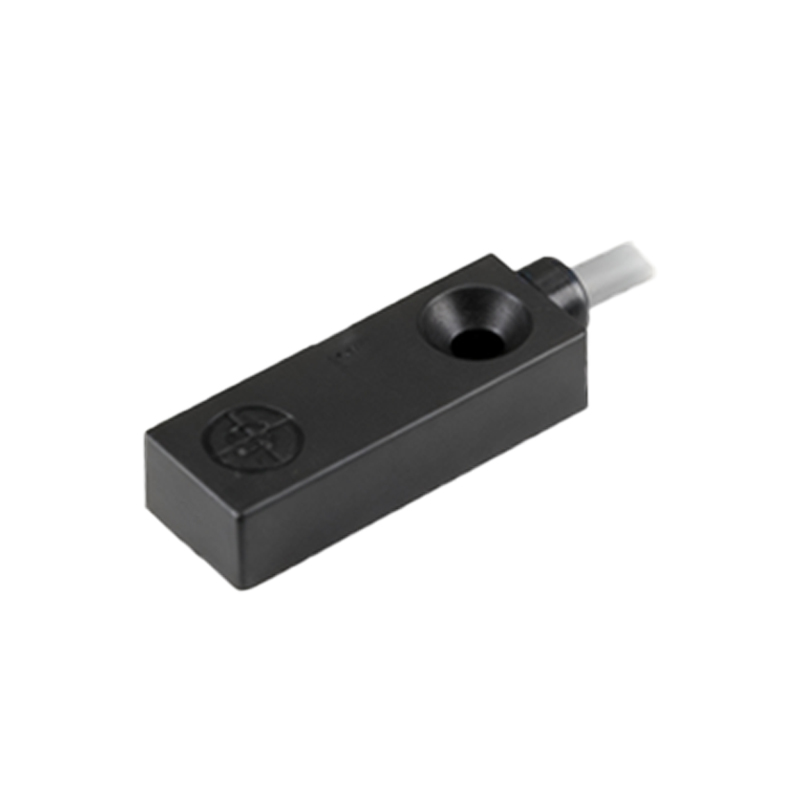
Inductive proximity sensors are the workhorses for detecting metallic objects, primarily ferrous metals like steel and iron. Their operation is based on the principle of electromagnetic induction. The sensor's active face contains a coil that is part of an oscillator circuit, generating a high-frequency electromagnetic field. When a metallic target enters this field, eddy currents are induced on the surface of the target. These eddy currents draw energy from the oscillator, causing a change in its amplitude or frequency. This change is detected by the sensor's evaluation circuit, which subsequently triggers a solid-state output switch (typically PNP or NPN). The key to a high-quality inductive sensor lies in its stability. Premium models feature temperature-compensated circuits to maintain a consistent sensing distance (the rated operating distance, Sn) despite ambient temperature fluctuations. They also exhibit excellent immunity to electromagnetic interference (EMI) from nearby motors or drives, and often incorporate short-circuit and overload protection. Another critical feature is the ability to provide a stable signal even when the target is positioned eccentrically or when facing different metal types, though the sensing distance may vary with the target's material (a factor defined by a reduction factor).
Capacitive proximity sensors, in contrast, can detect both metallic and non-metallic materials, including liquids, plastics, glass, and wood. They operate by generating an electrostatic field. The sensor acts as one plate of a capacitor, with the target object acting as the other plate. As the target approaches, the capacitance between the sensor and the target increases. When this capacitance reaches a preset threshold, the internal oscillator begins to oscillate, triggering the output switch. High-quality capacitive sensors offer exceptional sensitivity adjustment, often via a potentiometer, allowing fine-tuning to ignore certain materials (like a container wall) and detect the material inside (like a liquid level). They are engineered to minimize the effects of humidity, condensation, and dust accumulation on the sensing face, which could otherwise cause false triggering. Robust housing materials and sealing (often achieving IP67 or IP69K ratings) are hallmarks of quality, ensuring reliable operation in harsh, wash-down environments common in food and beverage or pharmaceutical industries.
Photoelectric sensors represent another major category, using a beam of light to detect objects. They come in several configurations: through-beam (separate emitter and receiver), retro-reflective (with a reflector), and diffuse (or proximity) mode, where the sensor detects light reflected directly from the target. The principle involves emitting modulated infrared, visible red, or laser light. A high-quality photoelectric sensor uses a precisely modulated LED or laser diode to ensure immunity to ambient light interference from factory lighting or sunlight. Advanced models feature background suppression technology, which allows them to detect an object within a precise, defined range while ignoring objects beyond that range, a crucial capability for precise positioning. They also boast fast response times, making them ideal for high-speed counting or sorting applications. Durability of the optical components against contamination and mechanical shock is a key differentiator for premium units.

Beyond the core sensing principle, several universal attributes define a high-quality proximity sensor. Switching frequency, or response time, determines how quickly the sensor can detect a passing object. High-speed applications demand sensors with frequencies in the kilohertz range. Repeat accuracy refers to the sensor's ability to consistently detect an object at the same point, which is vital for precision assembly. Environmental robustness is non-negotiable; this includes high ingress protection (IP) ratings against dust and water, resistance to chemicals and oils, and a wide operating temperature range. Electrical characteristics are equally important: stable output under varying supply voltage, low residual current in the "off" state, and protection against reverse polarity and transient voltages.
Finally, the design and manufacturing quality directly impact longevity and reliability. This involves precision in the coil winding for inductive sensors, the quality of the oscillator crystals, the use of high-grade plastics and stainless-steel housings, and rigorous testing procedures. A well-designed sensor will also offer clear status indication via LEDs and feature standardized mounting options for easy integration.
In conclusion, the principle of operation forms the