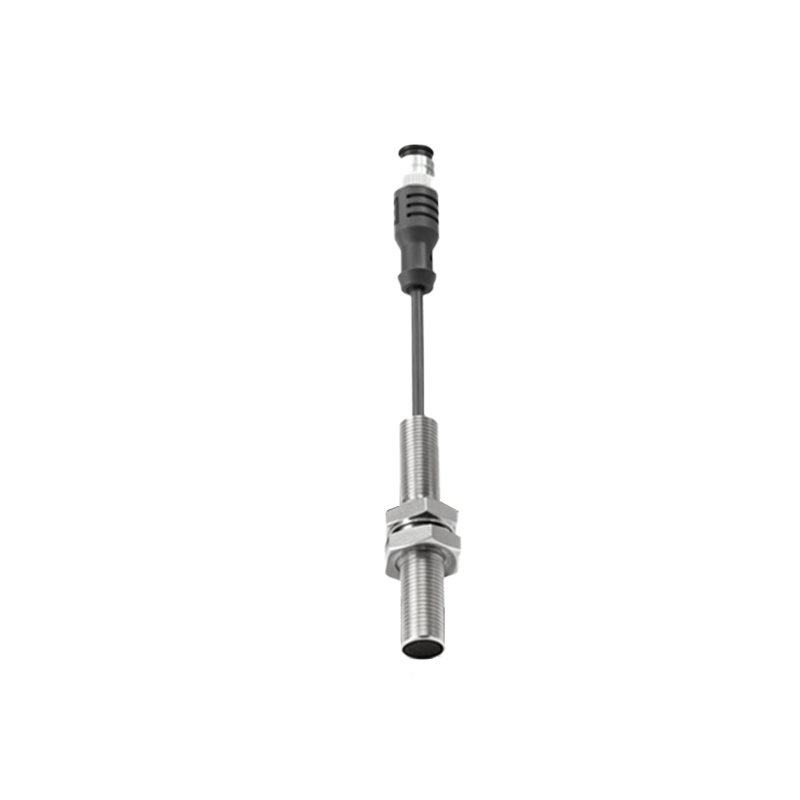
Inductive proximity sensors with cables, often referred to simply as "cabled proximity sensors," are fundamental components in industrial automation and control systems. These non-contact sensing devices are designed to detect the presence or absence of metallic objects without physical contact, making them ideal for harsh environments where durability and reliability are paramount. This article delves into the operating principles, key components, and typical applications of these sensors, providing a comprehensive overview for engineers and technicians in the electrical and automation fields.
At the core of an inductive proximity sensor lies an oscillator circuit that generates a high-frequency electromagnetic field. This field emanates from the sensor's active face, which is typically constructed from a ferrite core surrounded by a coil. When a metallic object enters this electromagnetic field, eddy currents are induced on the surface of the target object. These eddy currents create their own magnetic field, which opposes the original field generated by the sensor. This opposition results in a measurable change in the oscillator's amplitude or frequency. The sensor's internal circuitry, specifically a trigger circuit and an output switching device (such as a transistor), detects this change. Once the change exceeds a predefined threshold, the sensor's output state switches—either from "off" to "on" or vice versa, depending on its configuration (normally open or normally closed). This switching action is then transmitted via the attached cable to a controller like a PLC (Programmable Logic Controller).
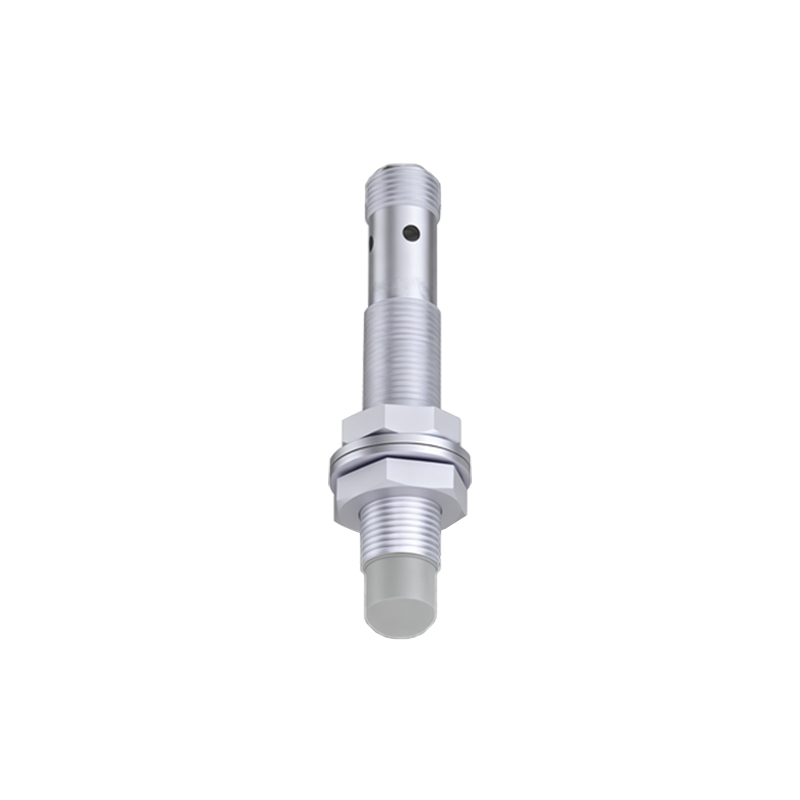
The attached cable is a critical feature, distinguishing these units from connector-style sensors. It provides a permanent, robust connection for power supply and signal transmission, reducing the risk of connection failure due to vibration or contamination. Standard cables are often PVC or PUR sheathed for protection against oils, coolants, and mechanical abrasion. The sensor itself is housed in a metal (typically stainless steel or brass) or polymer body, offering high ingress protection ratings (e.g., IP67, IP69K) for use in washdown or dusty conditions.
Key performance specifications include sensing distance, which is standardized (e.g., Sn) and depends on the sensor's size and the target material. For instance, a sensor calibrated for mild steel will have a reduced sensing range for non-ferrous metals like aluminum or copper due to differences in electrical conductivity and magnetic permeability. Repeat accuracy, response frequency, and hysteresis are other vital parameters. Hysteresis is the difference between the switch-on and switch-off points, preventing output chatter when a target is at the sensing edge.
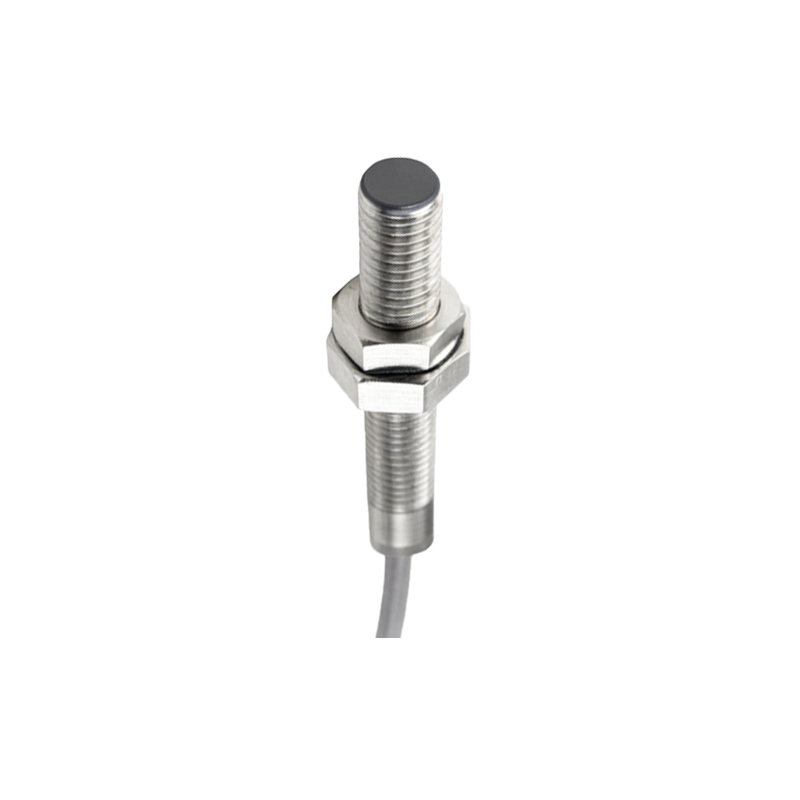
Applications for cabled inductive proximity sensors are vast across manufacturing. They are extensively used for object detection on conveyor lines, position verification of machine parts (e.g., cylinder end position), counting metallic items, and as safety presence checks in automated machinery. In metalworking, they monitor tool breakage or part positioning. Their non-contact nature ensures no wear and tear on the sensor or the target, leading to minimal maintenance and long service life.
When selecting a cabled inductive sensor, engineers must consider factors such as the target material, required sensing distance, environmental conditions (temperature, chemicals), electrical requirements (DC vs. AC supply, PNP vs. NPN output), and cable length and type. Proper installation is also crucial; sensors should be mounted securely, and care must be taken to avoid mutual interference when multiple sensors are placed in close proximity.
In summary, inductive proximity sensors with cables operate on the principle of electromagnetic induction and eddy current generation. Their robust construction, integrated cabling, and reliable non-contact switching make them indispensable for precise, high-speed detection of metallic objects in demanding industrial settings. Understanding their underlying technology and specifications is essential for optimal integration into any control system, ensuring efficiency, safety, and reliability in automated processes.