In the realm of industrial automation and precision measurement, laser displacement sensors have emerged as indispensable tools. These non-contact devices provide high-accuracy, high-speed measurements critical for quality control, process monitoring, and robotic guidance. This article delves into the operational principles, key technologies, and diverse applications of these sophisticated instruments, offering insights for engineers and procurement specialists navigating this essential market segment.
At its core, a laser displacement sensor operates on the principle of triangulation. The sensor projects a focused laser beam onto the target surface. The reflected light is then captured by a receiving lens and focused onto a position-sensitive detector, typically a CCD or CMOS linear array. The position of the light spot on this detector shifts proportionally to the distance of the target. By precisely calculating this shift, the sensor determines the displacement or distance with remarkable accuracy. This fundamental principle allows for measurements that are immune to the wear and tear associated with contact probes and unaffected by the target's material properties in many cases, though surface finish and color can influence reflectivity.
Modern laser displacement sensors incorporate several advanced technologies to enhance performance. Key among these is the use of Class 2 or Class 1M lasers, ensuring eye safety in industrial environments. Signal processing algorithms have become increasingly sophisticated, enabling features like peak-hold for measuring transparent objects (e.g., glass), edge detection for precise positioning, and robust filtering to ignore background interference. Furthermore, innovations in optical design have led to models with exceptionally small spot sizes, allowing for measurement on very small components or intricate features. The integration of digital interfaces like EtherCAT, PROFINET, and IO-Link has streamlined integration into modern industrial networks, facilitating real-time data acquisition and control.
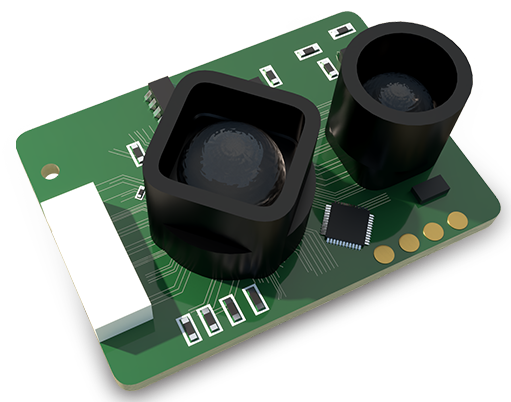
The performance of a laser displacement sensor is characterized by several critical specifications. Resolution, often in the micron or sub-micron range, defines the smallest detectable change in distance. Repeatability indicates the consistency of measurements under unchanged conditions. Linear accuracy defines the maximum deviation from the true value across the entire measuring range. The sampling rate, often reaching tens or even hundreds of kilohertz, determines how fast the sensor can capture data, which is vital for high-speed production lines. Engineers must carefully balance these parameters against the required measuring range and the environmental conditions, such as ambient light, temperature fluctuations, and vibration.
Applications for laser displacement sensors are vast and span numerous industries. In automotive manufacturing, they are used for gap and flush measurement on car body assemblies, brake disc thickness inspection, and weld seam profiling. In electronics, they ensure the coplanarity of semiconductor packages and measure the height of micro-components on PCBs. In metal processing, they monitor sheet flatness, roll gap dimensions, and part thickness. They are also pivotal in robotics for precise bin-picking guidance and assembly verification. The ability to perform non-contact, high-speed measurements makes them ideal for inline inspection systems where throughput and accuracy are paramount.
Selecting the right laser displacement sensor requires a thorough analysis of the application. Key considerations include the required measuring range and stand-off distance, the necessary resolution and accuracy, the target's surface characteristics (highly reflective, matte, transparent), the available mounting space, and the environmental robustness (IP rating, temperature range). Communication protocol requirements and the need for specialized software for data analysis and logging are also crucial decision factors. Engaging with technical specialists from reputable suppliers is often necessary to match the sensor's capabilities precisely to the application's demands, ensuring optimal performance and return on investment.
The future of laser displacement sensing is geared towards even greater integration, intelligence, and ease of use. We are seeing trends towards miniaturization of sensor heads, the incorporation of AI-driven data analysis for anomaly detection and predictive maintenance, and the development of multi-point sensors that capture entire profiles in a single scan. As Industry 4.0 and smart factory concepts continue to evolve, the role of these precise measurement devices as key data providers for digital twins and closed-loop process control will only become more pronounced, solidifying their status as a cornerstone of modern industrial engineering.