The automotive industry stands on the precipice of a profound transformation, driven by the relentless march toward autonomous driving and advanced driver-assistance systems (ADAS). At the heart of this revolution lies a critical enabling technology: LiDAR (Light Detection and Ranging). For investors and industry professionals, understanding the landscape of LiDAR sensor stocks is no longer a niche pursuit but a crucial exercise in identifying the key players shaping the future of mobility. This article provides a technical and market-focused analysis of the investment thesis surrounding automotive LiDAR.
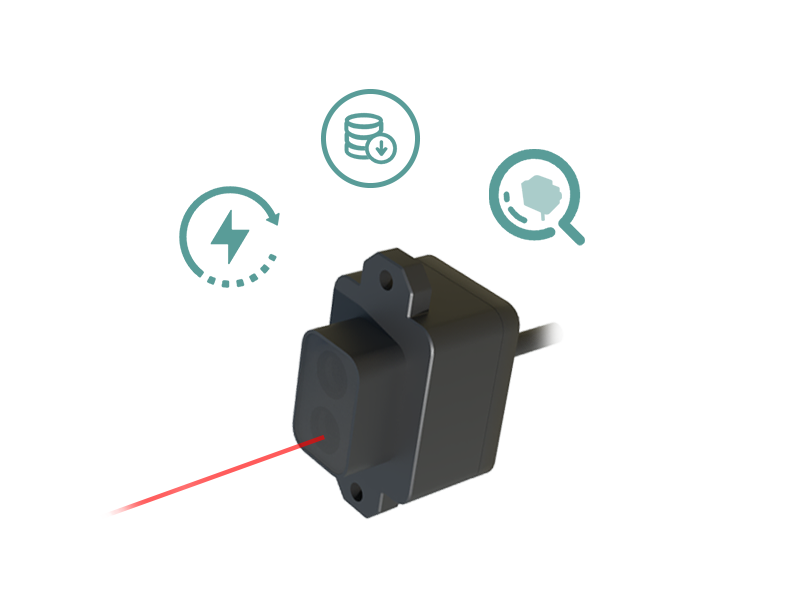
LiDAR functions by emitting pulsed laser light and measuring the time it takes for the reflections to return. This creates a high-resolution, three-dimensional point cloud map of the vehicle's surroundings, offering superior object detection, classification, and ranging capabilities compared to cameras and radar, especially in low-light or adverse weather conditions. The core technological battlegrounds in automotive LiDAR revolve around form factor, range, resolution, and, most critically, cost. Early mechanical spinning LiDAR units were bulky and expensive, but the industry is rapidly transitioning to solid-state and semi-solid-state solutions. These newer designs, such as MEMS (Micro-Electro-Mechanical Systems) mirror-based systems and optical phased arrays, promise greater reliability, smaller size, and the potential for mass production at significantly lower price points—a prerequisite for widespread adoption in consumer vehicles.
The market for automotive LiDAR is projected to experience exponential growth over the next decade. This growth is fueled by regulatory pushes for vehicle safety, consumer demand for advanced features, and the long-term roadmap of automakers toward higher levels of automation (SAE Levels 3-5). Consequently, the investment universe has expanded beyond pure-play LiDAR developers to include established automotive suppliers, semiconductor companies, and tech giants.
Pure-play LiDAR companies represent the most direct investment avenue. Firms like Velodyne Lidar, a pioneer in the space, Luminar Technologies, which has secured notable design wins with major OEMs, and Innoviz Technologies, known for its solid-state approach, are publicly traded and fiercely competing for market share. Their financials are typically characterized by significant research and development expenditures and early-stage revenue, making them higher-risk, higher-potential-reward propositions. Investors must scrutinize their technology roadmap, patent portfolios, and, most importantly, their production design wins with automakers. A contract with a major OEM is often a more significant catalyst than quarterly earnings at this stage.
The competitive landscape also features established Tier 1 automotive suppliers. Companies like Valeo have already brought scalable LiDAR solutions to market, with its Scala system featured in production vehicles. These giants offer stability, manufacturing scale, and deep existing relationships with automakers. For investors, stocks in this category provide a more conservative way to gain exposure, often as part of a broader automotive technology portfolio, but with potentially lower upside tied specifically to LiDAR growth.
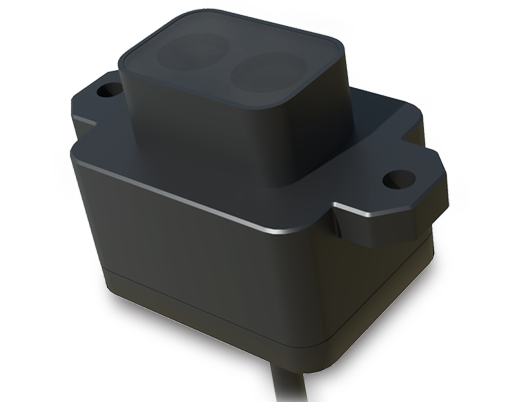
Furthermore, the ecosystem extends to critical component suppliers. The lasers, detectors, and specialized semiconductors (like ASICs for signal processing) are essential. Companies like Lumentum Holdings (lasers) or NVIDIA (whose DRIVE platform often integrates sensor data including LiDAR) play a vital enabling role. Their success is less dependent on which LiDAR brand wins but on the overall adoption of the technology, offering a diversified, albeit indirect, investment angle.
Key risks for investors cannot be overstated. The technology is still evolving, with no definitive consensus on the optimal architecture. A price war could erode margins as the market scales. There is also the risk of technological disruption or that alternative sensor fusion strategies (combining advanced radar and cameras with AI) could diminish LiDAR's perceived necessity for certain automation levels. Furthermore, the timeline for full autonomy has repeatedly been extended, testing investor patience.
In conclusion, investing in automotive LiDAR sensor stocks requires a blend of technical understanding and disciplined financial analysis. The sector offers a compelling growth narrative tied to the future of transportation but is fraught with technical and commercial uncertainty. A balanced approach might involve a mix of pure-play innovators, established automotive suppliers with LiDAR divisions, and key component makers. Diligent investors should focus on companies with robust technology, credible manufacturing partnerships, a clear path to profitability, and a balance sheet capable of weathering the inevitable industry consolidation that lies ahead. The road to autonomy is long, but LiDAR sensors are undoubtedly one of its most critical paving stones.