In industrial automation and process control, proximity switch sensors are widely recognized for their ability to detect the presence or absence of objects without physical contact. These sensors operate based on electromagnetic, capacitive, or inductive principles, making them suitable for various applications, including position sensing, object counting, and safety systems. However, a common question arises: can proximity switch sensors effectively control water levels? This article explores the feasibility, mechanisms, and practical considerations of using proximity sensors for water level control.
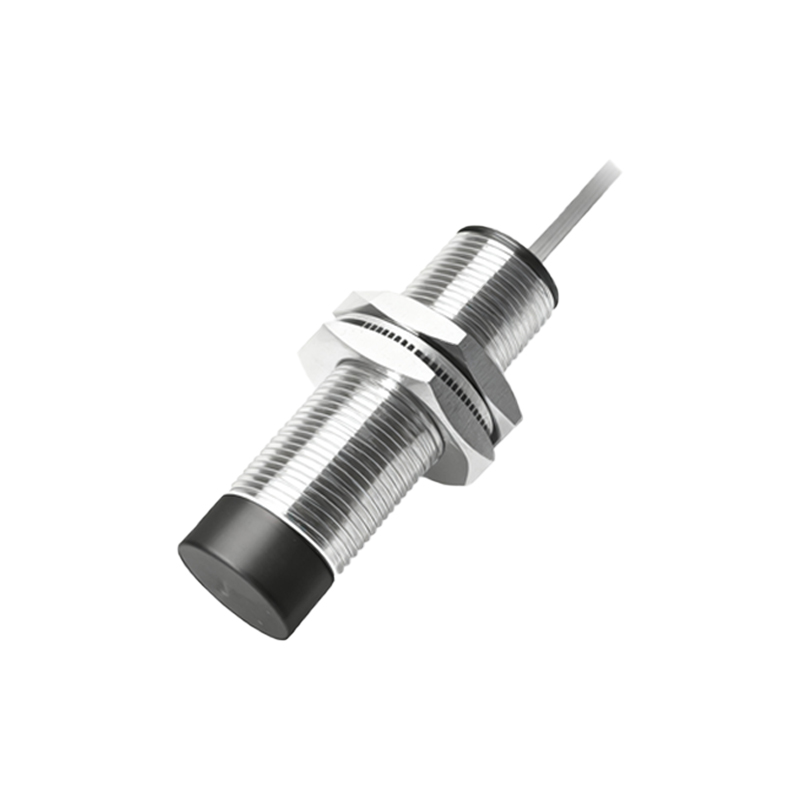
Proximity sensors, particularly capacitive and inductive types, can be adapted for liquid level detection under specific conditions. Capacitive proximity sensors are often the preferred choice for water level control due to their sensitivity to changes in dielectric constants. Water has a high dielectric constant, allowing capacitive sensors to detect its presence by measuring capacitance variations between the sensor and the liquid. When water reaches a predetermined level, the sensor triggers an output signal, which can be used to activate or deactivate pumps, valves, or alarms. This makes capacitive sensors suitable for applications in tanks, reservoirs, and plumbing systems where non-contact measurement is advantageous.
Inductive proximity sensors, on the other hand, are generally not suitable for direct water level detection because they rely on detecting metallic objects. However, they can be used indirectly by attaching a float with a metallic component. As the water level changes, the float moves, bringing the metal within the sensor's detection range to trigger a response. This method is effective but involves mechanical components, which may require more maintenance compared to non-contact capacitive sensors.
For precise water level control, factors such as sensor selection, installation, and environmental conditions must be carefully considered. Capacitive sensors should be calibrated to account for factors like temperature fluctuations, water purity, and container material, as these can affect dielectric properties and sensor accuracy. In corrosive or high-temperature environments, sensors with appropriate housing materials, such as stainless steel or PTFE, are recommended to ensure durability and reliable operation.
In practice, proximity sensors are often integrated into broader control systems, such as programmable logic controllers (PLCs) or microcontrollers, to automate water level management. For example, in a water treatment plant, capacitive sensors can monitor tank levels and send signals to PLCs to control pump operations, preventing overflow or dry running. Similarly, in household appliances like washing machines, proximity sensors help regulate water intake by detecting fill levels and shutting off valves when needed.
While proximity sensors offer advantages like fast response, low maintenance, and resistance to contamination, they may not be ideal for all water level control scenarios. In applications requiring continuous level measurement, ultrasonic or pressure sensors might be more appropriate due to their ability to provide analog outputs for precise monitoring. Proximity sensors typically provide discrete on/off signals, making them better suited for point-level detection rather than continuous tracking.
In conclusion, proximity switch sensors, especially capacitive types, can effectively control water levels in many industrial and domestic settings. By leveraging their non-contact detection capabilities, these sensors contribute to efficient and automated liquid management systems. Engineers should assess specific requirements, such as accuracy, environmental factors, and system integration, to determine the optimal sensor solution for reliable water level control. With proper implementation, proximity sensors serve as a valuable tool in enhancing process safety and operational efficiency.