Capacitive laser displacement sensors represent a critical technology for non-contact precision measurement in modern industrial environments. These sophisticated instruments utilize laser triangulation principles to achieve micron-level accuracy in gap, thickness, and displacement measurements, making them indispensable for quality control, assembly verification, and process monitoring. Unlike traditional contact probes, they eliminate mechanical wear, measurement force errors, and potential damage to delicate surfaces, enabling high-speed, repeatable inspections.
The core operating principle involves projecting a focused laser beam onto the target surface. The reflected light is detected by a high-resolution position-sensitive device (PSD) or a CMOS/CCD sensor within the sensor head. As the target distance changes, the position of the reflected light spot shifts on the detector. Using precise trigonometric calculations and advanced algorithms, the sensor's internal processor converts this positional shift into an exact distance measurement. This method allows for measurements on a vast array of materials, including metals, plastics, ceramics, and even transparent or glossy surfaces, often with the aid of specialized filters or software models to handle challenging optical properties.
Key performance parameters for selecting a gap measurement sensor include measuring range, resolution, linearity, spot size, and sampling rate. For instance, a sensor with a 10mm range might offer a resolution of 0.1µm, ideal for checking bearing clearances or semiconductor wafer warpage. Larger range models, up to several hundred millimeters, serve in applications like sheet metal flatness inspection or robot positioning. The choice between a red or blue laser wavelength is also crucial; blue lasers, with their shorter wavelength, provide smaller spot sizes and superior performance on organic materials or hot surfaces, while red lasers are common for general-purpose use.
Industrial applications are extensive. In automotive manufacturing, these sensors verify piston-to-cylinder clearance, brake disc thickness, and critical assembly gaps with relentless precision. In electronics, they measure component coplanarity, solder paste height, and PCB warpage. The precision machinery sector relies on them for spindle runout analysis, guide rail alignment, and part dimensional verification. Furthermore, their integration into automated production lines and robotic systems facilitates 100% inline inspection, replacing error-prone manual sampling and enabling real-time process feedback for closed-loop control.
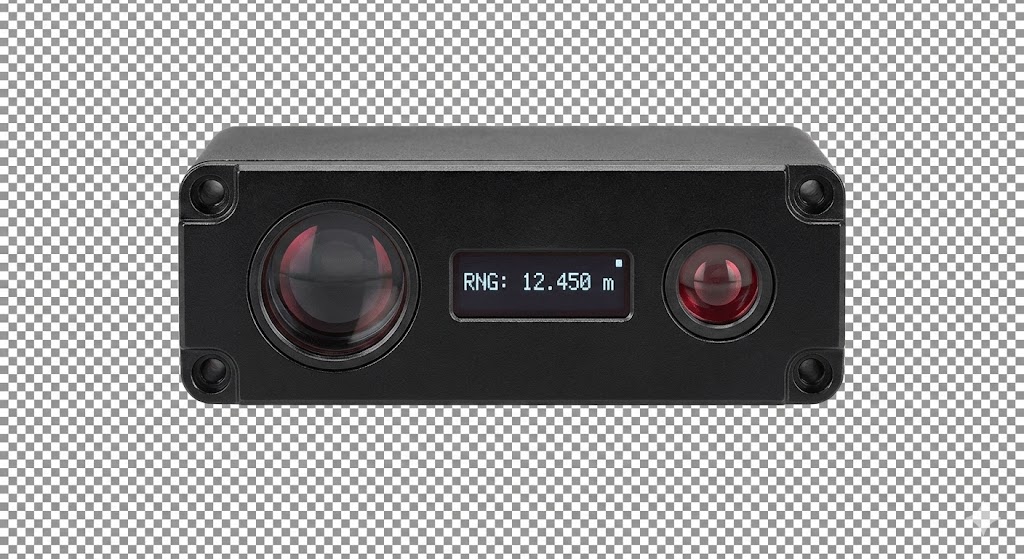
Integration considerations extend beyond the sensor head. Modern units feature robust industrial housings (IP67 ratings are common), integrated temperature compensation for thermal stability, and various digital interfaces like Ethernet/IP, PROFINET, EtherCAT, and analog outputs. Sophisticated software suites allow for easy configuration, multi-point measurement, data logging, and SPC (Statistical Process Control) analysis. When installing a capacitive laser sensor, factors such as mounting stability, environmental vibrations, ambient light interference, and the target's surface condition must be meticulously evaluated to ensure specified accuracy.
The future of laser gap sensing is intertwined with Industry 4.0. Emerging trends include the development of ultra-high-speed sensors for dynamic measurement on fast-moving production lines, embedded AI for automatic outlier detection and classification, and enhanced connectivity for seamless data integration into Manufacturing Execution Systems (MES) and cloud platforms. Multi-point sensor arrays and profile scanners are also gaining traction for capturing complete 3D profiles of complex gaps and geometries in a single pass.
In conclusion, capacitive laser displacement sensors are a cornerstone of advanced metrology, providing the accurate, reliable, and non-contact data essential for modern precision manufacturing. Their ability to deliver micron-level measurements at high speeds directly contributes to improved product quality, reduced waste, and optimized production efficiency. As industrial demands for tighter tolerances and smarter processes grow, the evolution of this technology will continue to be a key driver in maintaining competitive advantage across the global manufacturing landscape.