In the rapidly evolving landscape of industrial automation and smart systems, proximity sensing technology stands as a critical pillar. Among the various solutions available, the V3 series of proximity light sensors has emerged as a particularly robust and versatile option for engineers. This article delves into the operational principles, key specifications, application scenarios, and best practices for integrating V3 proximity light sensors into modern electrical systems.
At its core, a V3 proximity light sensor operates on the principle of modulated light emission and reception. Unlike simple photoelectric sensors, the V3 series typically employs a pulsed infrared (IR) light-emitting diode (LED) and a dedicated phototransistor or photodiode receiver. The sensor emits a beam of light; when an object enters its detection field, it reflects part of this light back to the receiver. The onboard circuitry, often featuring advanced ASICs (Application-Specific Integrated Circuits), processes this reflected signal to determine the presence, absence, or distance of the object. A key differentiator of the V3 design is its sophisticated modulation technique, which allows it to effectively filter out ambient light interference from sources like sunlight or factory lighting, ensuring high reliability and stability in diverse environments.
Key technical specifications define the performance envelope of these sensors. The sensing range is a primary consideration, with V3 models often offering configurable ranges from a few millimeters up to several meters, depending on the lens configuration and output power. Response time is exceptionally fast, frequently in the microsecond range, enabling their use in high-speed production lines. Many V3 sensors feature a programmable logic controller (PLC)-compatible output, typically in the form of a digital NPN or PNP transistor switch, or analog outputs (0-10V, 4-20mA) for distance-proportional signaling. Environmental robustness is a hallmark, with standard ingress protection (IP) ratings of IP67 or higher, making them resistant to dust, water jets, and common industrial chemicals. Operating voltage ranges are broad, commonly from 10-30V DC, accommodating standard industrial power supplies.
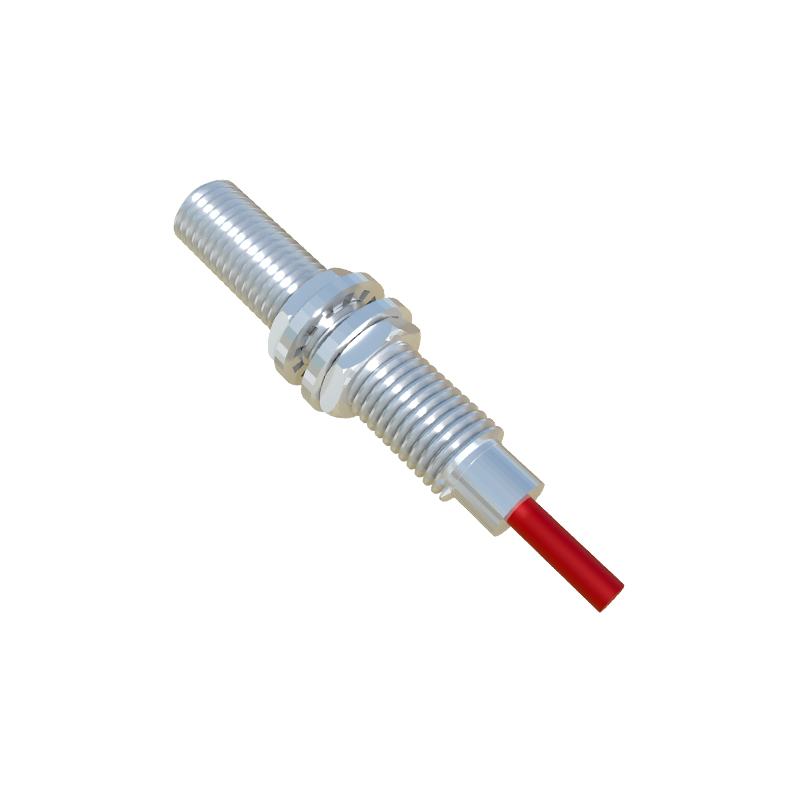
The application spectrum for V3 proximity light sensors is vast. In automated manufacturing, they are indispensable for object detection on conveyor belts, part positioning in assembly robots, and end-of-travel sensing. In packaging machinery, they ensure precise counting and fill-level control. Beyond traditional industry, they are integral to modern security systems for presence detection, in automotive applications for smart trunk opening or collision avoidance subsystems, and in consumer electronics for features like automatic screen dimming. Their ability to detect virtually any material—metal, plastic, wood, glass, or liquid—provides unparalleled flexibility compared to inductive or capacitive sensors, which are material-specific.
Successful integration requires attention to several critical factors. Mounting is paramount; sensors must be securely fixed to minimize vibration-induced error, and the lens must be kept clean from obstructions like dust, oil, or condensation. Proper alignment between the sensor and the target is crucial for consistent operation. Electrical installation demands careful observation of polarity for DC models and correct wiring of the output load. Many V3 sensors come with built-in diagnostic aids, such as a stability indicator LED, which is invaluable for setup and troubleshooting. When designing a system, engineers must consider the target object's properties (color, reflectivity, size), the required sensing distance, the environmental conditions (temperature, humidity, ambient light), and the necessary response speed.
Looking forward, the trajectory for V3 and similar advanced proximity sensors points toward greater intelligence and connectivity. Future iterations are likely to incorporate IO-Link communication for digital parameter setting, diagnostics, and process data exchange directly with the control system. Enhanced algorithms for background suppression and precise distance measurement will continue to push the boundaries of performance. For the practicing electrical engineer, mastering the implementation of V3 proximity light sensors is not just about connecting wires; it involves a holistic understanding of photonics, signal processing, and system integration to build reliable, efficient, and intelligent automated solutions that form the backbone of Industry 4.0.