In the realm of industrial automation, precision and reliability are paramount. The DP-M series of square proximity sensors stands as a testament to engineering excellence, designed to meet the rigorous demands of modern manufacturing environments. These sensors are integral components in countless applications, from assembly lines and packaging machinery to robotic systems and material handling equipment. Their robust construction and advanced sensing technology ensure consistent performance even in challenging conditions, making them a preferred choice for engineers and technicians worldwide.
The DP-M square proximity sensor operates on the inductive sensing principle, which allows it to detect metallic objects without physical contact. This non-contact detection capability is crucial for minimizing wear and tear, reducing maintenance costs, and enhancing operational efficiency. The sensor emits an electromagnetic field from its sensing face, and when a metallic target enters this field, it induces eddy currents that alter the sensor's oscillation. This change is detected and converted into a switching signal, providing real-time feedback to control systems. The square housing of the DP-M series offers distinct advantages, including easier installation in tight spaces and improved resistance to mechanical stress compared to cylindrical models.
One of the key features of the DP-M sensor is its high switching frequency, enabling rapid detection of objects in high-speed applications. This makes it ideal for use in fast-paced production lines where timing is critical. Additionally, the sensor is available in various sensing ranges, typically from 1mm to 15mm, allowing for flexibility in design and application. The housing is constructed from durable materials such as nickel-plated brass or stainless steel, providing excellent resistance to corrosion, oils, and coolants commonly found in industrial settings. Many models also feature IP67 or higher ingress protection ratings, ensuring reliable operation in dusty or wet environments.
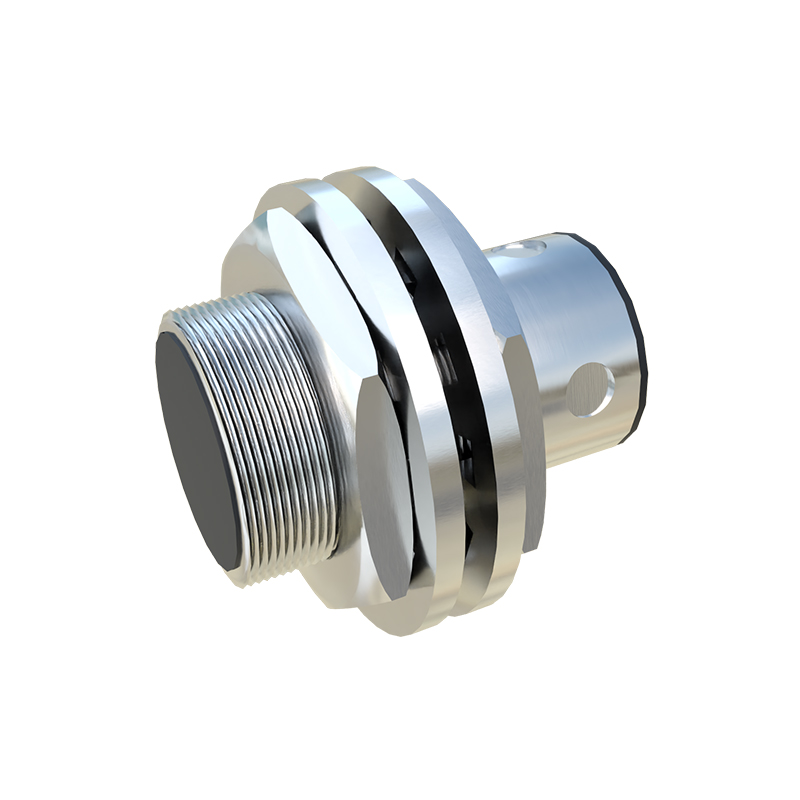
Wiring and installation of the DP-M sensor are straightforward, with options for both cable and connector versions. The sensors typically come in two-wire, three-wire, or four-wire configurations, compatible with DC or AC power supplies. The two-wire models simplify wiring by combining power and signal lines, while three-wire and four-wire versions offer separate connections for enhanced functionality, such as complementary outputs or diagnostic features. LED indicators are often included to provide visual confirmation of power status and object detection, aiding in quick troubleshooting and setup.
When integrating DP-M sensors into a system, several factors must be considered to optimize performance. The sensing distance can be influenced by the target material, size, and shape. For instance, ferrous metals like steel are detected at the nominal range, while non-ferrous metals such as aluminum or copper may require reduced sensing distances. It is also essential to account for environmental conditions like temperature extremes, electromagnetic interference, and vibration. Proper mounting and alignment are critical to avoid false triggers or missed detections. Many DP-M sensors feature built-in shielding to minimize interference from adjacent metal objects or other sensors, ensuring stable operation in dense installations.
Maintenance of DP-M square proximity sensors is minimal due to their solid-state design and lack of moving parts. Regular inspections should focus on cleaning the sensing face to remove debris or buildup that could impair functionality. Checking electrical connections for corrosion or looseness is also recommended to prevent signal loss. In case of malfunctions, diagnostic tools like multimeters or oscilloscopes can be used to verify output signals and power supply integrity. Most manufacturers provide detailed datasheets with specifications for sensing range, hysteresis, repeat accuracy, and temperature ratings, which should be referenced during troubleshooting.
The versatility of the DP-M series extends beyond standard detection tasks. Specialized variants include models with extended temperature ranges for use in foundries or cold storage facilities, high-pressure resistant versions for hydraulic systems, and analog output types for distance measurement applications. Some advanced models incorporate IO-Link communication capabilities, enabling digital parameter setting, condition monitoring, and integration into Industry 4.0 networks. This connectivity allows for predictive maintenance, reducing downtime and improving overall equipment effectiveness.
In summary, the DP-M square proximity sensor is a robust and reliable solution for industrial automation. Its non-contact operation, durable construction, and adaptability make it suitable for a wide array of applications. By understanding its principles, features, and best practices for use, engineers can leverage this technology to enhance system performance, safety, and productivity. As industries continue to evolve toward smarter and more efficient operations, sensors like the DP-M will remain foundational components in achieving these goals.