In the realm of industrial automation, where space constraints and precision are paramount, the 4mm proximity switch sensor stands as a critical component. These compact, non-contact sensors are engineered to detect the presence or absence of metallic objects at extremely close ranges, typically with a nominal sensing distance of 4 millimeters. Their design is a marvel of miniaturization, packing robust sensing technology into a housing small enough to fit into the tightest machinery layouts.
The operating principle is predominantly based on the inductive sensing method. The sensor generates an oscillating electromagnetic field from its active face. When a ferrous or non-ferrous metal target enters this field, eddy currents are induced in the object, causing a change in the oscillation amplitude. This change is detected by the sensor's internal circuitry, which then triggers a solid-state switching output—either PNP (sourcing) or NPN (sinking). This entire process occurs without any physical contact, eliminating mechanical wear and ensuring a long operational life, often rated in millions of cycles.
Key specifications define their performance. The 4mm sensing distance is a standardized nominal value, with actual operating points often derated to ensure reliability against temperature fluctuations and supply voltage variations. Switching frequency is high, commonly reaching several hundred Hertz, allowing for detection of rapidly moving parts on assembly lines. Housing materials, such as nickel-plated brass or stainless steel, provide excellent resistance to oils, coolants, and industrial debris. Many models feature built-in LED status indicators for easy diagnostics and are rated for IP67 or higher ingress protection, making them suitable for harsh washdown environments.
The application spectrum for these tiny sensors is vast. They are indispensable in precision assembly robots for verifying part placement, in CNC machining centers for tool breakage detection, and in packaging machinery for monitoring foil or thin metal lids. In electronic component manufacturing, they verify the presence of miniature connectors or shields. Their compact size allows for installation in multi-axis grippers and miniature linear actuators where larger sensors would be impossible to mount.
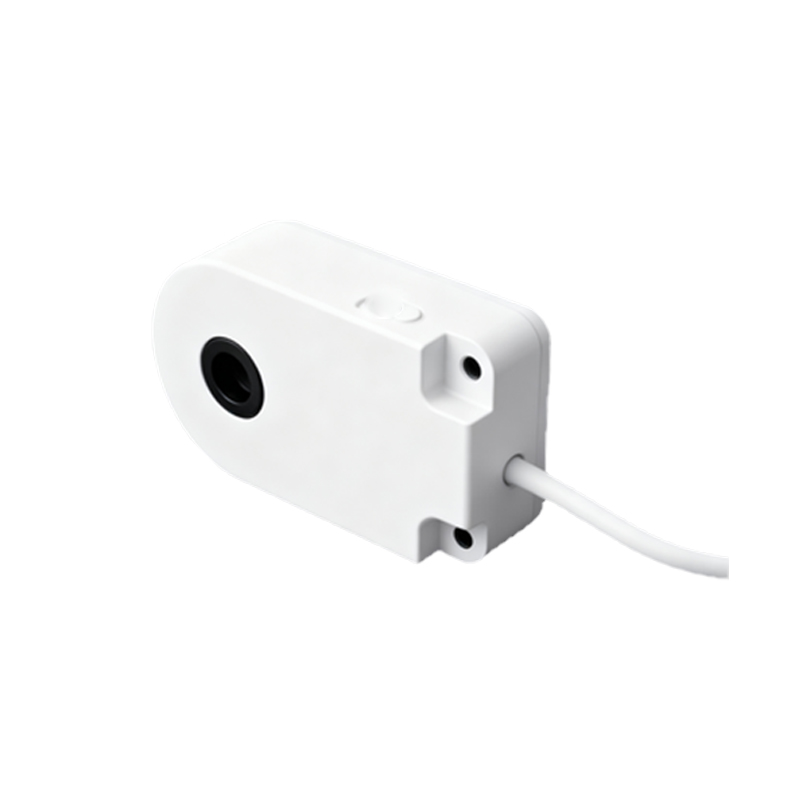
Selection and installation require careful consideration. Engineers must evaluate the target material, as different metals affect the effective sensing range. For instance, steel provides the standard sensing distance, while aluminum or copper may reduce it. The sensor must be mounted flush in its metal bracket without any surrounding metal within its "non-sensing" zone to prevent false triggering. Proper shielding and cable routing are essential in electrically noisy environments to prevent electromagnetic interference from causing erratic behavior.
Advancements continue to push the boundaries. Modern 4mm proximity sensors now incorporate IO-Link digital communication, enabling not just simple switching but also the transmission of parametric data like temperature, signal strength, and operating hours for predictive maintenance. Some variants offer analog output for distance-proportional measurement, adding a layer of process control. Enhanced designs also feature increased resistance to welding field interference, a common challenge in automotive manufacturing cells.
In conclusion, the 4mm proximity switch sensor is a testament to the industry's drive toward miniaturization and intelligence. It delivers reliable, wear-free detection in spaces where every millimeter counts, forming the sensory backbone of modern, high-density automated systems. Its continued evolution with smart features ensures it will remain a fundamental element in the pursuit of leaner, more responsive, and more efficient manufacturing processes.