In the intricate world of sensor manufacturing, where precision is paramount and traceability is non-negotiable, laser marking has emerged as the definitive process for applying critical information onto sensor housings and components. Unlike traditional methods such as inkjet printing or mechanical engraving, laser marking offers an unparalleled combination of durability, accuracy, and flexibility, making it indispensable for industries ranging from automotive and aerospace to medical devices and industrial automation.
The core principle of laser marking involves using a focused beam of light to alter the surface properties of a material. For sensors, which are often constructed from metals like stainless steel or aluminum, and increasingly from engineered plastics and ceramics, the laser interacts with the surface to create high-contrast, permanent marks. The most common techniques include annealing (creating a dark mark on metals through oxidation), engraving (removing material to create depth), and foaming (for plastics, creating a light-colored mark). This non-contact process ensures no mechanical stress is applied to the delicate internal components of the sensor, preserving its integrity and functionality.

The advantages of laser engraving for sensors are multifaceted. First and foremost is permanence. Marks created by lasers are resistant to abrasion, corrosion, heat, and chemicals. A sensor deployed in a harsh industrial environment or within an engine compartment must maintain legibility throughout its operational life for calibration data, serial numbers, part numbers, and compliance symbols like CE or UL marks. Laser marks achieve this where inks would fade or peel. Secondly, the precision is exceptional. Modern fiber or UV lasers can produce marks with resolutions finer than a human hair, enabling the direct part marking (DPM) of Data Matrix or QR codes onto extremely small surfaces. These 2D codes can store vast amounts of information for automated tracking throughout the supply chain and the product's lifecycle.
Furthermore, laser systems offer remarkable flexibility. A single laser marking workstation can be programmed to instantly switch between different marking patterns, fonts, and data sequences. This is crucial for high-mix, low-volume production runs common in sensor manufacturing, where batch sizes may be small but customization is high. The process is also inherently clean and eco-friendly, eliminating the need for consumables like inks, solvents, or tool bits, thereby reducing waste and operational costs.

The integration of laser marking into a sensor production line is a study in modern automation. It is typically performed as one of the final steps after sensor calibration and testing. Automated handling systems, often robotic arms or conveyor belts with precision fixturing, present each sensor to the laser marking field. The marking parameters—such as power, speed, frequency, and pulse width—are meticulously optimized for the specific sensor material to achieve the desired contrast and depth without causing thermal damage or micro-cracks that could affect performance. For instance, marking a thin-film strain gauge requires vastly different settings than marking a robust pressure sensor housing.
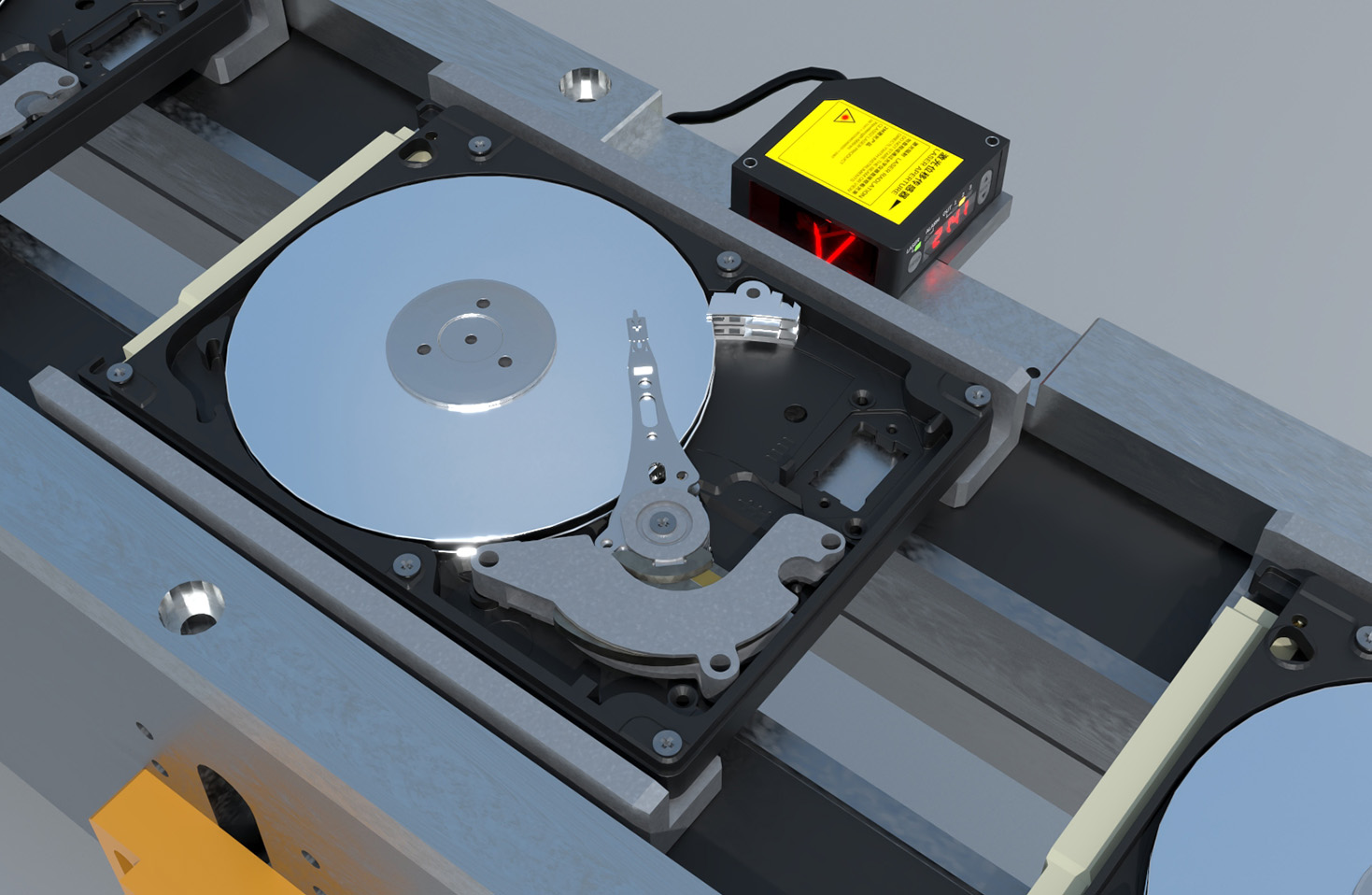
Quality control is integrated directly into the process. Vision systems frequently verify the accuracy and readability of each mark, especially critical for 2D codes, ensuring a 100% inspection rate. This closed-loop feedback guarantees that every sensor leaving the production line is perfectly and permanently identified.
Looking ahead, the evolution of laser technology continues to push boundaries. Ultrafast picosecond and femtosecond lasers offer "cold ablation" capabilities, minimizing the heat-affected zone to near zero. This allows for the precise marking of highly sensitive materials or coatings without any detrimental effects, opening new possibilities for next-generation sensor designs. Additionally, the integration with Industrial Internet of Things (IIoT) platforms enables real-time data logging from the laser marker, linking each mark's parameters directly to the sensor's production and test data for complete digital traceability.
In conclusion, laser marking is far more than just putting a number on a device. For sensors, it is a critical enabler of quality, reliability, and intelligence in manufacturing. It provides the permanent, high-resolution identity that allows these essential components to be tracked, trusted, and integrated into the complex systems that define modern technology. As sensors become smaller, smarter, and more ubiquitous, the art and science of laser marking will remain at the forefront, ensuring that every piece of data, both on the sensor and from the sensor, is clearly and permanently defined.