Selecting the appropriate proximity sensor is a critical decision in industrial automation and control systems. These non-contact devices detect the presence or absence of objects, and their performance directly impacts efficiency, safety, and reliability. With various technologies available, understanding key selection criteria is essential for optimal system integration.
The first step involves defining the application requirements. Consider the target material: inductive sensors detect metallic objects, while capacitive sensors can sense both metallic and non-metallic materials like plastics, liquids, or granules. For long-range detection of any material, ultrasonic or photoelectric sensors might be suitable. The sensing distance, or nominal range, must be chosen based on the actual operating distance, typically selecting 60-80% of the rated specification to account for environmental factors and tolerance variations.
Environmental conditions heavily influence sensor choice. In harsh settings with dust, moisture, or chemical exposure, sensors with high IP (Ingress Protection) ratings, such as IP67 or IP69K, are necessary. Temperature extremes require models with extended operating ranges, while areas with strong electromagnetic interference need shielded or immune designs. For washdown environments in food processing, stainless steel housings and robust sealing are mandatory.
Output configuration is another vital aspect. Two-wire DC sensors simplify wiring but may have higher leakage current. Three-wire DC sensors (PNP or NNP sourcing/sinking) offer precise switching and are common in programmable logic controller (PLC) interfaces. Analog outputs (4-20 mA or 0-10 V) provide continuous distance or signal strength data for process control. Additionally, consider the switching frequency; high-speed applications like counting or sorting demand fast-response sensors to maintain cycle times.
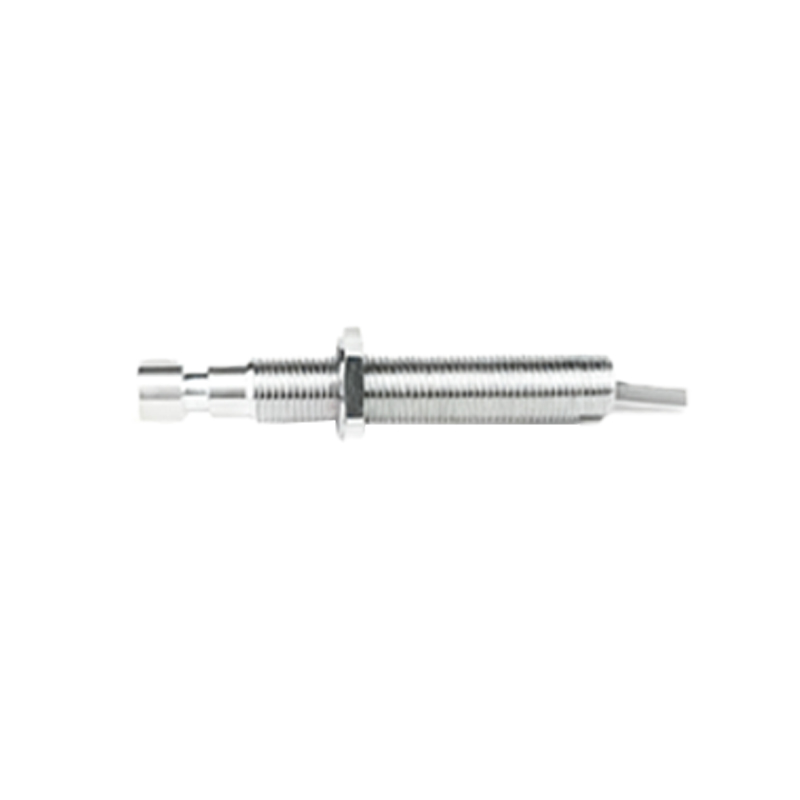
Physical size and mounting constraints cannot be overlooked. Cylindrical threaded barrels (e.g., M8, M12, M18, M30) are standard, but rectangular or flat designs fit space-limited installations. Factor in the flush or non-flush mounting style: flush-mounted sensors can be embedded without lateral interference, whereas non-flush types offer longer sensing ranges but require clearance. Connection methods, such as pre-wired cables or quick-disconnect connectors, affect maintenance and replacement ease.
Finally, evaluate long-term reliability and compliance. Look for sensors with robust construction, proven durability in similar applications, and certifications like CE, UL, or ATEX for hazardous areas. While cost is a factor, prioritizing quality and suitability over initial price prevents downtime and frequent replacements. Consulting datasheets, application notes, and manufacturer support ensures the selected sensor meets all technical and operational demands, delivering consistent performance throughout its lifecycle.
In summary, a methodical approach—analyzing target material, environment, output needs, physical layout, and reliability—guides engineers to the ideal proximity sensor. This proactive selection minimizes errors, enhances system integration, and supports seamless automation across diverse industries from automotive manufacturing to packaging and material handling.