In the realm of industrial automation and machine safety, the reliable detection of metallic objects is paramount. Among the various sensing technologies available, inductive proximity sensors stand out for their robustness, non-contact operation, and exceptional performance in harsh environments. This article delves into the specifics of a common and highly versatile category: the metal inductive proximity switch sensor, often designated with model series like "50" (e.g., E2E, PR, BI). We will explore their operating principle, key characteristics, selection criteria, and typical applications.
Fundamental Operating Principle
An inductive proximity sensor for metal detection operates on the principle of electromagnetic induction. The core component is a coil housed within the sensor's face, which is fed by a high-frequency oscillating current. This generates an alternating electromagnetic field around the active sensing surface. When a metallic target enters this field, eddy currents are induced on the target's surface. These eddy currents draw energy from the sensor's oscillator, causing a change in its amplitude. An integrated evaluation circuit monitors this change. Once the amplitude drop exceeds a predefined threshold, the sensor's solid-state output switch (typically NPN or PNP) changes state, signaling the presence of the target. It is crucial to note that these sensors are primarily designed for ferrous metals (like iron and steel) but can also detect non-ferrous metals (like aluminum, copper, brass), though with a reduced sensing distance, often specified by a correction factor.
Key Characteristics of Type 50 Metal Sensors
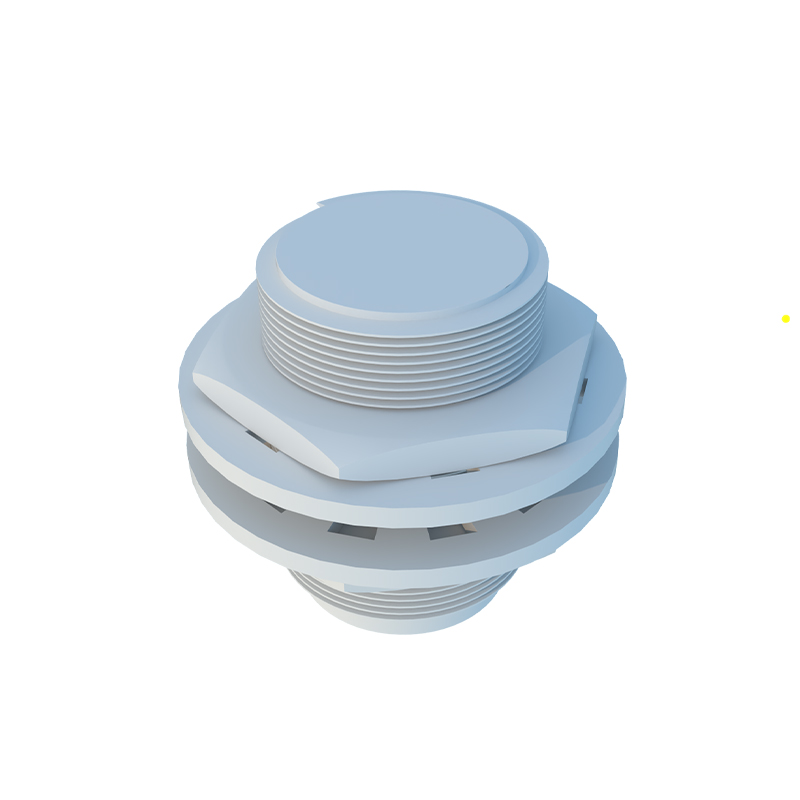
Sensors in this class, such as the ubiquitous M8, M12, M18, or M30 threaded cylindrical housings, share several defining features:
Sensing Range: The nominal sensing distance (Sn) is standardized. For a standard 18mm diameter (M18) sensor, this is often 5mm or 8mm. The "50" series often refers to a specific performance or housing family from a manufacturer.
Housing and Build: They typically feature robust metal (often stainless steel) or high-grade PBT plastic housings with IP67, IP68, or IP69K ratings, making them resistant to dust, water jets, and washdowns.
Output Configuration: Available in 3-wire DC configurations (NPN normally-open/closed, PNP normally-open/closed) or 2-wire AC/DC versions. Some advanced models offer analog (4-20mA, 0-10V) or IO-Link outputs for data communication.
Frequency Response: High switching frequencies, often up to 1-2 kHz, allow for detection of rapidly moving parts.
Embeddable vs. Non-Embeddable: Embeddable (flush-mountable) sensors can be installed flush in a metal bracket without affecting their sensing range, as their field is focused axially. Non-embeddable (non-flush) sensors have a larger lateral field and offer longer ranges but cannot be mounted flush with surrounding metal.
Selection Criteria for Optimal Performance
Choosing the right inductive sensor requires careful consideration:
1. Target Material: Determine if the primary target is mild steel, stainless steel, aluminum, or another metal. The sensing distance varies significantly.
2. Required Sensing Distance (Sr): Always select a sensor with a nominal range (Sn) 20-30% greater than your application's required distance (Sr) to account for temperature fluctuations, voltage tolerances, and part tolerances.
3. Mounting and Environment: Consider the available space, required mounting style (threaded, rectangular), and environmental factors like temperature extremes, presence of cutting fluids, or metallic chips.
4. Electrical Interface: Match the sensor's output type (NPN/PNP) and voltage range (10-30V DC typical) to your controller's input module (sinking vs. sourcing).
5. Special Features: Some applications may require weld-field immunity (resistance to spurious triggering from welding currents), extended temperature ranges, or chemical resistance.
Typical Industrial Applications
The versatility of metal inductive proximity sensors makes them indispensable across industries:
Machine Tooling: Position verification of tool holders, turret indexing, and end-of-stroke detection on cylinders.
Material Handling: Detecting metal parts on conveyors, counting products, and pallet positioning.
Packaging Machinery: Registration mark detection on metalized foils or cap presence detection on bottles.
Automotive Assembly: Robot arm position feedback, fixture clamping confirmation, and part presence in welding cells.
Basic Safety: Used as part of interlock systems on guards, though not as sole safety devices without appropriate safety-rated circuitry.
Installation and Troubleshooting Tips