In the realm of industrial automation and control systems, proximity sensors are indispensable components. They are non-contact sensors designed to detect the presence or absence of an object within a specific range without any physical contact. This capability makes them ideal for harsh environments, high-speed counting, positioning, and object detection applications where reliability, longevity, and precision are paramount. Unlike limit switches, they have no moving parts subject to wear, leading to significantly longer operational life. The fundamental principle behind their operation involves generating an electromagnetic field or beam and detecting changes in that field caused by a target object. Based on their underlying detection technology, proximity sensors are primarily categorized into several distinct types, each with its own set of characteristics, advantages, and ideal use cases.
The most common and widely used type is the Inductive Proximity Sensor. This sensor operates on the principle of electromagnetic induction. It contains a coil wound around a ferrite core connected to an oscillator. When an electrically conductive metal target enters the sensor's oscillating electromagnetic field, eddy currents are induced on the target's surface. This causes a load on the oscillator, leading to a change in the oscillation amplitude. This change is detected by the sensor's circuitry, which then triggers a solid-state output switch. Inductive sensors are exclusively for detecting metallic objects, primarily ferrous metals like steel and iron, though specialized versions can detect non-ferrous metals. They are renowned for their robustness, high switching frequency, and resistance to environmental factors like dust, oil, and moisture. Typical applications include detecting metal parts on conveyor belts, checking for the presence of nuts or bolts, and position sensing in machine tools.
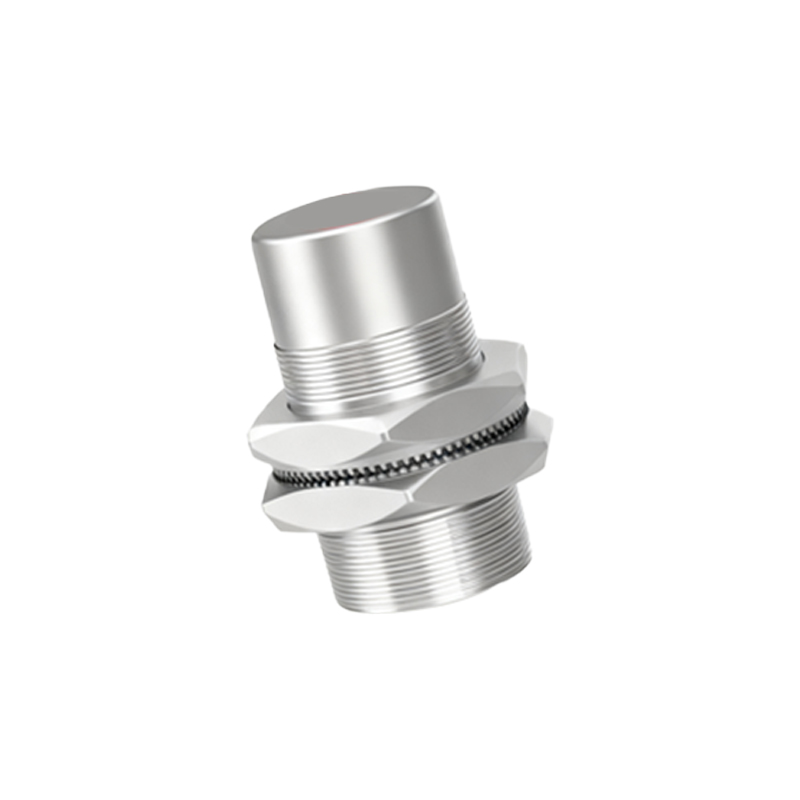
Another major category is the Capacitive Proximity Sensor. These sensors can detect both metallic and non-metallic objects, including liquids, powders, granules, and plastics. They function by generating an electrostatic field. The sensor itself acts as one plate of a capacitor, and the target object acts as the other. When an object enters the sensing field, it changes the dielectric constant and thus the capacitance of the system. The sensor's internal circuit monitors this capacitance change and triggers an output when a predetermined threshold is reached. Because they react to the material's dielectric constant, they are versatile but can be susceptible to false triggers from environmental humidity or contaminants. They are perfect for applications like liquid level detection in tanks, monitoring fill levels of non-metallic materials in hoppers, or detecting wood, glass, or cardboard.
For applications requiring longer sensing ranges or detection of any material regardless of color, reflectivity, or surface texture, Photoelectric Sensors are the preferred choice. While often considered a separate family, they are fundamentally a type of proximity sensor. They operate by emitting a beam of light (usually infrared, visible red, or laser) and detecting changes in the received light. There are three main sub-types used for proximity sensing: Through-beam (separate emitter and receiver), Retro-reflective (uses a reflector), and Diffuse (reflective), where the sensor itself emits light and detects the reflection from the target object. Diffuse photoelectric sensors are the true "proximity" mode, sensing the interruption or return of their own light beam. They offer the longest sensing distances among non-contact sensors and are excellent for detecting small objects, transparent materials, or for use in clean environments.
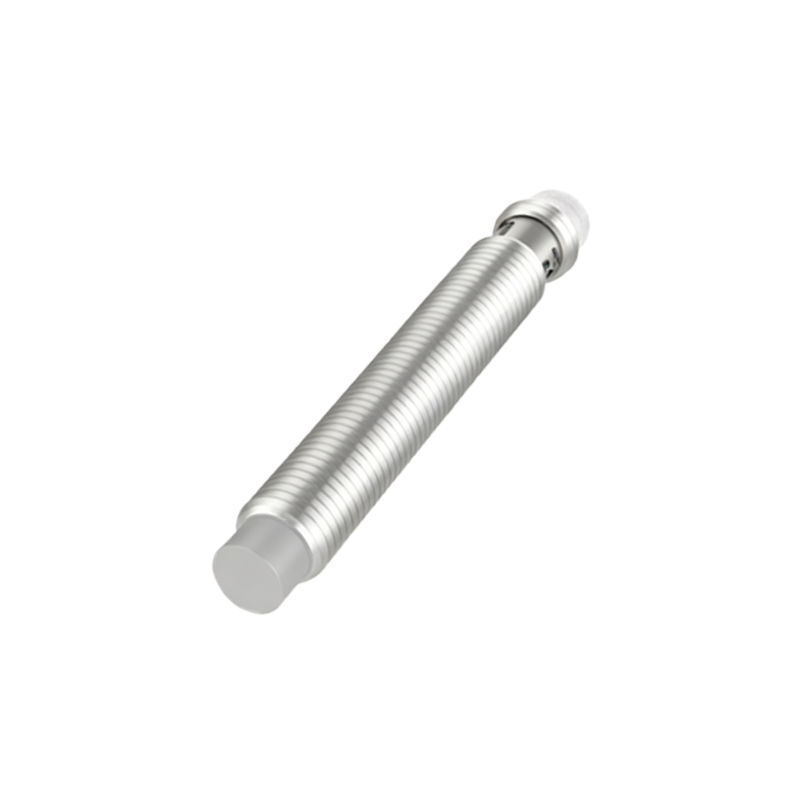
A specialized and highly precise type is the Ultrasonic Proximity Sensor. These sensors work on the principle of echolocation, similar to sonar. They emit high-frequency sound waves (ultrasonic pulses) and measure the time it takes for the echo to return after bouncing off a target object. The distance to the object is calculated based on the speed of sound. Ultrasonic sensors can detect virtually any solid or liquid object, and their performance is largely unaffected by color, transparency, or material composition. They are ideal for challenging applications such as detecting clear glass bottles, measuring distance or height, controlling loops in winding machines, or presence detection in dusty or vaporous environments where optical sensors might fail.
Finally, Magnetic Proximity Sensors, specifically Reed Switch or Hall Effect sensors, are designed to detect the presence of a permanent magnet. Reed switches use hermetically sealed ferromagnetic reeds that close or open in the presence of a magnetic field. Hall Effect sensors produce a voltage output proportional to the strength of a magnetic field. These sensors are extremely reliable for detecting the position of cylinders with embedded magnets (piston position in pneumatic cylinders), in door and lid closure detection, or in speed sensing of rotating shafts with magnetic targets. They are simple, cost-effective, and can operate in complete darkness or within sealed environments.
Selecting the correct type of proximity sensor is critical for system performance. Key selection criteria include the target material, required sensing distance, environmental conditions (IP rating, temperature, chemicals), switching frequency, output type (PNP/NPN, analog, IO