In the realm of industrial automation and electrical control systems, proximity switches stand as fundamental components for non-contact object detection. Among the various sensing technologies employed, infrared (IR) sensors have carved out a significant and reliable niche. This article delves into the operational principles, key characteristics, application considerations, and comparative advantages of infrared-based proximity switches, providing a technical overview for engineering professionals.
At its core, an infrared proximity switch operates by emitting an invisible beam of infrared light and detecting its reflection from a target object. The sensor typically contains an IR LED (Light Emitting Diode) as the transmitter and a phototransistor or photodiode as the receiver. When an object enters the sensor's detection range, it reflects the emitted IR radiation back to the receiver. The internal circuitry of the switch then processes this signal change to trigger an output state, typically a solid-state or relay output, indicating the object's presence. This principle is often termed diffuse or reflective sensing.
A critical specification for any proximity sensor is its sensing distance. For infrared sensors, this range is highly dependent on the color, material, and surface texture of the target. Light-colored, matte surfaces reflect IR light more effectively, allowing for longer and more consistent detection ranges. Conversely, dark, shiny, or absorbent surfaces can significantly reduce the effective sensing distance, as they either absorb the IR radiation or reflect it away from the receiver. This characteristic necessitates careful consideration during system design and sensor selection.
Infrared proximity switches offer several distinct advantages. They are generally immune to magnetic fields, making them suitable for environments where inductive sensors might malfunction. They can detect a wide variety of materials, including non-metals like plastic, wood, and glass, which are transparent to inductive sensors. Modern IR sensors often incorporate background suppression technology, which allows them to ignore objects beyond a set distance, or true background suppression, which uses triangulation to precisely define a sensing window, greatly enhancing reliability.
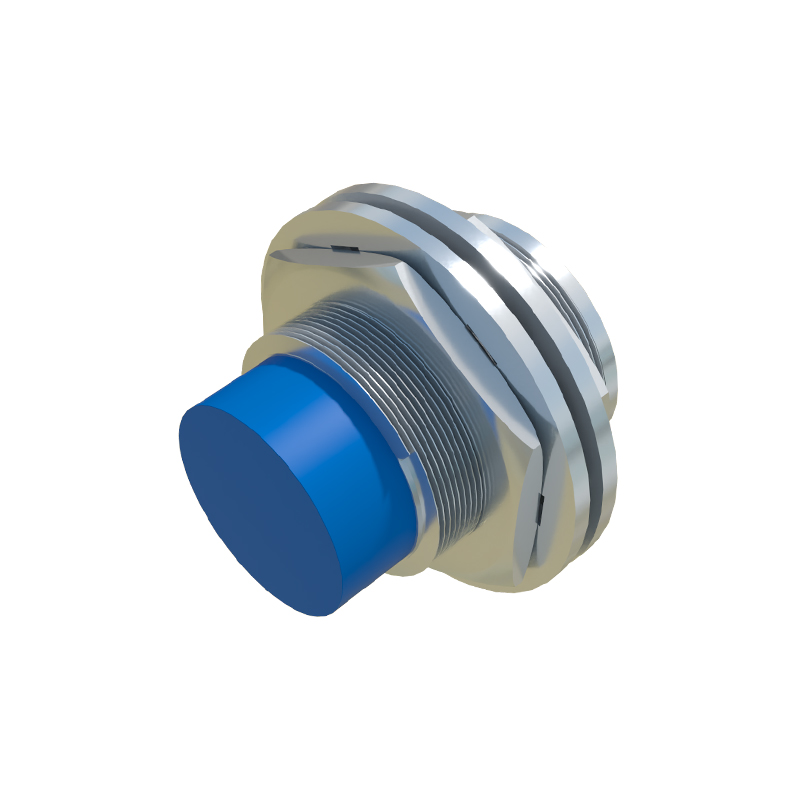
However, engineers must also account for their limitations. Ambient infrared light from sources like sunlight or incandescent lamps can cause interference or false triggering. While many models feature modulated IR light (pulsing at a specific frequency) and corresponding filtered receivers to mitigate this, installation away from strong direct IR sources is recommended. Furthermore, environmental factors like dust, fog, or steam can scatter or absorb the IR beam, potentially reducing performance. For such challenging conditions, sensors with higher ingress protection (IP) ratings and more robust optical designs are required.
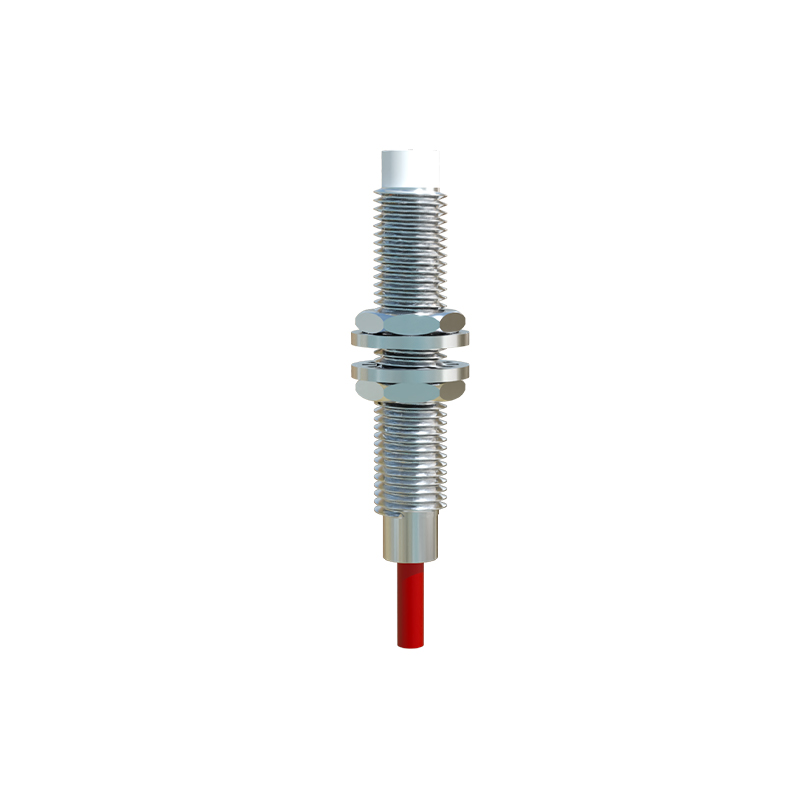
When compared to other prevalent technologies like inductive (for metals only) or capacitive (for both metals and non-metals, but sensitive to moisture and density) proximity sensors, IR sensors excel in applications requiring precise positioning of non-metallic objects, color detection (using specific reflectivity differences), or where the target's electrical properties are irrelevant. Common industrial applications include bottle/cap detection on filling lines, paper sheet counting in printers, thread break detection in textiles, and object presence verification in assembly automation.
Selection criteria extend beyond just sensing distance. Key parameters include response time (critical for high-speed lines), output type (PNP/NPN, analog, IO-Link), housing material (often stainless steel or plastic), connection method (pre-wired or connector-based), and environmental ratings for temperature, humidity, and chemical exposure. Proper alignment and mounting are crucial; the sensor must be positioned so that the target passes perpendicularly through its detection field for optimal signal strength.
In conclusion, infrared proximity switches are versatile and indispensable tools in the electrical engineer's arsenal for automation. Their ability to detect diverse materials without physical contact provides elegant solutions for countless positioning, counting, and inspection tasks. A thorough understanding of their operating principle, coupled with a careful analysis of the application environment and target properties, is essential for specifying the correct sensor, ensuring robust system performance, and minimizing downtime in industrial operations. As technology advances, features like longer ranges, enhanced environmental resistance, and smarter diagnostic capabilities via industrial networks continue to evolve, solidifying the role of IR sensing in the future of industrial automation.