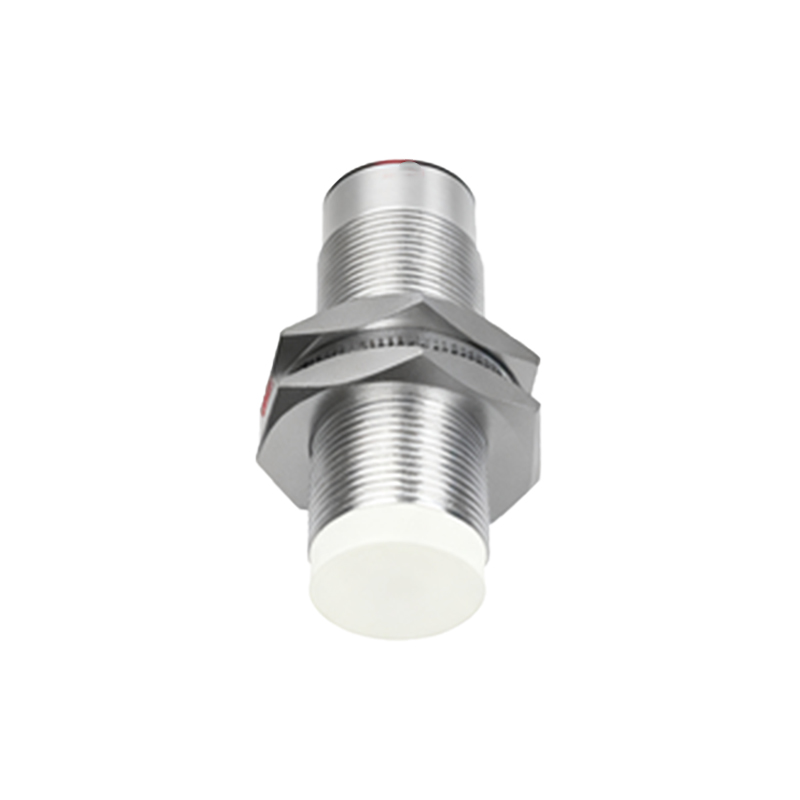
In the realm of industrial automation and control systems, proximity sensors are indispensable components for non-contact object detection. Among the various types, the NPN 3-wire proximity sensor stands out for its widespread use, reliability, and straightforward integration. This article delves into the operational principles, standard wiring configurations, and key application considerations for these essential devices.
Fundamentally, a proximity sensor detects the presence or absence of a metallic object (typically ferrous or non-ferrous metals, depending on the sensor type) within its sensing range without physical contact. It achieves this through electromagnetic fields, most commonly using an inductive sensing principle. An NPN 3-wire sensor specifically utilizes a semiconductor output switch—an NPN transistor—to control the load circuit. The "3-wire" designation refers to the three essential connections required: a positive supply voltage (V+ or Brown wire), a ground or common negative (0V or Blue wire), and the switched output signal (Black wire).
The core of its operation lies in the oscillator circuit and the NPN transistor. Inside the sensor housing, an oscillator generates a high-frequency electromagnetic field at the active face. When a metal target enters this field, eddy currents are induced in the target, causing a dampening or loading effect on the oscillator's amplitude. This change is detected by a threshold circuit, which then triggers the state of the output switch. In an NPN configuration, the transistor acts as a sinking switch. This means the output terminal (collector of the transistor) is connected to the load, and the load's other side is connected to the positive supply. When a target is detected, the NPN transistor turns ON, effectively connecting the output line to the common ground (0V), thus "sinking" current from the load to complete the circuit and signal detection.
Wiring an NPN 3-wire sensor correctly is critical for system functionality and safety. The standard color coding, following international conventions (IEC), is Brown for DC positive (+V, e.g., +10 to +30V DC), Blue for DC common (0V), and Black for the output signal. For an NPN sinking output, the black wire provides the path to ground when active. A typical connection involves: connecting the Brown wire to the positive terminal of the power supply, the Blue wire to the negative/0V terminal, and the Black wire to one side of the load (e.g., a PLC input, relay coil, or indicator lamp). The other side of that load must then be connected back to the positive supply. It is crucial to note that the power supply for the sensor and the load must share the same common ground (0V) reference. Always consult the specific sensor's datasheet for absolute confirmation of wire colors and voltage ratings, as variations can exist.
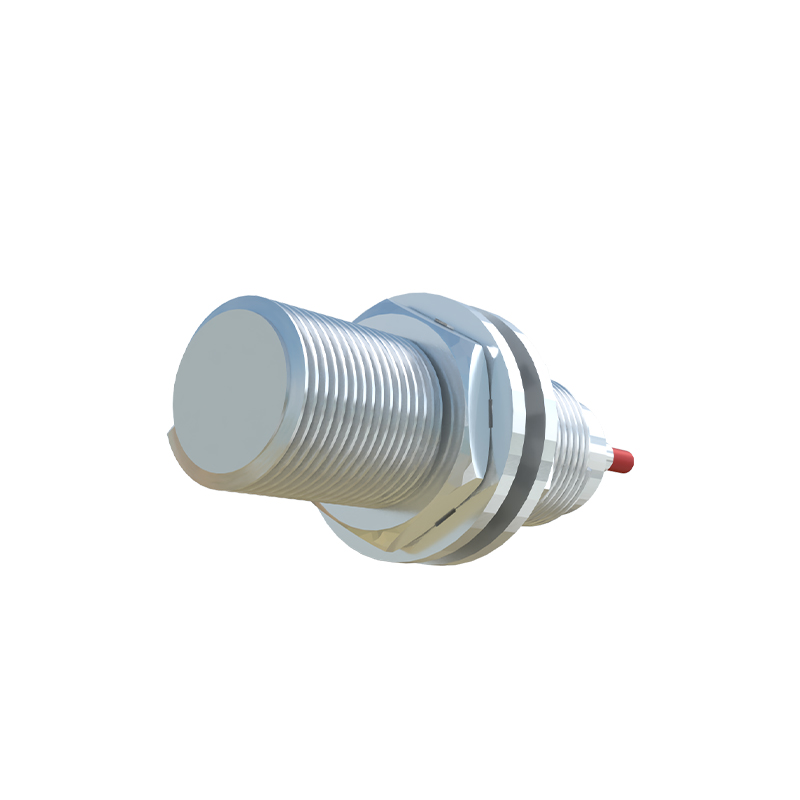
Choosing an NPN 3-wire sensor offers several advantages. Their compatibility with many programmable logic controllers (PLCs) that have sinking-type input modules is a primary reason for their popularity. They provide a clear, digital ON/OFF signal ideal for counting, positioning, and limit detection applications. Compared to 2-wire sensors, 3-wire versions generally offer better performance with lower leakage current and the ability to handle higher loads, though they do require an extra wire. When selecting a sensor, key specifications to consider include: sensing distance (rated and effective), target material (steel, aluminum, brass, etc.), output current rating, switching frequency (response speed), housing material (e.g., nickel-plated brass or stainless steel for harsh environments), and protection ratings like IP67 or IP69K for dust and water resistance.
Applications for NPN 3-wire inductive proximity sensors are vast across manufacturing. They are routinely used for detecting the position of machine parts, such as cylinders in pneumatic systems, verifying the presence of metal components on assembly lines, monitoring rotational speed by detecting gear teeth or bolts, and as safety interlock switches. In automated packaging, they detect metal lids or cans. In material handling, they sense the position of pallets or metal racks.
In conclusion, the NPN 3-wire proximity sensor is a fundamental, robust solution for industrial sensing tasks. Its sinking NPN output configuration, when understood and wired correctly, integrates seamlessly into standard control architectures. By paying close attention to wiring diagrams, electrical specifications, and environmental factors, engineers and technicians can reliably deploy these sensors to enhance automation efficiency, improve safety, and ensure consistent process control in countless industrial settings.