In the vast and intricate world of industrial automation and control systems, proximity sensors are indispensable components. They detect the presence or absence of an object without physical contact, enabling precise, reliable, and wear-free operation in countless applications. Their functionality hinges on different physical principles, leading to distinct types, each with unique characteristics, advantages, and ideal use cases. Understanding these types is crucial for selecting the right sensor for a specific task.
The most common categorization of proximity sensors is based on their underlying sensing technology. The primary types include Inductive, Capacitive, Ultrasonic, Photoelectric, and Magnetic (Reed or Hall Effect) sensors.
Inductive Proximity Sensors are workhorses in metal detection. They generate an electromagnetic field from a coil fed by an oscillator. When a metallic object (ferrous or non-ferrous) enters this field, it induces eddy currents, causing a change in the oscillation amplitude. This change is detected by the sensor's circuitry, triggering an output signal. Their key strengths are high switching frequency, robustness, and immunity to non-metallic substances like dust, oil, or water. They are ideal for detecting metal parts in machinery, position sensing in cylinders, or in dirty industrial environments. However, their sensing range is relatively short and is strictly limited to conductive materials.
Capacitive Proximity Sensors can detect both metallic and non-metallic objects, including liquids, powders, plastics, and wood. They function by generating an electrostatic field between two electrodes (often the sensor face and a ground). When any object with a dielectric constant different from air enters this field, it alters the capacitance, which is measured by the internal circuit to change the output state. These sensors are perfect for level detection of liquids or granular materials, detecting non-metallic containers, or sensing through thin non-metallic walls. They can be sensitive to environmental changes like humidity or temperature, and adjustment of sensitivity is often required to avoid false triggers from background objects.
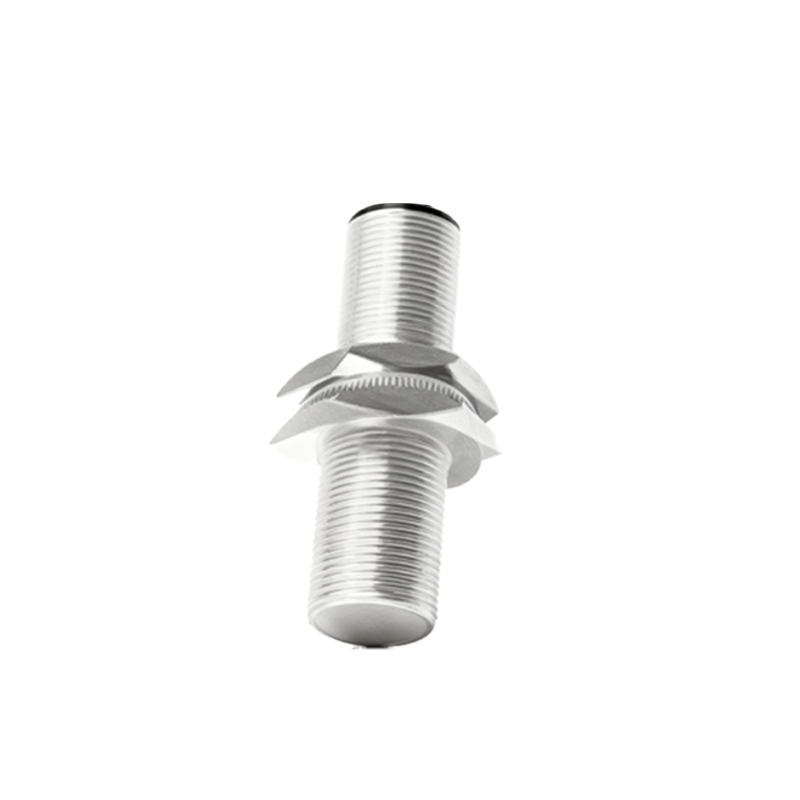
Ultrasonic Proximity Sensors operate on the principle of sound wave reflection. They emit high-frequency sound pulses (inaudible to humans) and measure the time taken for the echo to return after bouncing off a target object. This time-of-flight measurement allows them to determine not just presence, but also distance, making them excellent for precise position control and continuous level measurement. They are largely material-independent and perform well in challenging conditions with dust, smoke, or vapors. Their limitations include potential interference from air turbulence, temperature variations (which affect sound speed), and soft materials that absorb sound. They are widely used in parking assist systems, tank level monitoring, and robotic palletizing.
Photoelectric Sensors use light beams to detect objects. They consist of a light emitter (usually LED—infrared, red, or laser) and a receiver. They are further subdivided into three main modes: Through-beam (separate emitter and receiver), Retro-reflective (emitter and receiver in one unit with a reflector), and Diffuse (emitter and receiver in one unit, sensing light reflected directly from the target). Photoelectric sensors offer very long sensing ranges, especially the through-beam type, and can detect virtually any material. They are highly versatile but can be affected by environmental factors like ambient light, color, transparency, and surface reflectivity of the target. Applications include object counting on conveyors, break detection, and registration control in packaging.
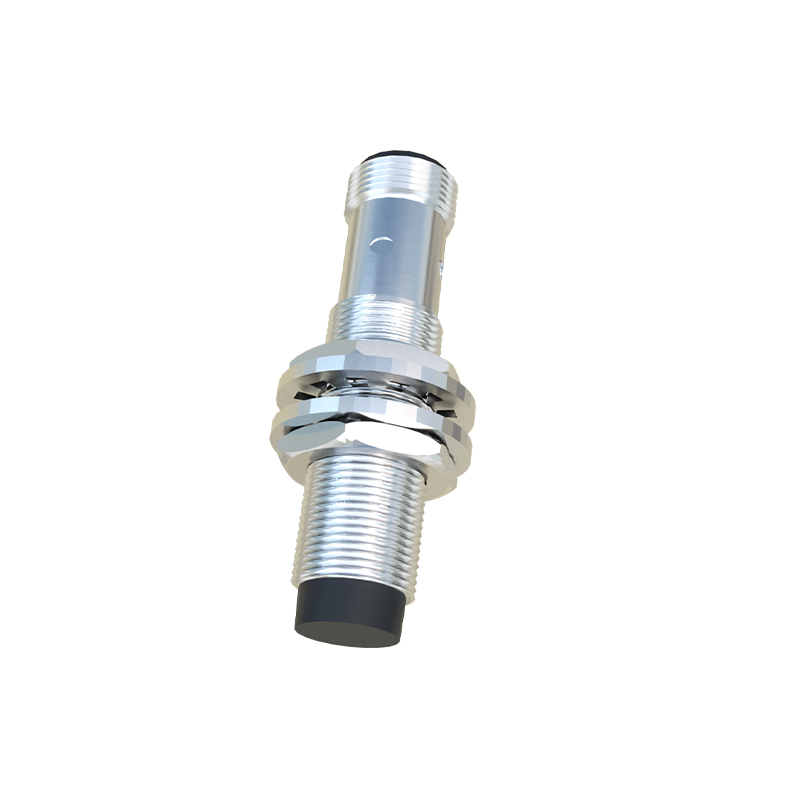
Magnetic Proximity Sensors are designed specifically to detect permanent magnets. The two main kinds are Reed Switches and Hall Effect sensors. A Reed Switch contains two ferromagnetic reeds sealed in a glass tube. When a magnet approaches, the reeds magnetize and attract each other, closing the contact. Hall Effect sensors produce a voltage change when exposed to a magnetic field. Both types are extremely reliable for detecting the position of magnet-equipped moving parts, such as in pneumatic cylinders (as cylinder position sensors), doors, or safety interlocks. They are immune to non-magnetic contaminants but, of course, only respond to magnetic fields.
Selection among these types depends on multiple factors: the target material, required sensing distance, environmental conditions (temperature, contaminants), switching speed, output type (PNP/NPN, analog, IO-Link), and installation constraints. For instance, an inductive sensor is the default for a metal part on a high-speed assembly line, while a capacitive sensor is chosen to detect a plastic bottle cap, and an ultrasonic sensor is selected for monitoring the fill level of a chemical slurry in a tank.
In conclusion, the "phase" of sensing—whether electromagnetic, electrostatic, acoustic, optical, or magnetic—defines the capability and application domain of a proximity sensor. A deep understanding of these fundamental types empowers engineers and technicians to build more efficient, reliable, and intelligent automated systems, ensuring optimal performance across diverse industrial landscapes.
SEO