In the realm of industrial automation and machine control, proximity sensors and distance sensing switches are indispensable components. They provide non-contact detection of objects, enabling precise, reliable, and maintenance-free operation in harsh environments. Unlike mechanical limit switches, these electronic devices operate without physical contact, thereby eliminating wear and tear and significantly increasing operational lifespan. The core principle behind most proximity sensors involves generating an electromagnetic field or a beam of radiation (like infrared or laser) and detecting changes in that field or the return signal caused by the presence of a target object.
The most prevalent type is the inductive proximity sensor. It generates an oscillating electromagnetic field from its active face. When a metallic object enters this field, eddy currents are induced in the target, which dampens the oscillation amplitude of the sensor's internal circuit. This change is detected and converted into a solid-state output signal, typically switching a load on or off. Inductive sensors are ideal for detecting ferrous and non-ferrous metals, with sensing ranges varying from a few millimeters to several centimeters. They are widely used in metal detection, position verification of machine parts, and high-speed counting applications.
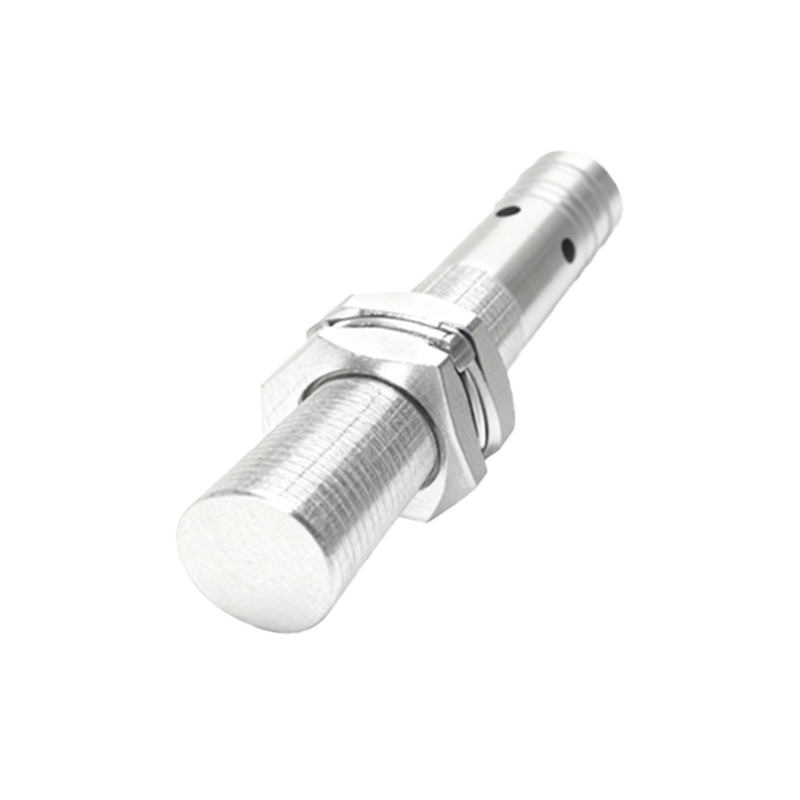
For non-metallic objects, capacitive proximity sensors are the tool of choice. These sensors can detect a much wider range of materials, including liquids, plastics, wood, and granular substances. They function by generating an electrostatic field. Any object with a dielectric constant different from air will alter the capacitance of the sensor's circuit when it approaches, triggering an output change. This makes them perfect for level detection in tanks, material handling, and presence detection of packaged goods.
Ultrasonic sensors represent another critical category for distance measurement and level sensing. They operate on the time-of-flight principle: emitting high-frequency sound pulses and measuring the time interval until the echo is received. The distance to the target is calculated based on the speed of sound. These sensors are excellent for detecting objects regardless of color, transparency, or material, and are commonly used in challenging conditions with dust, smoke, or light interference. Applications include palletizing, collision avoidance on AGVs (Automated Guided Vehicles), and continuous liquid level monitoring.
Photoelectric sensors, utilizing infrared, visible, or laser light, offer the longest sensing ranges. They work by either detecting the interruption of a light beam (through-beam), the reflection from a target (retro-reflective), or the reflection from the object itself (diffuse reflective). Modern photoelectric sensors with background suppression or precise background evaluation can reliably detect objects at specific distances, effectively functioning as distance-sensing switches. They are ubiquitous in packaging, material handling, and assembly line automation.
Selecting the right proximity sensor or distance switch requires careful consideration of several factors. The target material is paramount—metal, plastic, liquid, etc. The required sensing distance, often specified as a nominal range under ideal conditions, must be derated for real-world applications. Environmental factors like temperature extremes, washdown requirements (IP ratings), and exposure to chemicals or welding spatter dictate the housing material and ingress protection level. The output type, whether NPN (sinking) or PNP (sourcing) transistor, or a relay contact, must match the control system's input requirements. Finally, the mounting style (flush, non-flush, threaded barrel) influences the sensor's performance and immunity to adjacent metal.
The integration of these sensors into modern Industrial Internet of Things (IIoT) systems is a growing trend. Smart sensors with IO-Link communication not only provide a simple switched output but also transmit valuable diagnostic data, such as operating temperature, signal strength, and device health, to the central controller. This enables predictive maintenance, reducing unplanned downtime and optimizing production processes.
In conclusion, proximity sensors and distance sensing switches are the silent sentinels of automation. From ensuring a robotic gripper has picked up a part to maintaining safe distances between moving machinery, their role is critical. Understanding their operating principles, types, and key selection criteria allows engineers and technicians to design robust, efficient, and intelligent control systems that form the backbone of modern manufacturing and logistics.