In industrial automation and control systems, proximity sensors are fundamental components for non-contact detection of objects. A common point of discussion and occasional confusion among engineers and technicians is the concept of "amplifier separation" or "amplifier unit separation" in the context of these sensors. This article aims to clarify what this term means, its practical implications, and its significance in system design.
Fundamentally, a proximity sensor consists of two main functional parts: the sensing head and the amplifier. The sensing head contains the oscillator, coil, or sensing element that generates an electromagnetic field or detects a physical change. The amplifier is the electronic circuit that processes the weak signal from the sensing head, converts it into a robust, usable output signal (like a switch signal, analog voltage, or current), and often provides additional features like sensitivity adjustment, timers, and diagnostics.
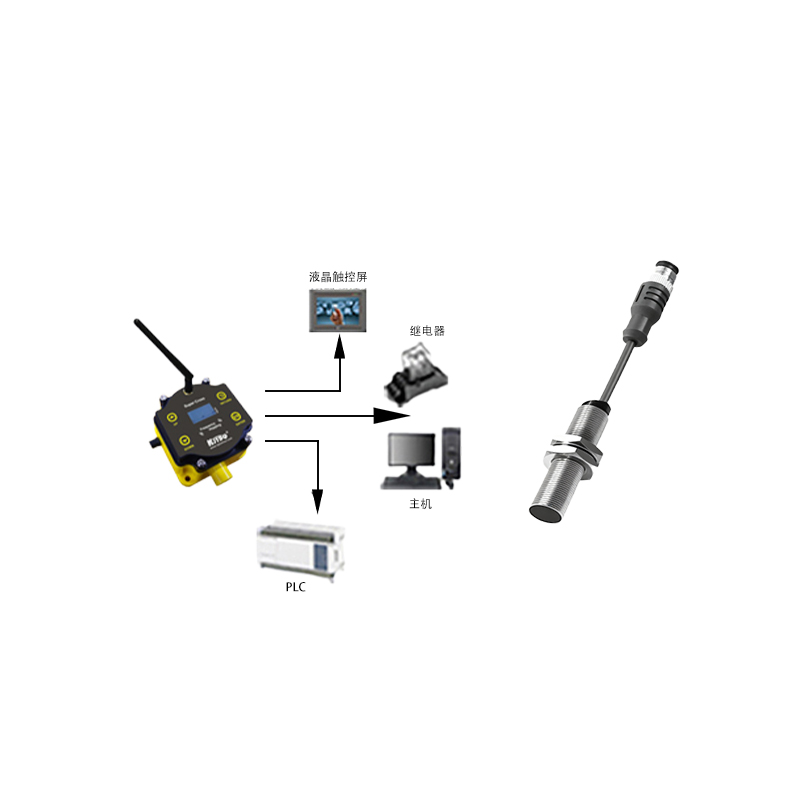
"Amplifier separation" refers to a design architecture where these two components—the sensing head and the amplifier unit—are physically separate entities, connected by a cable. This is in contrast to an "integrated" or "self-contained" proximity sensor, where the sensing head and amplifier are housed in a single, compact unit.
The primary reasons for opting for an amplifier-separated design are rooted in flexibility, environmental adaptability, and maintenance.
1. Environmental and Space Constraints: The sensing head of a separated type can be extremely compact. This allows it to be installed in very tight spaces, harsh environments, or locations with high temperatures, severe vibration, or potential physical impact. The more sensitive and bulky amplifier electronics can then be mounted remotely in a protected control cabinet or a less hostile environment, significantly extending the system's reliability and lifespan. Integrated sensors, if placed in such harsh conditions, might fail prematurely.
2. Ease of Maintenance and Replacement: Separation simplifies troubleshooting and replacement. If a sensing head is damaged mechanically, it can be replaced independently without needing to replace the entire sensor unit, including the amplifier and its wiring. Conversely, if an amplifier fails, the sensing head can remain in place. This modularity reduces downtime and inventory costs, as you only need to stock spare heads or amplifiers, not complete assemblies.
3. Configuration and Standardization: With separated types, a single, standardized amplifier model can often be paired with a wide variety of sensing heads (different sizes, sensing distances, materials like nickel-plated brass or stainless steel, and sensing principles like inductive, capacitive, or ultrasonic). This allows for greater design standardization in control panels and reduces the variety of spare parts needed. Amplifiers often feature DIP switches, potentiometers, or digital interfaces for easy configuration of parameters like output mode (NPN/PNP), delay timers, and sensitivity, which can be adjusted from the safe confines of the control cabinet.
4. Specialized Applications: Some applications require very long sensing distances or specialized sensing heads (e.g., high-temperature heads, flat heads for precise detection). A separated amplifier designed for high gain can drive these specialized heads effectively. It also allows for the use of extended cables between the head and the amplifier to suit unique machine layouts.
However, the separated design is not without its trade-offs. It typically involves a higher initial cost due to the need for two components and interconnecting cables. The installation is more complex, requiring careful routing and connection of the cable. There is also a potential point of failure at the cable connection points. For many standard applications where space is not severely limited and the environment is controlled, an integrated sensor offers a simpler, more cost-effective solution.
In practice, when specifying a proximity sensor, engineers must evaluate the application requirements. Key questions include: What is the available installation space? What are the ambient temperature, vibration, and risk of contamination? How critical is maintenance and module replacement? Is there a need for frequent reconfiguration of sensor parameters? The answers will guide the choice between an integrated unit and an amplifier-separated system.
In summary, "amplifier separation" in proximity sensors describes a modular design philosophy that prioritizes installation flexibility, environmental ruggedness, and maintenance efficiency by physically separating the detection element from the signal processing electronics. This approach is a powerful tool in the system designer's arsenal, enabling robust and adaptable solutions for challenging industrial environments where standard integrated sensors may not suffice. Understanding this concept is crucial for optimizing sensor selection, ensuring system reliability, and controlling long-term operational costs.