In the realm of industrial automation and electrical engineering, proximity sensors play a pivotal role in detecting the presence or absence of objects without physical contact. With the advent of smart manufacturing, integrating these sensors with telephonic communication systems—often referred to as a "proximity sensor phone"—has become increasingly vital. This article delves into the technical aspects of processing such systems, focusing on design considerations, implementation challenges, and best practices for engineers.
Proximity sensors, including inductive, capacitive, and photoelectric types, operate by emitting electromagnetic fields or beams to sense nearby objects. When paired with telephonic modules, these sensors enable remote monitoring and control, allowing operators to receive alerts or trigger actions via phone networks. For instance, in a manufacturing setup, a proximity sensor can detect a machine fault and automatically send a notification to a technician's phone, reducing downtime and enhancing efficiency. The processing involves signal conditioning, data conversion, and communication protocol integration.
From a design perspective, engineers must consider factors such as sensor sensitivity, response time, and environmental interference. Inductive sensors are ideal for metallic objects but may struggle in humid conditions, while capacitive sensors can detect non-metallic materials but require careful calibration to avoid false triggers. Integrating these with a phone system necessitates microcontrollers or PLCs (Programmable Logic Controllers) to process analog signals into digital data. Common protocols like Modbus, PROFINET, or MQTT are used to transmit this data to telephonic gateways, which convert it into SMS or voice calls. For example, a Raspberry Pi or Arduino board can serve as an intermediary, running scripts to manage sensor inputs and initiate phone communications via GSM modules like SIM800L.
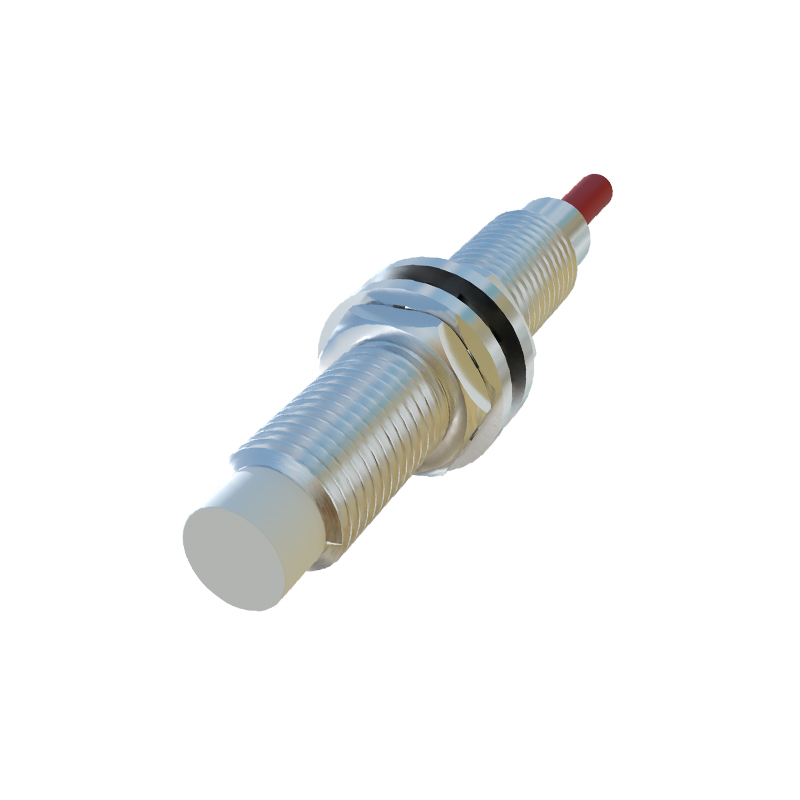
Implementation challenges often revolve around power management, network reliability, and cybersecurity. Proximity sensors typically operate on low voltage DC, but adding a phone module increases power consumption, necessitating efficient battery or PoE (Power over Ethernet) solutions. In remote areas, weak cellular signals can disrupt communication, requiring engineers to incorporate signal boosters or fallback mechanisms like satellite links. Moreover, securing data transmission is crucial to prevent unauthorized access; encryption methods such as TLS (Transport Layer Security) should be applied to phone alerts. Case studies from automotive assembly lines show that using encrypted MQTT over 4G networks can reduce latency by 30% while maintaining data integrity.
Best practices for processing proximity sensor phones include regular calibration, redundancy design, and adherence to industry standards like IEC 61131 for programming and ISO 13849 for safety. Engineers should conduct EMI (Electromagnetic Interference) testing to ensure sensor accuracy in noisy environments and implement fail-safe circuits to handle communication failures. For scalability, cloud-based platforms like AWS IoT or Azure IoT can be leveraged to manage multiple sensor-phone systems, providing analytics and remote updates. In summary, by combining robust sensor technology with reliable telephonic communication, electrical engineers can build resilient automation systems that improve operational visibility and response times in diverse industrial applications.